 Skip to content

Custom Tire Covers for RV Dealerships
Dealer-branded RV tire covers built for mixed-size inventory, outdoor exposure, consistent logo presentation, planned bulk orders, and reliable seasonal replenishment.
- Mixed-size programs are organized around actual tire sizes, controlled patterns, artwork versions, and dealer-specific SKUs.
- 420D, 600D, and 900D Oxford plus marine vinyl support different price, durability, and presentation levels.
- Basic custom samples are normally scheduled in 5–7 working daysafter specifications are confirmed.
- Commercial quantities scale from smaller runs through 500+ piece OEM programsand 1,000+ piece factory-volume orders.
Dealer logos, websites, city names, QR codes, branded packaging, and repeat-order records can be integrated into one program.
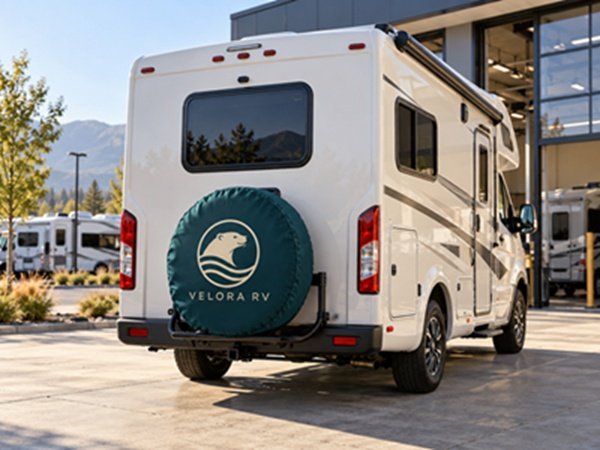
A Tire Cover Program Built Around Dealership Operations
Branded Dealer Program
Mixed Size Control
Reorder Stability
Key Facts for Planning an RV Dealer Program
Tire Size Intake
Core RV Material
- 600D PU-coated Oxford: provides a strong balance among outdoor performance, weight, cost, sewing efficiency, and commercial presentation for many dealership programs
- 420D: serves more price-sensitive ranges
- 900D or other upgraded structures: suit heavier outdoor requirements
- Marine vinyl: available where a premium automotive appearance or long-term weather exposure takes priority
Sample Timing
- Digital layout: normally requires 1–3 working days
- Existing samples: can generally be arranged in 1–2 working days
- Basic physical custom sample: normally requires 5–7 working days
- Complex structural development: takes longer because material, fit, sewing, printing, and other variables must be validated rather than rushed into production
Commercial Scale
Production Timing
Project Traceability
Turn Every Delivered RV Into Lasting Brand Exposure
Vehicle Delivery Gift
Mobile Brand Visibility
Accessories and Service Sales
Problems That Commonly Disrupt Dealer Tire Cover Programs
Most failures are not caused by one dramatic defect. They come from several uncontrolled details—size, artwork, material, printing, construction, packing, and reorders—drifting apart during the project.
Mixed Size Errors
Inconsistent Logo Scale
Outdoor Color Loss
Weak Installation Security
Reorder Variation
SKU Packing Mixups
Choose a Tire Cover Format That Fits Your Program
Different dealership programs call for different constructions. Product selection should start with the role of the tire cover, expected outdoor exposure, branding level, order quantity, and target price rather than one universal specification.
Dealer Logo Spare Covers for Everyday Vehicle Delivery
The standard dealer-logo spare tire cover is usually the most scalable starting point for an RV dealership. It can be configured around a controlled range of spare-tire sizes and a repeatable logo layout, making it suitable for vehicle delivery programs, parts departments, promotions, and dealer groups that need predictable replenishment.
For textile-led programs, 600D PU-coated Oxford is a strong core option because it balances durability, weight, sewing performance, and cost. A dealership working toward a lower target price can evaluate 420D, while more demanding outdoor applications can move toward 900D. When graphics require gradients, photographs, complex illustrations, or a smooth printable face, printable PVC, polyester, or suitable vinyl construction may be more appropriate than forcing a textile material into the wrong visual role.
Rear construction can use elastic for convenient installation, or a more secure bungee, buckle, or reinforced arrangement where wind exposure and long parking periods justify the change. The front artwork can contain a dealer logo, website, location, QR code, or short message, but visual hierarchy should remain clean enough to be recognized on the road.
A dealer-logo program becomes easier to scale when each finished configuration receives a defined size, material, print process, pattern, and packaging specification. That turns a promotional item into a controlled accessory SKU.


Full-Color Promotional Covers for Campaigns and Events
Some dealership programs need more visual freedom than a standard one- or two-color logo. RV shows, anniversaries, regional campaigns, special delivery packages, seasonal promotions, dealer-group launches, and co-branded campaigns may use full-color artwork, gradients, photography, sponsor graphics, or richer lifestyle imagery.
Digital printing is usually a better fit for complex artwork because it avoids separating every graphic element into individual screen colors. Printable PVC or suitable polyester platforms can give the graphic a controlled base surface, while the final material choice still needs to account for outdoor exposure, folding, sewing, and print durability.
Campaign artwork should be prepared as production artwork rather than treated as a poster. A tire cover has a circular face, curved edge, seams, and installation tension. Important logos, text, QR codes, or web addresses must remain inside the usable visual area after cutting and sewing. Szoneier can check resolution, composition, typography, color targets, and final placement before a physical sample is produced.
For deadline-driven projects, proof approval should also be connected to the production and shipping schedule. A late artwork revision can affect printing, cutting, sample approval, bulk production, packing, and delivery, so campaign timing should be planned backward from the required in-hand date.
Premium Outdoor Covers for Higher-Value RV Delivery
Higher-value RVs may justify a tire cover that feels more like a permanent automotive accessory than a promotional giveaway. Marine vinyl, premium PVC, upgraded Oxford structures, stronger rear retention, refined binding, and controlled sewing details can create a more substantial finished product.
Marine vinyl is especially useful when outdoor durability, easy-clean surfaces, premium grain, and automotive appearance matter more than minimum unit cost. Heavy-duty Oxford is another route where textile construction and rugged outdoor positioning are preferred. Material should still be chosen according to climate and use rather than appearance alone. A heavy fabric may add unnecessary cost and packing volume if the vehicle only needs moderate protection, while a light economy material may be unsuitable for long seasonal storage.
Premium programs often benefit from more attention to seam appearance, thread choice, binding, logo finishing, branded tags, and retail-ready presentation. Physical approval becomes important because a specification sheet cannot fully communicate handfeel, surface grain, stiffness, fit, or the visual relationship between the logo and finished cover.
The goal is not simply to make the cover heavier. The goal is to align material, construction, fit, and brand presentation with the value of the RV being delivered.

Control Multiple RV Tire Sizes Without Guessing Fit
Start With the Tire, Not Only the RV Model
Vehicle names are useful for orientation, but the actual tire specification should control final size selection. RVs and trailers can leave the factory with different wheel packages, receive replacement tires, or be modified later. Even two tires mounted on the same rim diameter can have different overall diameters and widths.
- For example, a designation such as 285/70R17 contains far more useful fit information than simply saying “17-inch tire.” The theoretical outside diameter is roughly 32.7 inches, before considering normal real-world variation among tire constructions and manufacturers. A cover selected only from “17-inch wheel” information could therefore be significantly wrong.
- The preferred intake is the complete tire-sidewall size. For unfamiliar, heavily modified, or borderline applications, outside diameter, section width, tread depth, mounting position, and reference photos can add confidence. Szoneier then matches the information to a known pattern or creates a controlled pattern revision when needed.
- The result should be a finished SKU specification rather than an informal message such as “large RV cover.” Each SKU should state what size it is designed to fit, which material and construction it uses, and which artwork version belongs to it.
- That discipline becomes especially valuable when a dealer group carries a changing mix of travel trailers, campers, motorhomes, and other rear-spare vehicles.
Build a Dealer Size Matrix Before Bulk Production
- Suppose an initial order contains six size groups. The same logo can be used across all six, but the print area may need individual adjustment to keep the visual result consistent. A large cover should not receive a tiny logo simply because the same artwork dimensions were copied from the smallest SKU. Conversely, important copy cannot be pushed close to the edge merely to maximize size.
- Mixed quantities also need production planning. A 300-piece order could contain 40 pieces of one size, 70 of another, 100 of a fast-moving SKU, and several smaller size groups. Cutting, identification, sewing, final inspection, and packing must preserve those quantities throughout production.
- A size matrix gives purchasing, production, QC, and warehouse teams one shared reference. Future replenishment is then much easier: the dealership can reorder the fast-moving SKUs without resending every basic fit instruction or recreating the artwork relationship.
Validate New or Sensitive Fits Before Scaling
Not every size requires expensive development, but unfamiliar or borderline fits should be confirmed before a large purchase order is released. A physical fitment sample checks more than front diameter. Side depth, installation force, elastic or bungee tension, seam location, finished appearance, and removal all influence whether the cover feels correct in actual use.
- Szoneier’s sample process can record the tire size, outside diameter, width, construction, and relevant installation details. If a change is needed, the pattern is revised under a new version rather than silently modified during bulk production.
- Minor artwork changes can often be reviewed digitally. Structural changes involving diameter, depth, material, closure, or fit should be validated with another physical sample because a digital mockup cannot reproduce fabric stretch, coating stiffness, sewing behavior, or retention force.
- Once approved, the final pattern is linked with the Golden Sample and program specification. Bulk cutting then follows the approved version. A later reorder should call the same pattern reference unless the dealership deliberately requests a fit change.
- Fitment management is therefore not a size-chart exercise. It is a controlled path from real tire data to a repeatable manufactured SKU.
Select Materials Around Climate, Positioning, and Service Life

420D PU Oxford for Cost-Controlled Dealer Programs
- Its main value is not that it is a “cheaper 600D.” 420D occupies a different product position. A lighter fabric can be easier to fold, pack, distribute, and install. For dealers supplying a cover as a delivery accessory or seasonal promotional item, those attributes may be more commercially useful than extra material weight.
- Performance still depends on more than denier. PU coating, base fabric quality, seam construction, thread, rear retention, and finishing influence the complete product. A poorly built heavier fabric can still perform worse than a correctly engineered lighter cover.
- Stock-color Oxford programs are generally more flexible than custom-dyed projects. Szoneier’s objective facts place many stock-color 420D/600D/900D/1680D programs around 30–50 pieces for compatible configurations, while custom dyeing may move to roughly 300–500 pieces per color and special coating functions can require larger material commitments.
- 420D therefore makes sense when the program brief prioritizes controlled cost, manageable packing, moderate exposure, and an easy-to-scale dealer accessory rather than maximum material weight.

600D PU Oxford as the Core RV Dealer Balance
- RV use places more emphasis on protection than many decorative spare-tire projects. Vehicles may remain parked for long periods, and covers encounter sunlight, rain, dust, temperature changes, and wind. 600D gives enough structure for a substantial finished feel while remaining suitable for single covers and larger dealer programs.
- Construction should match the fabric. Long outdoor storage may justify stronger bungee, buckle, strap, or reinforced hem rather than relying only on a light elastic edge. Logo method also matters. A simple dealer mark at commercial volume may suit screen printing, while more complex graphics can require a different print platform or print-compatible panel.
- 600D is not automatically required for every dealership. A low-cost short-life promotion may be better in 420D or another selected material. An extreme outdoor storage program may need 900D, coated heavy-duty construction, reflective materials, or another specialized solution.
- For the majority of general RV dealer programs, however, 600D offers a useful middle ground among durability, appearance, weight, cost, and reorder practicality. Szoneier’s internal RV material framework identifies 600D PU Oxford as its primary premium/core RV recommendation.

900D Oxford for Heavy Outdoor and Storage Programs
- Extra material weight changes the whole product. Cutting, sewing, folding, packing, carton efficiency, freight, handfeel, and installation can all be affected. A dealership shipping tire covers to multiple branches should therefore consider logistics as well as performance.
- For long storage, rear retention deserves equal attention. A heavy front fabric cannot solve a loose fit. Bungee, buckle, adjustable straps, reinforced hems, stronger stitching, and sufficient side depth may contribute more to wind stability than adding another fabric grade without changing the construction.
- Coating should also reflect the environment. PU-coated Oxford is useful for general outdoor protection, while specific projects may call for stronger waterproof-barrier requirements or additional UV considerations. Special coatings should only be claimed against the material and test basis actually specified for the project.
- 900D is therefore best presented as a targeted heavy-duty option, not a universal upgrade. When the expected conditions justify its cost and weight, it creates a credible premium tier. When they do not, 600D may provide a better commercial balance.
- Szoneier’s RV material framework positions 900D for long outdoor storage, commercial RV applications, high-wind or heavy-use environments rather than every standard dealership program.

Marine Vinyl for Premium Outdoor Dealer Presentation
- The material behaves differently from Oxford. It is generally thicker and less textile-like, so sewing details, binding, fold recovery, surface grain, backing, and finished fit deserve careful review. Those differences are easier to judge from a physical sample than from a material name alone.
- Branding options include selected digital processes, screen printing, heat-transfer approaches, or separate premium logo elements depending on the actual material surface and project requirement. Print adhesion and flex need to be validated because a logo that adheres well to one coated textile may behave differently on a vinyl surface.
- Marine vinyl also carries different MOQ conditions. Szoneier’s material facts place standard stock marine-vinyl programs around 30 pieces for compatible configurations, with special colors commonly moving toward 100–300 pieces, special textures around 300+, and special formulations around 500+.
- The right reason to choose marine vinyl is premium outdoor positioning and material behavior—not simply the label “marine.” Sample review should confirm appearance, flexibility, grain, color, fit, sewing, and logo finish before the material becomes a repeat-order standard.
Turn Dealer Artwork Into Repeatable Production Graphics
Adapt the Dealer Logo to a Circular Product
Most dealership logos are designed for websites, signage, storefronts, vehicles, or rectangular advertising. A tire-cover face introduces a different visual problem: the main graphic sits inside a circular or near-circular area that will later be cut, sewn, tensioned over a tire, and viewed from several meters away.
Artwork therefore needs more than file conversion. The logo, web address, city, short message, or QR element must be arranged around the usable finished face. Important elements should not sit so close to the perimeter that cutting tolerances, seam allowance, side curvature, or installation tension make the graphic look cramped.
Szoneier can begin from vector artwork, high-resolution raster artwork, or other usable brand assets. Low-resolution files may require redraw or vectorization before printing. The production file should identify the correct artwork version for each program so an outdated dealer logo does not reappear during a reorder.
Multiple tire sizes create another challenge. The goal is not necessarily identical print dimensions. The goal is a consistent visual relationship between the branding and the finished cover. A controlled artwork family can therefore use size-specific placement while retaining the same logo, typography, colors, and brand hierarchy.
A digital mockup gives the dealership an early visual check. Physical print and finished-cover samples then confirm how the artwork behaves on the actual material.
Control Brand Color Through the Real Material and Print Process
A Pantone reference, approved physical sample, existing sign, brand guideline, or digital value can provide the target for color work, but output also depends on the actual substrate and printing process. The same ink values do not look identical on white printable PVC, colored Oxford, textured vinyl, or polyester.
Color-sensitive programs should therefore define the target and the production path together. A printed material swatch can be used when the dealership needs to approve color before committing to a complete sample. The final approved sample becomes more meaningful than a screen mockup because it shows the material, ink, surface, and lighting interaction.
For repeat orders, color control is strengthened by preserving the approved artwork, material reference, print method, and physical sample. If the material source, coating, printer, ink system, or print route changes materially, the dealership should be informed and the visual result rechecked instead of assuming the same digital file guarantees the same finished color.
Simple dealer logos can often be controlled efficiently through screen printing at suitable quantities. Full-color identities, gradients, photographs, or complex graphics usually need digital methods. Premium patches or other branding components introduce another material and color system that should be approved separately.
Good color management does not promise impossible mathematical identity under every light source. It creates an agreed physical reference and a repeatable production method.
Add Website, City, QR, or Contact Information Without Clutter
Dealership branding often includes more than a logo. A web address, city, branch name, short sales message, QR code, or other identifying information can make the cover more useful as a promotional surface, but every additional element competes for viewing distance and visual clarity.
The strongest layouts normally establish one primary element—usually the dealer logo or name—then place supporting information in a secondary position. Small text that looks fine on a laptop can become unreadable once the cover is mounted on an RV. QR codes also need adequate physical size, contrast, quiet space, and final scan testing rather than being inserted as a decorative square.
When a dealer group operates multiple branches, one approach is to keep the master logo constant and change a controlled secondary line such as city or branch code. Another is to use one national or regional design across all locations. Artwork versioning prevents branch-specific graphics from being mixed during production.
Any QR destination should remain under the dealership’s control. The printed code can point to a dealer website, service booking form, inventory page, warranty information, campaign landing destination, or other approved address. Final printed codes should be scanned after production, not judged by sight alone.
The objective is clear dealer identification from normal viewing distance with supporting information that remains useful rather than overcrowded.
Match the Printing Method to Artwork and Order Volume

Digital Printing for Full Color and Flexible Quantities
- Digital printing is well suited to dealer programs containing gradients, photographic elements, complex backgrounds, multicolor logos, or several artwork versions. It also works well during development because there is less need to create separate screens for every color before the dealership has approved the final design.
- Printable PVC and selected polyester surfaces are particularly useful when the design relies heavily on full-color graphics. Depending on the substrate and project, suitable digital processes may include UV, latex, or other established print routes. The actual process should be confirmed against adhesion, flexibility, color, outdoor requirement, and final sewing construction.
- Digital production also helps when quantities are distributed across multiple size SKUs. A dealership may need 300 covers but not 300 pieces of every size. Print files can be organized by SKU and artwork version so the front panels remain connected to their correct production pattern.
- The main control points are resolution, color target, print size, positioning, sharpness, surface compatibility, and adhesion. A digital printer can reproduce a detailed image, but it cannot repair an unsuitable low-resolution source or incorrect layout. Artwork engineering therefore remains part of the process.
- For first programs, a printed material swatch or complete sample provides a better approval standard than approving only a computer proof.

Screen Printing for Simple Dealer Logos at Commercial Volume
- Screen printing becomes especially attractive when a dealership uses a stable one- or two-color logo and orders a commercial quantity. Once the artwork and screens are established, the process can provide strong repeatability and efficient unit economics for straightforward graphics.
- Szoneier’s process framework treats 500+ pieces with a simple one- or two-color logo as a particularly strong screen-printing scenario, although exact feasibility and MOQ still depend on material, print size, colors, and production setup. Smaller commercial runs may also use screen printing when the cost structure remains suitable.
- The graphic itself should be designed for the method. Fine photographic gradients, numerous color transitions, and complex images are usually poor reasons to force a screen-print route. A bold dealership logo, short website, or clean lettering can be a much better match.
- Color approval remains important. Each spot color should have a defined target and be checked on the actual substrate. Dark or textured materials can affect appearance, opacity, and edge definition. A first-print approval before continuous production helps catch wrong artwork, incorrect position, color mismatch, weak coverage, or other visible errors before the whole batch is completed.
- For repeat orders, the approved artwork version and print specification should remain tied to the program record.

Premium Branding Methods for Selected Dealer Programs
- Some dealer programs benefit from a smaller premium brand element rather than a large printed face. TPU patches, silicone patches, embroidery, woven labels, embossed elements, or selected metal branding can create a different visual and tactile result when the product positioning supports the added cost.
- These methods should not be treated as interchangeable decorations. Each adds its own material, attachment, MOQ, color, thickness, weight, and outdoor-performance considerations. Embroidery creates needle penetration and thread exposure. A rubber or silicone patch requires a controlled patch material and attachment method. Metal logos introduce weight, edges, corrosion considerations, and a different fastening structure.
- Premium branding can also be combined with a restrained printed design. For example, a clean 600D or marine-vinyl cover may carry a compact dealer patch while installation or product information appears on a separate tag. That approach can look more refined than filling the complete front face with advertising copy.
- The decision should start with where the cover sits in the dealership’s product strategy. A high-volume delivery giveaway and a premium accessory sold with a high-value RV do not need the same logo treatment.
- Whichever process is selected, Szoneier confirms the physical sample before the branding method becomes the approved bulk standard.
Construction Details That Change Fit and Outdoor Performance

Elastic Hem
- Best for straightforward installations.
- Keeps the rear appearance simple.
- Must be matched to the approved pattern rather than one generic elastic length.

Bungee Retention
- Useful for long parking periods.
- Can improve wind stability.
- Works best with a reinforced hem or properly engineered cord channel.

Buckles and Straps
- Provides adjustable mechanical security.
- Suitable for selected high-wind or storage programs.
- Buckle and webbing specifications should remain controlled for later reorders.

Reinforced Hem
- Helps manage repeated edge loading.
- Important on heavier fabrics and long-term outdoor covers.
- Should be included in the Golden Sample and sewing standard.

Binding and Thread
- Premium programs may use more visible finished binding.
- Thread color can match or intentionally contrast with the cover.
- Stitch appearance and seam integrity are checked during bulk QC.

Identification Details
- Connect finished product to dealer SKU.
- Supports warehouse and branch allocation.
- Can be integrated with hang tags, polybags, cartons, or internal barcode systems.
Move From Digital Proof to an Approved Golden Sample
Review Artwork and Build the First Physical Sample
Development normally begins by confirming the size, material, artwork, logo, printing process, construction, quantity, packaging expectation, and destination. A digital sample or mockup can then show logo size, layout, color direction, text, and overall composition before physical production.
Szoneier’s standard digital sample timing is 1–3 working days, while an existing physical sample can generally be prepared for dispatch within 1–2 working days. A basic custom physical tire-cover sample normally requires 5–7 working days. More complex structural work can take 10–15 working days because pattern, material, sewing, fit, and other changes need actual validation.
The first physical sample is not expected to hide unresolved questions. It is designed to expose them while changes are still inexpensive. Dealer teams can review material handfeel, finished diameter, depth, installation, logo placement, color, sewing, elastic or bungee behavior, labels, and packaging.
A printed swatch can sometimes be approved before a complete sewn sample when color is the main concern. If the program uses several sizes but one material and branding system, the development plan can identify which representative sizes genuinely need physical confirmation.
Revise With Controlled Versions Instead of Informal Changes
Sample feedback should be converted into a change list. A revision can address logo scale, text, print position, color, size, side depth, material, elastic, bungee, seam detail, or packaging.
Minor graphic changes can usually be reviewed with another digital proof before a new physical sample is made. Structural changes involving size, fit, material, closure, construction, or another physical variable require a new sample because the impact cannot be judged reliably from a screen.
A simple revision sequence may look like:
V1 → Dealer Review → Logo Adjustment → V2 → Fit Review → Construction Adjustment → V3 → Final Approval
Every revision should answer three questions: what changed, why it changed, and which version received approval.
The approach is especially useful for mixed-size programs. One correction to a logo layout should not accidentally overwrite the pattern or artwork of another SKU. Version control keeps artwork and fit decisions connected to their correct finished product.
Sampling therefore becomes an engineering record. When production begins, teams are not interpreting scattered emails and screenshots; they are following a defined approved version.
Use the Golden Sample as the Bulk and Reorder Reference
The final approved physical product becomes the Golden Sample. It should represent the agreed material, size, color, logo, printing, sewing, retention system, labels, and packaging rather than functioning as a generic showroom sample.
Szoneier’s sample framework defines the Golden Sample as the physical reference used by production, QC, and the purchasing side during acceptance.
For a dealer program, the Golden Sample is particularly valuable because purchase orders may repeat months later. A label saying “600D black dealer cover” is not enough to preserve every detail. The Golden Sample shows the real grain, shade, handfeel, logo proportion, seam appearance, side depth, and finished packing arrangement.
A larger multi-size program can use one primary Golden Sample plus controlled size-specific pattern records where the material and branding system are shared. When different materials or construction levels are used, separate approved references may be appropriate.
Any requested change after approval should enter a controlled change process instead of being introduced quietly during production. Future reorders can then call the same approved standard or deliberately move to a new revision.
Plan MOQ Around the Real Dealer Program Specification
MOQ is determined by the most restrictive element in the program—material, color, printing, structure, accessory, packaging, or commercial setup—rather than one universal number printed on a price list.
Program Factor | Typical Szoneier Reference | Dealer Planning Meaning |
Standard selected PVC/PU configuration | From 1 pc in qualifying configurations | Useful for development, personalized orders, or special one-off requirements; not the normal cost basis for a commercial dealership rollout |
Small commercial quantities | 30 pcs+ | Many compatible stock-material programs begin to enter more commercial production logic |
Clearer batch-cost advantage | 100 pcs+ | Better level for a stable logo program once the dealership has confirmed the product |
Standard OEM volume | 500 pcs+ | Stronger setup efficiency for established dealer programs and repeatable specifications |
Factory volume pricing | 1,000 pcs+ | Suitable for larger dealer groups, distributors, promotional programs, or consolidated annual orders |
Stock Oxford colors | Usually 30–50 pcs | 420D/600D/900D programs remain more flexible when existing fabric colors are used |
Custom Oxford color | About 300–500 pcs/color | Custom dyeing introduces fabric-mill minimums independent of the tire-cover sewing quantity |
Stock Marine Vinyl | Around 30 pcs | Premium material can remain flexible when approved stock color and construction are available |
Special Marine Vinyl color | Commonly 100–300 pcs | Special color, texture, or formulation raises the material commitment |
Custom printed packaging | Often 500 pcs depending format | Packaging MOQ can exceed the tire-cover MOQ, so early orders may use standard packaging plus labels or inserts |
Exact MOQ is confirmed after Szoneier reviews the size mix, material, color, print process, construction, packaging, and required quantity.
Keep Mixed Dealer SKUs Controlled Through Bulk Production

Dealer PO Intake
- One PO may contain several SKUs.
- Dealer logo can remain common across the range.
- Branch allocation can be planned before packing begins.

SKU and Pattern Matrix
- Dealer SKU.
- Tire specification.
- Pattern revision.
- Quantity and artwork version.

Material Lot Control
- Material type and color.
- Relevant lot/reference.
- Approved coating or surface.
- Connection to finished SKUs.

Artwork Version Control
- No production from obsolete mockups.
- Branch versions remain separated.
- Revised artwork receives a new controlled version.

First-Off Production Approval
- Catch setup errors early.
- Compare against approved sample.
- Confirm process before full quantity runs.

Carton and Branch Separation
- Reduces warehouse recounting.
- Supports multi-branch allocation.
- Simplifies future size-specific replenishment.
Make the Second Order Match the First Approved Order
Preserve Material, Pattern, and Artwork as Controlled References
- Szoneier can connect the program with a Project ID, SKU, material reference, pattern revision, artwork version, Golden Sample, QC criteria, packaging instruction, and shipment history. Those records create a structured starting point for the next purchase order.
- Pattern revision is especially important. If a fit adjustment was made during development, bulk production must use the approved revision rather than an earlier pattern file. Artwork needs the same discipline because dealer logos, web addresses, campaign messages, or branch details may change over time.
- Material continuity should also be reviewed. A fabric sold under the same generic name may vary by source, coating, color, weight, or surface. The approved material reference helps purchasing and QC identify the correct target instead of simply sourcing “black 600D.”
- The system does not mean no change is ever allowed. It means every change is deliberate, visible, and attached to a new approved revision.
Keep Packaging and Dealer Identification Consistent
- Packaging therefore belongs inside the product standard. The approved program can retain polybag type, label content, hang tag version, insert, barcode, QR code, carton mark, units per carton, and branch-specific instructions where required.
- If the dealership later changes brand identity or packaging, the update should be treated as a controlled change. New artwork is reviewed, the old version is retired from the active order, and the revised packaging becomes the new standard.
- For dealer groups, consistency matters even more because units may be distributed to several locations. A warehouse team should be able to identify the correct size and program without opening every bag.
- Small packaging details rarely appear in product photography, but they strongly affect receiving accuracy, inventory handling, branch distribution, and perceived supplier reliability.
Approve Changes Before They Enter the Reorder
Repeat production should not freeze a product permanently. Materials become unavailable, regulations change, artwork is updated, or a dealership may want to improve fit, construction, packaging, or cost. The important principle is to prevent unapproved substitution.
- When a material or construction must change, Szoneier can identify the affected SKUs and confirm the revised option before bulk production. A digital proof may be enough for simple artwork changes; material, fit, or structural changes may require a new physical sample.
- The previous Golden Sample remains useful during the comparison. Teams can evaluate what stays the same and what intentionally changes. Once the revision is approved, the new version becomes the active reference for later orders.
- A controlled reorder process saves time because successful decisions are preserved while only the changed variables need review.
- For a dealership with several annual purchase orders, the benefit compounds: faster requirement confirmation, fewer repeated explanations, clearer QC, easier replenishment, and less risk of receiving a product that carries the same SKU but no longer looks or fits like the approved version.
Inspect the Details That Matter to Dealer Programs
Quality control should follow the failure modes that create visible branding problems, fit complaints, outdoor-performance concerns, receiving errors, and inconsistent reorders—not a generic inspection slogan.
Control Stage | Main Checks | Useful Evidence |
Material Incoming | Material reference, color, surface, thickness/GSM where specified, visible defects | Material record, IQC result, lot/reference |
Printing | Artwork version, logo size, position, color direction, sharpness, coverage, adhesion | First-print approval, print inspection record |
Cutting | Pattern revision, panel dimensions, graphic registration, quantity | Pattern ID, cut-piece check |
Sewing | Seam construction, side depth, elastic/bungee channel, reinforcement, workmanship | Inline sewing check, approved sample comparison |
Fit | Finished diameter/depth, installation, retention, appearance | Fitment sample or approved size reference |
Outdoor Material Validation | Tear, abrasion, hydrostatic/spray, UV aging, cold crack where relevant | Internal screening or requested third-party report |
Print Durability | Adhesion, scratch/flex behavior, visible color consistency | Material/print sample and test record |
Packing | SKU, size label, barcode/QR scan, quantity, carton mark, branch allocation | Packing inspection and carton record |
Final Inspection | Overall appearance, dimensions, construction, print, labels, packing | Final QC result against project standard |
Repeat Order Check | Material, pattern, artwork, Golden Sample, packaging revision | Project history and approved reference |
Internal screening results and third-party reports should be identified separately. Target specifications should also be distinguished from actual batch results rather than presented as the same thing. Szoneier’s quality framework includes material and product checks covering areas such as tensile, tear, hydrostatic pressure, abrasion, UV aging, cold crack, print adhesion, seam strength, and related project-specific controls.
Package Dealer Tire Covers for Storage and Distribution

Clear Polybag
- Low packing volume.
- Easy size identification.
- Suitable for branch distribution and bulk storage.

Branded Polybag
- Dealer logo and product identity.
- Better presentation at vehicle handover.
- Packaging MOQ reviewed separately from product MOQ.

Hang Tag
- Useful for parts-counter or retail presentation.
- Makes size and SKU visible.
- Can support barcode-based receiving.

Insert Card
- Adds useful information without printing it on the cover.
- Keeps front branding clean.
- Easy to update as dealer information changes.

QR and Barcode
- Supports dealer systems and digital content.
- Can be printed on labels, tags, bags, or boxes.
- Dealer supplies authorized commercial barcode data where applicable.

Carton Identification
- Reduces opening and recounting.
- Supports multi-location distribution.
- Makes later size-specific replenishment easier.
Follow a Controlled Path From RFQ to Delivery

Requirement Review
- Dealer program objective.
- Size and quantity matrix.
- Target market and delivery requirement.
- Special construction or packaging needs.

Engineering and Artwork
- Pattern and size confirmation.
- Artwork version control.
- Material specification.
- Print and construction selection.

Sampling and Approval
- Digital sample.
- Physical custom sample.
- Revision record.
- Golden Sample approval.

Controlled Bulk Production
- Material and artwork control.
- Size-specific cutting.
- Sewing and assembly.
- First-off production verification.

Quality Control
- Incoming and in-process control.
- Print and construction inspection.
- Final inspection.
- Project-specific records.

Packing and Fulfillment
- Bulk shipment.
- Multi-carton SKU separation.
- Branch or destination allocation where arranged.
- Repeat-order record retained for replenishment.
Representative RV Dealership Program Models
Regional Dealer Group — 360-Piece Mixed-Size Logo Program
A regional RV dealer group plans to include a branded spare-tire cover with selected vehicle deliveries across several locations. The initial forecast is 360 covers distributed across six tire-size groups rather than 360 identical units.
The dealer supplies a vector logo, website, brand-color reference, quantity by tire size, destination plan, and required in-hand date. After reviewing the use environment and target price, the program selects 600D PU-coated Oxford as the core material. The dealership wants a clear two-color identity rather than a photographic design, so screen printing is evaluated as the primary bulk method.
The initial size mix is structured as 40 / 50 / 60 / 70 / 70 / 70 pieces across six controlled SKUs. Each size receives a pattern reference and artwork placement adapted to the finished face. One representative size is produced as the primary physical sample, while digital layouts confirm the graphic relationship across the remaining sizes.
The first sample reveals that the web address appears visually too small below the main logo. Artwork is revised before bulk printing. The approved Golden Sample locks material, print scale, seam construction, rear retention, label layout, and polybag presentation.
Bulk cartons are separated by SKU and marked for branch distribution. Three months later, the dealership needs only the faster-moving sizes. A 180-piece replenishment uses the saved material reference, patterns, artwork version, Golden Sample, and packing specification rather than reopening the entire development process.
The commercial value comes from keeping six sizes under one controlled dealer identity while allowing the reorder mix to change with actual vehicle sales.
Dealer E-Commerce Add-On — Stock Program Plus One-Piece Personalization
Another dealership wants a standard branded accessory for vehicle delivery while also allowing selected RV owners to order personalized graphics through its online store. A single production model would be inefficient because the stock program and personalized orders have very different quantities and artwork requirements.
The dealership begins with 96 standard branded covers across four popular size groups. A durable stock material and repeatable dealer logo provide the core program. Individual bags carry size identification so staff can select the correct cover during vehicle preparation.
The online add-on uses a separate printable-material configuration. An owner may choose a family name, travel graphic, pet photo, or other approved artwork combined with a small dealership identifier. Those orders can be produced one piece at a time under qualifying personalized configurations rather than requiring the dealership to inventory dozens of unpredictable designs.
A typical personalized order follows:
Online Order → Tire Size → Artwork File → Digital Proof/Artwork Check → Production → Individual QC → Neutral or Dealer-Approved Packing → Direct Shipment
The approach keeps the standard dealer program efficient while giving the dealership a broader personalization service without stocking every graphic combination. Personalized units remain separated from bulk SKUs so the production and QC standard for each model stays clear.
The model can later evolve according to volume. Frequently ordered designs may move into stocked finished goods or blank inventory, while low-frequency artwork stays make-to-order. Dealer branding, size control, packaging, and tracking remain connected to the relevant order type.
RV Dealership Tire Cover Frequently Asked Questions
Start Your RV Dealership Tire Cover Program
Send enough information for Szoneier to evaluate the program as a complete dealership project rather than quoting a generic cover without understanding size mix, branding, material, or delivery requirements. A good RFQ allows engineering and costing decisions to be made together, reducing unnecessary revisions after sampling begins.
For an initial review, include as much of the following information as available:
- Dealer logo or artwork: Vector file preferred, or the highest-resolution file currently available.
- Estimated quantity: Total quantity plus expected quantity by tire size when known.
- Tire-size list: Full sidewall specifications are preferred over rim diameter alone.
- Product level: Standard, premium, heavy-duty, full-color promotional, or another target.
- Material preference: 420D, 600D, 900D, marine vinyl, or request a recommendation.
- Brand details: Website, city, QR code, secondary copy, or other approved information.
- Packaging: Standard polybag, branded bag, hang tag, insert, barcode, or dealer-specific packing.
- Destination and timing: Delivery country, port or address, and required in-hand date.
- Reorder plan: Indicate whether the project is a one-time campaign or an ongoing dealer program.
Szoneier can then review fitment, artwork, material, sample requirements, MOQ, production timing, packaging, and shipping as one coordinated specification.
