 Skip to content

Private Label Tire Cover Manufacturer
Build branded tire cover lines with controlled fit, materials, graphics, packaging and production standards under one coordinated Szoneier manufacturing program.
- Standard private label programs commonly move into the 300–500 piece OEM range, while larger established programs can scale through 1,000–5,000-piece production schedules.
- Basic custom samples normally require 5–7 working days; camera-compatible development generally requires 7–10 working days.
- A standard 1,000-piece production order is typically planned around 12–18 working daysafter order, artwork, material and payment conditions are confirmed.
- Materials, print method, packaging and fitment are approved before bulk release rather than decided independently on the production floor.
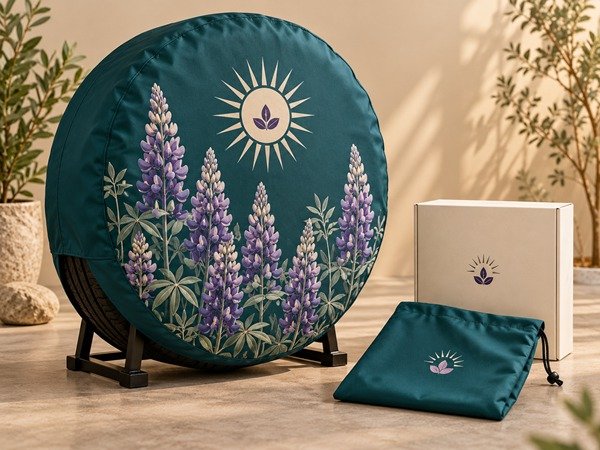
Private Label Means More Than Adding a Logo
Product Specification
Brand Identity
Retail Packaging
Repeat Production
Programs Built for Established Tire Cover Product Lines
Automotive Accessory Brands
RV and Trailer Brands
Dealers and Distributors
Established Ecommerce Brands
Build a Tire Cover Range Around Real Applications

Standard Spare Tire Covers

Vehicle-Specific Covers

Camera-Compatible Covers

RV Tire Covers

Multi-Pack RV Programs

Premium Vinyl Covers

Custom Printed Covers

Dealer and Promotional Covers
Four Ways to Start a Private Label Program
Existing Specification
Key review points include:
- Material availability and required finish
- Tire and vehicle dimensions
- Artwork files and print method
- Packaging and labeling
- Inspection requirements
- Target order volume
Existing Product Improvement
Typical improvement work includes:
- Changing PVC or PU grade
- Moving from 420D to 600D Oxford
- Correcting sidewall depth
- Improving elastic tension
- Reinforcing a camera opening
- Reworking artwork placement
- Building retail-ready packaging
Reference-Based Development
Development normally requires:
- Use-case confirmation
- Tire and vehicle data
- Material positioning
- Pattern preparation
- Digital artwork proof
- Physical sample
- Revision and approval
Exclusive Product Development
A new range can begin with a target vehicle, retail price level, appearance and performance requirement rather than an existing product. Szoneier can help translate those targets into a manufacturable construction.
Development may cover:
- Material platform
- Vehicle fitment
- Camera compatibility
- Branded design details
- Printing
- Packaging
- SKU architecture
- Production standard
The approved Golden Sample becomes the reference used for future manufacturing and inspection.
Choose Materials by Market Position, Exposure and Construction

PVC and PU Serve Different Product Positions
PVC and PU should not be treated as interchangeable versions of “leather.” PVC generally provides a stronger continuous moisture barrier and high wear resistance, making it useful for graphic spare tire covers, dealer products and outdoor programs where water resistance and a structured surface are important. Printable white PVC also provides a suitable base for detailed digital graphics. Premium PVC, matte PVC leather and UV-stabilized grades can move the product toward a more automotive appearance.
PU places greater emphasis on softness, flexibility and low-temperature handling. Premium or matte PU can suit more refined vehicle-specific products where hand feel and surface appearance matter. Szoneier’s material controls distinguish standard PU, premium PU, printable PU, matte PU and textured PU rather than approving material by the word “PU” alone. Matte PU specifications can fall around 0.50–0.70 mm, depending on the selected construction.
Print compatibility must be confirmed on the actual surface. Different PU chemistry can change ink adhesion even when two materials look similar. Printable and long-term program materials therefore require appropriate adhesion, bending, scratch and color checks before approval. PVC and PU selection should finally reflect exposure, required finish, graphic complexity, target cost and product structure rather than a simple “which material is better” decision.

Oxford Specifications Need More Than a Denier Number
Polyester Oxford is central to RV, trailer, fleet and heavy-duty soft-cover programs. Szoneier’s core platform includes 210D, 420D, 600D and 900D, with heavier specialty constructions available where justified. A professional specification cannot stop at “600D.” Weave density, finished weight, back coating, waterproof requirement, UV requirement, color and surface finish all influence performance.
600D Oxford is positioned as a premium mainstream heavy-duty material. Depending on coating, finished weight can sit around 320–400 g/m²; PVC-backed 600D constructions can reach approximately 320–420 g/m². A basic 600D PU-backed specification can be designed around approximately 3,000 mm water resistance, while heavier PVC-backed constructions can target higher protection levels according to the project specification.
Stock black or gray Oxford programs can often begin at relatively modest commercial quantities, while custom-dyed material changes the economics. For 420D, 600D and 900D, stock-color material can support orders around 30–50 pieces, but special dyed colors commonly require material quantities equivalent to roughly 300–500 pieces per color. Special waterproof, UV, flame-retardant or laminated constructions may require larger mill quantities. Material MOQ therefore needs to be separated from finished-product MOQ during quotation.

Marine Vinyl and Specialty Materials Support Premium Positions
Marine vinyl is suited to premium automotive, Jeep, Bronco, outdoor and selected RV products where surface appearance and long-term outdoor performance carry more weight than lowest material cost. It can support automotive grains, premium texture and selected printing systems while creating a more substantial finished product than lightweight printable materials. Standard stocked marine-vinyl options can support relatively flexible production, while special colors, textures or formulations carry higher material minimums.
Szoneier’s material platform also includes printable polyester and PVC for graphic programs, reflective or silver-faced constructions for high-heat applications, and solution-dyed acrylic for premium long-term outdoor positioning. Solution-dyed acrylic should be specified by actual material identity. A generic equivalent must not be marketed under a branded fabric name unless genuine branded material was purchased and traceability is available.
Material selection follows the end use. A high-resolution printed promotional cover does not automatically need 900D Oxford. A premium Bronco cover does not automatically need the same substrate as a four-piece RV storage set. Exposure, print process, fitment, foldability, appearance, order volume and target retail position determine the correct material platform.
Fitment Engineering Protects Reviews, Returns and Brand Reputation
Tire Size Requires Diameter, Width and Construction Control
A tire cover has to wrap around the real tire, not the wheel rim. Two products described by the same wheel diameter can still require different patterns because overall tire diameter, section width, tread profile and sidewall depth vary. Szoneier therefore reviews the complete tire marking or verified dimensions before approving a production pattern. A clear tire-sidewall photograph is often the fastest way to confirm the original specification when records are incomplete.
Pattern development controls front-panel diameter, sidewall depth, elastic channel position and installation tension together. Excess depth can leave a loose, baggy appearance. Insufficient depth can make installation difficult and overstress seams or elastic. Oversized front panels create wrinkles; undersized panels can distort printed artwork and pull camera openings away from their intended position.
Vehicle information is added where fitment is vehicle-sensitive. Model year, spare-wheel carrier and rear-camera configuration can change how a cover sits even when the nominal tire size appears familiar. Szoneier maintains fitment records with verification status so an engineering reference is not silently treated as an already proven exact-fit pattern. Mature patterns require stronger verification than a calculated dimension alone.
Vehicle and Camera Data Must Reach the Pattern
Vehicle-specific development goes beyond creating a folder named “Jeep Cover” or “Bronco Cover.” Production records need enough information to distinguish the tire, generation, year, spare carrier and camera configuration connected with the pattern.
Szoneier’s fitment system uses verification levels. Records can include manufacturer specification verification, Szoneier production verification, measurements supplied from the field or engineering references still awaiting physical confirmation. Patterns with stronger verification can move into a mature exact-fit library, while new combinations remain subject to fitment confirmation.
Camera-compatible products require an additional engineering layer. Vehicle, model year, tire size, camera housing, opening diameter, reinforcement, artwork safe zone, pattern revision and fitment fixture all affect the finished cover. Jeep Wrangler JL/JLU and Ford Bronco 2021+ applications are examples where a centered opening is not enough. The hole has to align after the cover is tensioned around the tire.
Reinforcement also matters. A clean opening in a flat panel may deform once elastic tension and road vibration act on the product. Reinforcement material, binding or stitched support must stabilize the opening without creating a bulky ring or damaging the print area.
Fitment Approval Becomes Part of the Production Standard
Vehicle-fitment samples are used to confirm diameter, depth, elastic, installation, camera clearance and overall fit. For camera applications, approval should also verify the housing, spare mount and any relevant accessories. Artwork must be reviewed on the fitted product because a logo placed correctly on a flat digital proof can shift visually after the material curves around the tire.
A physical revision is required when changes involve size, construction, material, camera position or fit. Logo text, minor color adjustments or artwork scale can often be corrected digitally without rebuilding the complete sample, but dimensional changes should return to physical verification.
Once fitment is approved, the Golden Sample records the accepted relationship between pattern, material, construction, print and camera structure. Bulk production then has a physical reference instead of relying only on a measurement sheet. For established brands managing multiple sizes, controlled pattern IDs and revision history also prevent an old pattern from returning accidentally during a repeat order.
Match Printing Method to Material, Artwork and Volume
Digital Printing Handles Detailed and Variable Graphics
Digital printing is the most flexible route for photography, illustrations, gradients, multi-color graphics and short artwork runs. Printable PVC and selected printable polyester structures can accept detailed full-color graphics without separate screens for each color. Digital printing can technically support very small quantities on approved stocked materials, making it useful for development samples, graphic testing and programs containing many designs.
Production approval still requires more than an attractive digital file. Resolution, color, artwork size, print position, surface compatibility and final curvature have to be considered. A large logo crossing the edge of a round panel may look centered on the artwork file but distorted after sewing. Camera-compatible designs also require a protected artwork zone around the opening.
Outdoor performance depends on the complete system: substrate, ink, surface preparation, adhesion, curing and exposure environment. Claims such as “never fades” are not appropriate for products exposed continuously to sunlight and weather. High-UV markets should use material and print systems selected for the intended exposure rather than assuming a high-resolution print automatically provides high outdoor durability.
Screen Printing Rewards Repeated Simple Branding
Screen printing is particularly effective for repeated dealer logos, fleet identification, club marks and private-label graphics with a limited number of solid colors. Szoneier’s platform can print on PVC, PU, vinyl, 210D, 420D, 600D, 900D, polyester, canvas and other validated surfaces using the ink system matched to the material.
The strongest cost position normally appears in repeated volume. One to four colors are the most efficient range, although more colors are possible with additional screens and registration work. A standard printing area can reach approximately 900 × 900 mm, with special large frames around 1,200 × 1,200 mm where the artwork and product structure permit.
The technical MOQ can begin around 30 pieces, while the economic advantage becomes much clearer around 100 pieces and above. One-color programs may become economical around 50 pieces; two-color programs around 100 pieces; three-to-four-color projects commonly fall in the 100–300-piece range. Higher color counts are normally evaluated against digital printing rather than forcing screen printing into a design where it no longer makes commercial sense.
Sublimation and Artwork Control Serve Polyester Programs
Sublimation is well suited to compatible polyester structures where the design requires vivid color, fine detail, large printed areas and flexibility after folding. Szoneier’s production platform includes a 64-inch Epson SureColor F9570/F9570H dye-sublimation system, giving the process enough working width for large tire-cover graphics and other sewn-product panels.
Because the color is transferred into compatible polyester rather than forming a thick surface ink film, the result remains flexible and can work well for full-surface art, gradients, landscapes and graphic collections. Standard sublimation programs can be economical from roughly 10–30 pieces, depending on material and artwork setup.
Artwork engineering remains important regardless of print method. Files are reviewed for front-panel printable area, edge safe zone, stitching safe zone and camera safe zone. Approved proof and Golden Sample become color and position references. DTF or other transfer methods may have value for selected small logos, but they are not automatically the first choice for large tire-cover surfaces exposed outdoors. Process selection follows the material and intended use.
Construction Details Decide Fit, Durability and Finished Appearance
Sidewall Depth and Retention Must Work Together
A tire cover remains in position because the front panel, sidewall depth and retention structure work as a system. Elastic should create enough tension to hold the cover securely without forcing installers to overstretch the seam. The elastic channel must also remain consistent around the circumference; local tight spots can twist the cover, while weak sections create a loose edge.
Material changes can alter the required construction. A stiff PVC sidewall behaves differently from soft PU or flexible Oxford. Heavier 600D or 900D fabric can require different seam handling from lightweight printable polyester. Szoneier reviews material thickness, flexibility and finished circumference before establishing the production method.
The edge area also affects artwork. Important text and logos should stay away from curvature, wrapping and stitching zones. A design extending too close to the perimeter may disappear visually after installation even when the printed panel was correct before sewing.
For private-label programs containing multiple tire sizes, retention settings should not be copied blindly from the smallest or largest pattern. Each size needs enough sidewall coverage and elastic recovery to achieve the intended appearance. Approved fit samples provide the most useful reference for tension and installation feel.
Reinforcement Protects Camera Openings and Stress Points
Camera openings, webbing ends, elastic joints, handles, straps and attachment points concentrate mechanical stress. Reinforcement should therefore be designed into the construction before bulk production rather than added only after tearing appears in testing or use.
Camera-compatible covers can use reinforcement patches, binding and controlled stitching around the opening. The reinforcement has to stabilize the hole while leaving enough clearance for the camera housing. An oversized stiff patch can interfere with fit; an undersized patch may not distribute tension effectively. Artwork safe zones also have to account for the final reinforcement footprint.
Szoneier uses industrial sewing methods suited to vinyl, Oxford, webbing and reinforced structures. Computerized bartacking can be used at selected high-stress points such as elastic joints, webbing, straps, camera-hole reinforcement and labels. The standard bartack working area is approximately 40 × 30 mm, with templates adjusted according to the component.
Reinforcement material itself can include PVC, PU leather, webbing, EVA or other approved components. Component selection should match the main substrate in stiffness and outdoor behavior rather than creating a patch that ages differently from the surrounding cover.
Binding, Webbing, Labels and Brand Details Need Control
Accessories are often the smallest items on the BOM but can create highly visible variation. Binding width, webbing type, elastic, label placement, patch dimensions and thread appearance should therefore be defined before bulk release.
Industrial hot-knife cutting can process polyester webbing, elastic, binding tape and nylon while heat-sealing suitable edges to reduce fraying. Binding equipment controls finished edges around selected structures, including reinforcement and camera openings. Heavy-duty walking-foot sewing is suitable for multi-layer vinyl, Oxford and webbing where synchronized feeding helps reduce shifting and wrinkles.
Private-label elements can include woven labels, printed labels, logo patches, care information or internal identification. Their placement should not interfere with fitment, camera hardware or the visible graphic. A premium automotive product may require a discreet label and clean external surface, while a dealer or promotional program may intentionally use a more visible brand patch.
Accessory approval becomes part of the Golden Sample. Replacing elastic, webbing or binding with a visually similar component can still change fit or durability, so repeat production should follow the approved component specification rather than purchase by appearance alone.
Turn the Cover Into a Retail-Ready Branded SKU
Folding and Surface Protection Come Before Decoration
A tire cover is a flexible sewn product, so packaging is designed around folding, creasing, moisture, dust, print-surface protection, carton volume and international shipping cost rather than impact protection alone. A premium vinyl surface should not be folded carelessly across a visible front area if the crease may remain obvious after unpacking. Printed surfaces also need to stay clean and separated from abrasive carton contact.
Standard transparent polybags can be produced in PE, LDPE, CPP or related constructions according to clarity, sealing and print requirements. Common export polybag thickness sits around 0.04–0.08 mm, approximately 1.6–3.1 mil. Finished packaging is checked for cleanliness, contamination, sealing and barcode readability where applicable.
Multi-piece RV programs add another requirement: set integrity. A four-piece package must contain four correct covers before sealing. Size, color, branding and quantity should be verified as a set rather than assuming four pieces taken from a bulk pile are identical.
Folding method should therefore be part of the packaging specification. The same product packed for a warehouse master carton, Amazon unit or premium retail display may use different folding and protection arrangements.
Branded Packaging Builds the Private Label Presentation
Private-label packaging can move from a simple clear bag with branded label to printed polybags, reusable zipper bags, storage bags, mailer boxes, retail boxes, hang tags, inserts or gift packaging. The correct level depends on retail price, channel and order quantity.
A branded polybag can carry the logo, brand name, product name, website, warning information, recycling information and barcode area. Simple screen printing or applied label solutions can often begin around 100 pieces, while fully printed custom bags commonly require approximately 500–1,000 pieces or more, depending on bag size, material, color count and printing supplier.
Packaging MOQ therefore needs to be quoted separately from the tire cover. A 300-piece product order may be commercially workable while a unique printed bag or custom box requires a larger packaging run. Szoneier can propose a lower-volume branded label or insert solution when producing excess custom packaging would create unnecessary inventory.
The objective is a coherent brand presentation without forcing packaging components into uneconomical quantities.
SKU, Barcode and Carton Control Protect Fulfillment Accuracy
Formal private-label programs can connect each SKU with a defined fold method, inner packaging, label, barcode, insert, carton quantity, carton dimension and gross weight. Such controls become increasingly important when a range contains several tire sizes, graphics or multi-pack configurations.
Amazon-bound products may require unit packaging, set preparation, suffocation warnings, barcode or FNSKU where required, carton labeling and inspection before dispatch. Distributor programs may place more emphasis on carton efficiency and clear SKU identification. Dealer orders may use branded inserts or display-ready packaging.
Packing verification should confirm the product before the carton is closed. A perfectly manufactured tire cover packed under the wrong barcode can create the same commercial damage as a production defect.
For long-running programs, the packaging specification should be version-controlled alongside artwork and product specifications. Changes to a barcode, insert or carton quantity need controlled release so older packaging does not reappear during replenishment.
Use Sampling to Lock the Standard Before Production
Digital Proofs Resolve Artwork Before Physical Production
A digital sample can establish artwork position, size, camera opening, text, color direction and layout before materials are cut. A first digital version can generally be prepared within 1–3 working days, depending on artwork complexity.
Digital approval is especially useful for preventing avoidable physical revisions. Logo size, text position, graphic scale and some color corrections can be adjusted digitally without rebuilding a complete sewn sample. Camera-compatible graphics can also be checked against the planned safe zone before printing.
Digital proofing does not replace a physical sample when the decision involves fit, material, construction or camera clearance. A flat render cannot prove how a heavy vinyl sidewall wraps around the tire, how elastic feels during installation or whether a camera reinforcement sits correctly against the vehicle.
Artwork files should therefore progress from digital proof into the appropriate physical verification stage. Approved artwork version numbers remain linked with the sample record, preventing an earlier file from being used accidentally after a revision.
Physical Samples Confirm Material, Pattern and Construction
A basic custom sample normally requires around 5–7 working days once the required material, size and artwork are ready. Camera-compatible samples generally require around 7–10 working days, while complex developments may require 10–15 working days.
Physical sampling can confirm size, material, print, logo, accessories, construction and packaging together. A vehicle-fitment sample adds diameter, depth, elastic tension, installation, camera clearance and spare-wheel configuration to the review.
Every meaningful revision should be recorded. Sample V1 may establish the first construction. V2 might change logo scale. V3 could revise a camera opening or sidewall depth. A dimensional, construction, material, camera or fit change normally requires another physical sample because the change can affect how the product behaves after installation.
Existing production samples can often be dispatched in 1–2 working days when a brand only needs to inspect general manufacturing quality before starting a custom project. Such samples demonstrate capability but do not replace a project-specific approval sample.
The Golden Sample Becomes the Bulk Production Standard
The Golden Sample is the approved physical reference for production, inspection and final acceptance. It records the agreed material, size, color, print, sewing, camera structure and packaging rather than serving as a showroom sample.
Production teams compare the bulk product with the Golden Sample. Quality teams use the same approved reference when evaluating appearance and construction. Brand teams can retain an approved unit for incoming inspection or supplier comparison.
Sample records can include project number, date, version, material, size, artwork, camera requirement, packaging, revision and approval status. Such records become valuable when the first order is repeated months later or expanded into new sizes.
The strongest private-label program does not rely on memory from the development stage. Pattern, artwork, material and packaging standards remain documented after launch. A requested change then becomes a controlled revision with a clear reason, approval status and effective production version.
One Coordinated Manufacturing System From Development to Release
Engineering Gate
Controlled Production
Shipment Release
Dedicated Functions Support Multi-SKU Private Label Programs

Project Management

Product Engineering

Artwork and Prepress

Quality Control

Global Fulfillment
Control Bulk Quality Against Approved Specifications, Not Assumptions
Incoming Material Control Starts Before Cutting
Bulk quality can be lost before sewing begins. Color variation, coating defects, incorrect weight, width variation, stains, holes, creases and surface problems can all enter the product if incoming material is not inspected before cutting.
Szoneier’s material inspection platform includes three fabric and vinyl inspection machines with a working width up to approximately 2,200 mm. Individual inspection capacity is around 800–1,500 meters per hour, with length measurement control around ±0.5% and width inspection accuracy around ±2 mm. Materials covered by the inspection process include polyester, Oxford grades, PVC-coated polyester, PU-coated polyester, marine-grade vinyl, printable materials and lining fabrics.
Material relaxation is also relevant for selected textile structures. Roll tension created during storage and transport can influence cut dimensions after the fabric is released. Relaxation helps reduce panel shrink-back, circumference variation, asymmetry and artwork or camera-position shifts before cutting.
Approved material specifications should therefore identify more than a trade name. Color, finish, coating and relevant physical requirements remain part of the receiving standard for repeat production.
Process Control Protects Pattern, Printing and Sewing
Cutting and sewing quality are connected directly with fitment. A pattern can be correct in CAD yet become inaccurate if fabric tension, panel alignment or seam allowance varies during production. Front panel, sidewall, elastic channel, reinforcement and camera structure all need production controls appropriate to the material.
Printing is checked against approved artwork for position, scale, color direction and visible defects. Depending on process, inspection may also include adhesion, cure, scratch resistance and surface condition. Material and ink compatibility is treated as a system rather than assuming one ink performs equally on PVC, PU, Oxford and polyester.
Sewing inspection focuses on panel alignment, seam consistency, binding, elastic channel, reinforcement and visual appearance. Heavy vinyl or multi-layer Oxford can shift if feeding is not controlled; industrial walking-foot equipment is used where synchronized material feeding is needed.
Camera-compatible products require additional attention because small positional errors become visible immediately on the installed vehicle. Hole center, diameter, reinforcement and surrounding artwork need to remain connected with the approved pattern.
Final Inspection Includes Packaging and Shipment Release
Final inspection compares finished products with approved specifications and the Golden Sample. Size, appearance, print, sewing, camera structure, elastic, labels and packaging can all be included according to the project standard.
Packing inspection checks whether the correct SKU entered the correct bag or box, whether multi-piece sets contain the full quantity and whether barcodes or labels are readable. Carton quantity and shipping instructions are reviewed before goods are released.
A large brand may also require third-party inspection. Szoneier can support inspection arrangements by providing the production specification, Golden Sample reference, carton information and access required for the agreed inspection scope.
Shipment release remains a separate control point. A completed sewing operation does not equal an approved shipment. Critical issues need closure before release even when a delivery schedule is tight, because shipping an unresolved error simply moves the cost from the factory to the market.
Understand MOQ by Product, Material, Printing and Packaging
Finished-product quantity is only one part of MOQ. Special material colors, printing methods and branded packaging can each create an independent production minimum.
| Requirement | Typical Quantity Range | Planning Note |
|---|---|---|
| Existing production sample | 1 pc | Stock sample can normally ship in 1–2 working days |
| Basic custom sample | 1 pc | Usually 5–7 working days |
| Camera custom sample | 1 pc | Usually 7–10 working days |
| Standard OEM program | 300–500 pcs | Common range for established branded production |
| Volume program | 1,000–5,000 pcs | Dedicated material and production planning becomes more important |
| Contract program | 10,000 pcs+ | Annual or large retail planning normally requires dedicated scheduling |
| Stock-color 420D/600D/900D | About 30–50 pcs | Depends on available approved material |
| Custom-dyed Oxford | About 300–500 pcs/color | Material mill MOQ can control final project MOQ |
| Digital printing | From 1 pc technically | Best for full color, photo, gradient and complex graphics |
| 1-color screen print | About 50 pcs economically | Setup cost becomes more efficient as volume rises |
| 2-color screen print | About 100 pcs | Registration and screen count affect cost |
| 3–4 color screen print | About 100–300 pcs | Often suitable for repeated brand graphics |
| Fully printed branded polybag | Commonly 500–1,000 pcs+ | Varies with bag size, material and color count |
| Simple branded label/bag solution | About 100 pcs+ | Useful when full custom packaging MOQ is too high |
A quote should therefore separate finished-product MOQ, material MOQ, printing MOQ and packaging MOQ. Such separation prevents a seemingly simple 300-piece order from being delayed because one custom color or packaging component requires a much larger upstream run.
Repeat Orders Need Version Control and Reserved Standards
Approved Specification
Golden Sample
Revision Control
Faster Replenishment
Choose Fulfillment Around Your Sales and Inventory Model

Brand Warehouse Delivery

Amazon FBA Programs

One-Piece Blind Fulfillment
Private Label Programs With Measurable Production Decisions
720-Piece 4x4 Vehicle-Specific Program
A representative 4×4 accessory program can begin with 720 tire covers across six SKUs, combining Jeep and Bronco applications rather than ordering one universal construction. The collection can separate standard vehicle-specific models from camera-compatible versions so engineering requirements remain visible in the SKU structure.
A suitable development route starts by verifying actual tire sizes and vehicle configuration. Premium PVC can serve the main branded assortment, while selected premium variants can move into marine vinyl where a stronger automotive finish is required. Camera applications receive separate pattern and reinforcement records instead of sharing a hole position with standard covers.
Brand graphics are reviewed against front-panel dimensions and camera safe zones. A repeated one- or two-color dealer-style mark can use screen printing where volume supports setup cost, while a more complex graphic SKU can use a digital process on a compatible substrate.
Sampling begins with digital artwork proof, followed by fitment samples for the vehicle-sensitive SKUs. Approved versions move into Golden Samples. Packaging can use branded polybags, individual SKU labels and barcode areas rather than forcing a custom retail box into an order volume where packaging MOQ would be inefficient.
The program is then inspected by SKU so a correct total quantity cannot hide a shortage or fitment mix-up within one vehicle application.
480-Piece Premium RV Multi-Pack Program
A representative RV program can contain 480 individual covers, packed as 120 four-piece sets. A four-piece configuration changes the manufacturing requirement because the product must be controlled both as individual covers and as a complete retail set.
A premium mainstream specification can use 600D polyester Oxford with the coating selected according to the required weather position. Stock black material keeps material MOQ under control, while a simple repeated brand logo can be screen printed. A complete 600D specification records more than denier: finished material weight, coating, water-protection requirement, color and finish remain part of the approved material reference.
Sampling checks cover diameter, sidewall depth, elastic tension, sewing and print appearance. A Golden Sample set can also confirm how four pieces are folded and arranged in packaging.
For 120 sets, fully printed custom boxes may not be commercially sensible if the packaging supplier requires a larger run. A reusable storage bag, branded insert, label or simpler branded outer bag can provide stronger brand presentation without creating hundreds of unused boxes.
Packing QC verifies 4 pieces per set, correct logo, consistent size and the right set label before carton packing. Carton quantity is then planned around shipping volume and warehouse handling rather than simply filling the largest carton available.
96-Piece Graphic Launch With One-Piece Replenishment
A representative graphic-led program can start with 96 pieces across multiple artwork designs to establish photography, merchandising and initial stock, then move selected designs into one-piece blind fulfillment after launch.
Printable PVC or approved printable polyester can support high-color graphics without screen setup for every design. A digital proof establishes art scale, position and safe zones before the physical sample is printed. One approved construction can support multiple graphics as long as material, pattern and manufacturing specification remain unchanged.
The initial 96-piece order can be separated by tire size and artwork SKU. Each finished product receives the correct brand packaging and identification before shipment to the brand’s warehouse. Designs selected for ongoing dropshipping can then move through a one-order, one-cover workflow with unit-level QC and blind shipping.
Such a structure avoids treating every graphic as a separate product-development project. The underlying tire-cover specification remains controlled while artwork is managed as a variable layer.
The approach is useful for brands that want a broad visual catalog but prefer bulk investment only in proven designs. Graphic versions can later graduate into larger replenishment runs without rebuilding the underlying product specification.
Evaluate Manufacturers With Evidence Before Awarding a Program
A reliable sourcing review should ask for evidence connected with the actual product. Factory claims matter less when fitment, material, samples and QC cannot be demonstrated.
| What to Verify | Why It Matters | Evidence Worth Requesting |
|---|---|---|
| Tire-size control | Reduces loose, tight or incorrectly graded covers | Size records, pattern IDs, fit samples |
| Vehicle-specific capability | Prevents generic fit being sold as exact fit | Vehicle data, installed sample, revision record |
| Camera engineering | Protects camera clearance and opening durability | Hole dimensions, reinforcement detail, fit verification |
| Material specification | Avoids relying on “600D” or “PU” alone | GSM/thickness, coating, finish and approved material record |
| Print compatibility | Reduces peeling, cracking or avoidable color problems | Printed sample, adhesion checks, approved process |
| Golden Sample control | Creates a common bulk-production reference | Approved physical sample and sample version |
| Packaging specification | Protects SKU and retail presentation | Bag/box spec, barcode position, set configuration |
| Bulk QC | Reduces variation between sample and shipment | Inspection criteria and final QC record |
| Revision control | Prevents old patterns or artwork returning | Pattern/artwork version history |
| Fulfillment capability | Keeps finished SKU connected to final channel | Carton, barcode, FBA or warehouse shipping plan |
A strong manufacturer should be able to explain how information moves from specification into sample, production, inspection and shipment. Ask for evidence around the product being sourced rather than relying only on general certificates, factory photographs or marketing statements.
Private Label Tire Cover Frequently Asked Questions
Yes. An existing specification, sample, drawing, photo set or technical file can be reviewed against available materials, construction, fitment and production methods. Differences are identified before sampling. If the reference contains a fit or construction problem, Szoneier can also propose corrections instead of reproducing the problem automatically.

Start Your Private Label Tire Cover Program
A useful quotation starts with enough information to define the product, not a long form filled with details unrelated to manufacturing. Send the core requirements available today, even if the specification is not complete. Szoneier can review the information and identify which items need engineering confirmation before sampling.
For the first review, include:
- Product:spare tire cover, Jeep/Bronco cover, RV cover, trailer cover or another structure.
- Fitment:tire size, vehicle/model year and camera configuration where relevant.
- Quantity:estimated total pieces, number of sizes and number of artwork SKUs.
- Material:preferred PVC, PU, Oxford, marine vinyl or performance target if undecided.
- Branding:logo, artwork, Pantone reference or existing product photos.
- Packaging:polybag, branded bag, retail box, barcode, insert, FBA or warehouse requirement.
- Timing:sample deadline, launch date and expected replenishment schedule.
- Files:artwork, drawings, tire-sidewall photos, reference samples or packaging examples.
