 Skip to content

Custom Tire Covers for Tire Dealers
- Dealer programs commonly run from 50-500 pieces, with larger replenishment programs available after specifications are locked.
- Standard samples are typically completed in 3-5 working days after artwork, size, material, and construction are confirmed.
- Programs can cover Jeep, Ford Bronco, RV, trailer, SUV, 4×4, and other rear-spare applications with separate size and SKU control.
- Szoneier supports dealer logos, full-color graphics, camera-compatible development, private-label packaging, bulk production, and international fulfillment.
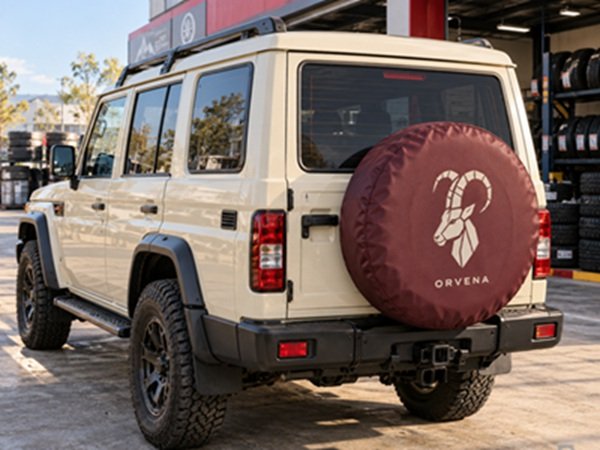
What Tire Dealers Need From a Cover Manufacturer
Dealer Program Fit
Controlled Repeat Supply
Turn Delivered Vehicles Into Ongoing Dealer Brand Exposure
Delivery Gift
Moving Brand Visibility
Resale And Upsell
Service And Fleet ID
Six Dealer Problems That Cause Returns And Rework
- Review Your Risks
Mixed Tire Sizes
Wrong Camera Clearance
Logo Distortion
Inconsistent Reorders
Packaging Confusion
Unstable Lead Times
Tire Cover Programs Built Around Different Dealer Sales Models

Standard Dealer Logo
- Best for: routine vehicle delivery and promotions
- Common focus: visibility, cost, mixed sizes, repeat supply

Premium Automotive
- Best for: premium delivery gifts and accessory upgrades
- Common focus: appearance, fit, outdoor exposure, brand consistency

Jeep And Bronco Camera
- Best for: Bronco and selected Jeep programs
- Common focus: camera view, reinforcement, logo safe zone, installed appearance

RV Dealer Gift
- Best for: RV, camper, travel trailer, fifth-wheel programs
- Common focus: UV, weather, size families, bulk logo production

Trailer Dealer Program
- Best for: trailer dealerships and accessory programs
- Common focus: durability, pack configuration, logo, inventory control

Private Label Retail
- Best for: dealership retail shelves and dealer groups
- Common focus: brand presentation, SKU structure, packaging, replenishment
Fitment Engineering For Mixed Vehicle And Tire Inventories
Actual Tire Size Comes Before Vehicle Name
A common sizing error is using wheel diameter as cover diameter. A 17-inch wheel does not require a 17-inch cover. For example, a 285/70R17 tire has a theoretical overall diameter of about 32.7 inches, so it generally enters a 33-inch cover platform before final fitment confirmation. The actual tire, brand variation, tread profile, and spare-carrier arrangement can still justify a measurement check.
The release sequence should therefore move from vehicle and year to actual tire sidewall, theoretical outside diameter and width, actual measurement when needed, spare carrier, camera configuration, pattern, material, and final production file. A photograph of the tire sidewall and the rear of the vehicle can resolve uncertainty faster than relying on a model name alone. For dealer groups, storing the confirmed input with the released SKU also reduces repeated measurement questions when the same configuration returns for replenishment.
Multi-Size Orders Need Separate Pattern And SKU Control
Szoneier can assign a separate SKU or internal production reference to each dealer size. The record can connect tire sidewall or finished diameter, pattern revision, artwork version, material, camera requirement, and packaging mark. During cutting, the pattern used for a 30-inch platform should not be interchangeable with a 33-inch or 35-inch platform. During packing, the folded product should carry enough identification for warehouse staff to separate sizes without unfolding every cover.
Logo scale also deserves separate review. A logo that occupies the right visual proportion on a 30-inch cover may look undersized on a 35-inch cover. For one dealer identity across several diameters, the artwork can be adapted by size while preserving the approved brand relationship. The result is one coordinated dealer program with multiple controlled SKUs rather than several unrelated custom jobs. Packing and carton identification should follow the same SKU logic, allowing receiving teams to separate sizes without reopening every unit.
Aftermarket Tires And Camera Systems Require Extra Confirmation
Camera-equipped applications add another layer. Szoneier checks the actual tire, camera position, camera housing, carrier structure, opening size, reinforcement, and artwork safe zone. A Bronco camera program should not automatically reuse a Jeep camera pattern, and a modified spare carrier may change the relationship between the tire and camera assembly. When the program is new, a fitment sample or verified reference should be approved before bulk release.
A disciplined dealer workflow does not make fitment complicated; it makes uncertainty visible early. The dealership can submit a vehicle list, tire sidewall data, photographs, and camera notes. Szoneier converts the information into a controlled size and pattern plan before production, reducing the chance that size errors become returns after delivery. The same record also gives sales, warehouse, and replenishment teams a common reference when a vehicle arrives with a tire change that differs from the original order assumption or when a branch requests the same configuration again.
Build A Dealer SKU Matrix Before Production Starts
A simple matrix connects each size, vehicle application, camera requirement, material, artwork version, and package mark before purchasing, cutting, and packing begin.
Dealer SKU | Application Reference | Tire Input Required | Camera | Recommended Product Direction | Artwork Control | Packaging Mark |
DL-30 | Compact rear-spare SUV | Actual sidewall + width | No | PVC / printable PVC | Size-specific logo scale | 30 platform + SKU |
DL-32 | Jeep / SUV program | Actual sidewall + photo | Verify | Premium PVC / 600D | Logo version by diameter | 32 platform + SKU |
DL-33 | Jeep JL/JLU or similar | Actual sidewall + year | Verify | Premium PVC / PVC leather | Camera safe zone if used | 33 platform + SKU |
DL-35 | Bronco / off-road program | Actual sidewall + carrier | Often | Marine vinyl / premium PVC | Camera-aware artwork | 35 platform + SKU |
RV-S | RV single spare | Tire sidewall + measured OD if needed | No | 600D / PVC | Dealer logo | Size + dealer code |
RV-4P | RV four-pack | Wheel/tire list + pack count | No | 600D / 900D | Dealer logo | Set quantity + size |
TR-DUAL | Dual-axle trailer | Tire size + axle configuration | No | 600D / 900D | Dealer / fleet logo | Pair/set identification |
Final fitment is released from actual tire and project data; vehicle examples are reference categories, not universal fit claims.
Camera-Compatible Covers Need More Than A Center Cutout

Bronco Camera Fit
- Confirm: model year, sidewall, rear photo, camera/carrier
- Control: opening, reinforcement, center, logo safe zone

Jeep Camera Fit
- Confirm: generation, tire size, carrier, camera structure
- Control: fit, opening position, seam strength, installed appearance

Artwork Safe Zone
Camera compatibility affects design as much as sewing. A dealer logo, website, phone number, or QR element can lose readability if placed too close to the opening or hidden by the camera housing. Production artwork should show the safe zone before printing. For multi-size programs, the safe zone and logo scale can be adjusted by SKU so the brand remains balanced across the dealer range.
- Review before print: visible diameter, opening zone, seam boundary
- Approve before bulk: digital proof, sample, final artwork version
Materials Selected For Dealer Positioning, Climate And Order Volume

Premium PVC And PVC Synthetic Leather
- PVC synthetic leather adds a more automotive surface and should be described accurately as synthetic leather rather than genuine leather. Szoneier’s standard PVC leather range is typically about 0.55-0.75 mm thick with approximately 550-750 g/m2 material weight, depending on backing and finish. Available surface directions can include automotive grain, leather grain, pebble grain, fine grain, matte, and semi-matte. Internal material targets can include waterproof performance at or above 8,000 mm and UV exposure targets around 300-500 hours for standard grades, with higher outdoor specifications available for selected premium materials.
- Dealer programs should not select PVC only because it is familiar. The decision should consider climate, expected outdoor duration, logo method, target price, and brand level. A high-volume one-color dealership logo can favor screen printing, while a full-color automotive graphic can favor latex or UV digital printing on a compatible surface. The material and print process should be released together, because a premium material with the wrong print method can still produce a weak finished product.

Marine-Grade Vinyl For Premium Automotive Programs
- The advantage is not simply “thicker is better.” Marine vinyl should be chosen when its surface stability, outdoor formulation, visual finish, and intended service environment justify the additional material cost. For a dealer handing out a simple promotional cover on lower-cost inventory, premium vinyl may add cost without adding enough commercial value. For a premium Bronco accessory package, branded off-road delivery, or marine dealer program, the same material can support a stronger product position and better visual match with the vehicle.
- Szoneier reviews color, grain, backing, print compatibility, folding behavior, seam construction, and expected outdoor exposure before approval. Premium materials can also have higher supplier minimums for special colors or textures, so a program using a standard stock color may start at a lower commercial quantity than one requiring a custom color formulation. Material selection is therefore connected to the full order plan, not separated from MOQ and artwork decisions.
- For dealership teams comparing materials, the useful question is not “Which material is the strongest?” A better question is “Which material delivers the required appearance, outdoor performance, print result, and replenishment economics for the vehicles being sold?” That approach prevents over-specification on entry programs and under-specification on premium ones.

420D And 600D Oxford For Commercial Dealer Programs
- For large, simple dealer logos, 420D or 600D combined with screen printing can create an efficient program. A one-color or two-color logo is particularly suitable when quantities justify screen preparation. For full-color artwork, ordinary dark Oxford is not automatically the right substrate; white printable or sublimation-compatible polyester Oxford is more suitable when the design contains photographs, gradients, or broad color areas. Trying to force detailed full-color graphics onto a rough, dark, untreated surface can reduce clarity and color accuracy.
- RV and trailer applications often favor 600D because the market expects outdoor protection, simple handling, and a more fabric-oriented cover. Pack formats such as single wheel, two-pack, four-pack, dual axle, or triple axle can also influence structure and material use. The same dealership may therefore use premium PVC on rear-spare vehicles and 600D on RV or trailer lines without creating a contradiction. Different products serve different use cases.
- Szoneier reviews the program by vehicle category, climate, artwork, quantity, pack configuration, and target price. A dealer group can keep one visual identity while using different material platforms under a controlled specification. The goal is consistent branding with product construction appropriate to the vehicle family.

When 900D Or Specialty Materials Make Sense
900D is useful where higher abrasion resistance, heavier construction, or a premium heavy-duty position is justified. Fifth-wheel, toy-hauler, commercial trailer, long-term storage, and more demanding fleet programs are common areas where 900D may be evaluated. It should not be promoted as an automatic upgrade for every dealer order. Added weight, cost, sewing demand, folding volume, and shipping density can outweigh the benefit when the end use does not require it.
- Specialty options can include reflective structures, UV-focused materials, coated polyester, marine vinyl, premium PVC, TPU or silicone branding, woven patches, and other constructions selected for a defined purpose. A high-UV market may require a different material direction from a temperate indoor-display program. A boat-trailer dealer near salt-air and humid environments may prioritize water resistance and marine-oriented material selection. A fleet program may value identification consistency and replacement supply more than premium hand feel.
- Material approval should be documented. Szoneier can classify project materials by approval status and retain the material identity used for released production. Repeat orders then start from the approved material reference, while a new lot is checked again before use. The process helps prevent a common supply problem in which a replacement material looks similar but changes print color, hand feel, coating performance, or sewing behavior.
- A dealer program gains more value from disciplined selection than from a long material list. Szoneier narrows the options to the few combinations that match the required use, brand level, artwork, order size, and outdoor environment, then verifies the chosen material during sampling.
Dealer Logo Artwork Must Be Engineered For A Round Product
From Rough Logo Files To Production Artwork
Szoneier can begin with AI, EPS, SVG, PDF, PSD, PNG, JPG, a phone photo, screenshot, business card, old tire-cover photo, or another usable brand reference. The artwork team does not simply paste the file into a circle. It prepares print-ready production artwork around the finished cover diameter, visible area, edge wrap, seam zone, material color, print method, and installed appearance.
- Vector files are preferred when available because lettering, line art, and logos can be scaled without losing edge quality.
- Raster files can still be workable when the resolution and source quality are sufficient.
- Fonts may need outlining, linked images may need embedding, and colors can be converted or matched to a defined target where the dealer provides a Pantone reference.
- When the source is too weak for reliable reproduction, the issue should be identified before sampling rather than hidden until printing begins.
Small details deserve particular attention. A website address that looks large on a monitor can become unreadable once placed on a 30- or 33-inch circular surface and viewed from several meters away. Thin lines can lose definition on textured material. QR codes need enough clean area and contrast to remain scannable after printing and curvature. Dealer artwork therefore needs a production review based on the physical product, not only graphic appearance. The released file becomes a controlled artwork version. Any later change to phone number, website, branch name, logo, legal line, or campaign message should create a new revision instead of overwriting the approved reference. That simple discipline protects repeat orders and multi-location dealer programs.
Scale Logos Across Multiple Tire Sizes
A multi-size dealer order should not use one logo size blindly across every cover. The visible proportion changes as the finished diameter changes. A graphic that is balanced on a 30-inch cover may look too small on a 35-inch cover, while a graphic scaled too aggressively can move into the edge wrap or become distorted after installation.
Szoneier can build a coordinated size family in which the logo relationship remains visually consistent while the actual artwork dimensions change by SKU. Dealer name, city, website, phone number, service line, and campaign copy can be treated as separate elements so each can be adjusted for reading distance and available space. The layout can also account for a camera opening, center hub, seam boundary, or other reserved area.
For a dealership group, artwork control becomes even more important. One master brand may need branch-specific versions with different city names, contact details, QR destinations, or sales messages. The safest approach is a clear naming and revision structure tied to each SKU. Production staff should be able to identify exactly which file belongs to which size and location without relying on email history.
Proof approval happens before bulk printing. A digital mockup shows the intended composition, but a physical print or fitment sample remains valuable when the dealer is approving a new material, new size, new camera arrangement, or important branding program. Once the final visual relationship is approved, the artwork becomes part of the golden-sample record used for future replenishment.
Protect Camera And Stitching Zones
Rear-camera applications create a permanent no-print or limited-print area in the middle of the design. The opening, housing, carrier, reinforcement, and installed camera view can all interfere with a logo if artwork is placed without engineering input. Szoneier creates a camera-aware safe zone so text, logos, QR codes, and fine details remain clear after the cover is installed.
The same principle applies to edge sewing and elastic structures. Graphics placed too close to the outer boundary can disappear around the tire, become distorted by tension, or be partially hidden in the seam. Full-bleed artwork needs enough continuation beyond the visible face to account for wrapping and production tolerance. A centered dealer logo often needs a different approach from a full-color image because the eye notices small changes in centering much more quickly on a simple logo.
Camera-safe artwork is reviewed together with the pattern. A change in tire size or camera pattern can move the available print area, so artwork and fitment should not be treated as separate departments. The final release should show the correct SKU, artwork version, camera zone, and production method in one controlled file set.
Dealer teams do not need to become graphic-production specialists. They need to provide the best source logo available, the vehicle and tire information, the message to be shown, and any brand rules. Szoneier converts those inputs into a production-ready file that can be approved before the physical product enters bulk manufacturing.
Match Printing Method To Logo, Material And Order Quantity

Screen Printing For Repeat Logo Programs
- The commercial advantage is repeatable production at volume. Once the screen setup and color target are approved, a large logo can be reproduced efficiently across a controlled size family. One-color logos usually offer the clearest cost advantage. Two-color logos can remain efficient, while additional colors, gradients, fine photographic detail, or frequent artwork changes may favor a digital process instead.
- Screen printing still needs artwork engineering. Line thickness, negative space, registration, ink system, drying, and the texture of the substrate all influence the result. A fine logo on rough Oxford may need simplification. A very large solid ink area on flexible vinyl may require attention to adhesion and flex. Szoneier approves the print result on the actual material rather than assuming a process will behave the same on every surface.
- For dealer replenishment, the print setup should be recorded with the artwork version and approved color reference. New material lots are checked because even a visually similar substrate can change ink appearance. Stable repeat printing comes from controlled inputs, not from the label “screen print” alone.

Latex And UV For Premium Or Multicolor Graphics
- Latex can provide detailed full-color output on compatible flexible surfaces, while UV can be useful where strong graphic definition and white-ink capability are required. The exact route depends on substrate, flexibility, surface texture, color base, outdoor requirement, and the finished-product construction. Dark materials may require a white layer or a different production approach to keep colors from becoming dull.
- Digital methods are especially valuable when a dealership group wants several branch versions, campaign graphics, or artwork with different phone numbers and QR destinations. Instead of creating a screen set for every variant, the file can be managed digitally with clear version control. The trade-off is that the material and ink system must still be tested for adhesion, scratch resistance, flexing, and outdoor use.
- Premium appearance is not created by printing technology alone. Color management, source artwork, printable surface, curing, trimming, sewing alignment, and final installation all influence the visible result. Szoneier treats printing as one stage inside the complete product process.

Sublimation For Full-Area Polyester Graphics
- A sublimated dealer cover can support lifestyle artwork, scenic graphics, promotional campaigns, or a brand design that uses more than a simple centered logo. For RV, trailer, outdoor, and event-oriented programs, the textile appearance can suit the product category while allowing broad graphic coverage. The image is prepared around the finished cover shape so important elements remain inside the visible area.
- Szoneier reviews source resolution, color, panel size, transfer conditions, and sewing alignment before release. If the product has separate panels, seams, elastic sections, or a camera opening, the artwork needs to account for those features. Full-area graphics should be sampled when color accuracy and alignment are important because a flat printed panel will change appearance after sewing and installation.
- Sublimation makes sense when artwork and material support each other. Choosing it only because the design has many colors can be a mistake if the intended cover requires a different surface, heavier structure, or premium vinyl appearance.

Patches, Embroidery And Premium Branding
- A silicone or TPU patch can give a clean branded badge on selected fabrics or synthetic surfaces. Embroidery can work well on suitable textile areas but may not be the best choice for a waterproof printable face where needle penetration, backing, puckering, or graphic scale becomes a concern. Hot stamping can add a refined mark on compatible synthetic leather surfaces, while woven labels can carry detailed identity in a controlled format.
- MOQ and setup can differ from the base tire-cover quantity because the branding component has its own production minimum. A dealer might be able to order a low quantity of a stock-material cover while a custom molded patch requires a higher component minimum. The commercial plan should therefore separate product MOQ from logo-component MOQ.
- Szoneier compares artwork, material, quantity, durability expectation, and target price before recommending a premium method. The goal is not to use the most elaborate branding option. The goal is to use the method that strengthens the dealer program without adding cost or complexity that the final vehicle owner will not value.
Approve Fit, Print And Construction Before Dealer Bulk Production

Digital Proof Before Physical Sampling
- Dealer projects can move quickly when the specification is organized before a physical sample is started. Szoneier typically reviews artwork in about 2-4 hours once the source file and project inputs are complete, and a digital mockup can usually be prepared in roughly 4-12 hours. The mockup is used to confirm logo placement, proportion, text, color direction, camera safe zone, and visible composition before material is printed.
- A digital proof is not a substitute for every physical sample. It is a fast approval stage that catches obvious layout problems. If a website address is too small, a logo is too close to the edge, a camera hole cuts through the brand mark, or the wrong branch name is used, the correction can be made before material and labor are committed.
- The proof should identify the SKU or size, artwork version, material direction, and any camera requirement. Dealer groups with several locations can approve a master layout first, then review branch-specific versions built from the approved structure. Keeping a clean revision trail prevents old artwork from returning during replenishment.
- Once the visual direction is approved, Szoneier moves to the sample type needed for the project rather than producing a physical prototype by habit.

Fitment And Print Samples
- A standard sample is typically completed in about 3-5 working days after the specification is confirmed. The exact sample route depends on what needs to be validated. A print sample may be enough when the cover construction and size are already proven but the dealer is introducing a new logo or color. A fitment sample is more appropriate when a new tire size, new vehicle platform, camera structure, or modified carrier creates physical uncertainty.
- Fitment approval checks more than whether the cover can be installed. The review looks at tension, side depth, wrinkle level, ease of installation, camera clearance where applicable, edge alignment, and overall appearance. A cover that barely stretches over the tire may be technically installable but still put excessive load on elastic or seams. An oversized cover may flap, wrinkle, or look poor on the vehicle.
- Print approval checks color direction, detail, scale, centering, adhesion, surface interaction, and the relationship between the printed face and sewing. For premium or camera programs, installed photographs are especially useful because they show whether the graphic looks correct in real use.
- Problems found during sampling are documented and revised before release. The objective is not to finish a sample quickly; it is to reduce the risk carried into bulk production.

Golden Sample Controls Reorders
- After fit, print, construction, and packaging are approved, the final sample becomes the production reference. Szoneier treats the golden sample as a production standard rather than a showroom piece. It is linked with material, pattern revision, artwork version, camera requirement, accessories, packaging, and inspection criteria. Photographs, measurements, and approval notes can also be retained where they help distinguish similar sizes or explain a feature that is easy to misinterpret from a written specification alone.
- Bulk production should reproduce the approved result within the accepted tolerance. The first piece is compared with the release information before the line continues. During repeat orders, the same approved references are called back instead of rebuilding the product from memory. New material lots, updated logos, packaging changes, or size additions are reviewed as controlled changes.
- For dealer programs, the golden sample becomes especially valuable when replenishment happens months later. A sales team may remember only the old purchase-order number, while the manufacturing record needs to remember the material, print method, pattern, logo dimensions, stitch construction, packaging label, and QC requirement. The golden sample connects those details.
- Sampling therefore protects both sides of the order. The dealership gains confidence before committing to 100, 300, 500, or more units, and the factory gains a clear reference for repeatable execution.
Dealer Order Quantities Should Match The Program Stage
Final MOQ depends on product structure, material, printing, accessories, packaging, and branding components. The ranges below show common commercial planning levels rather than one universal minimum.
| Program Stage | Common Quantity | Typical Use | Material / Printing Direction | Commercial Notes |
|---|---|---|---|---|
| Dealer trial | 50-100 pcs | One location, new logo, limited vehicle mix | Stock PVC, printable PVC, 420D/600D; digital or suitable screen route | Useful for validating fit, artwork, and local demand |
| Initial rollout | 100-300 pcs | Multi-size dealer launch | PVC, premium PVC, 600D; digital or screen by artwork | Size mix and packaging marks should be fixed before release |
| Standard dealer program | 300-500 pcs | Repeat delivery-gift or accessory program | 600D + screen for simple logos; PVC/vinyl + screen or digital | Strong range for planned replenishment and private-label development |
| Volume replenishment | 500-1,000 pcs | Dealer group, seasonal campaign, larger vehicle mix | Bulk material + volume print route | Screen printing becomes especially efficient for simple repeat logos |
| Packaging component planning | Often 500 pcs+ | Branded polybag, custom insert, selected retail components | Independent packaging MOQ | Packaging MOQ may be higher than tire-cover MOQ |
Stock-material and digital projects can sometimes start lower, while custom colors, specialty coatings, molded branding, or custom packaging can raise the effective minimum.
Packaging Can Carry Size, Brand And Reorder Information

Standard Polybag
- Best for: delivery gifts, bulk dealer inventory, simple replenishment
- Main value: low complexity and clear product identification

Branded Polybag
- Best for: dealer groups and accessory programs
- Main value: consistent presentation without a rigid retail box

Hang Tags
- Best for: retail accessory display
- Main value: product information without changing the main package

Barcode And SKU
- Best for: dealer warehouses and multi-location programs
- Main value: inventory accuracy and reorder control

Dealer Kits
- Best for: branch rollouts and promotions
- Main value: simpler distribution inside a dealer network

Retail Boxes
- Best for: private-label retail and premium delivery packages
- Main value: stronger shelf and presentation quality
Repeat Orders Should Reproduce An Approved Product, Not Memory
Lock The Approved Reference
A repeat order should start by calling back the golden sample, material ID, pattern revision, artwork version, print setting, accessories, packaging specification, and QC standard. Szoneier keeps those elements connected to the project so production teams are not asked to remember how a cover looked several months earlier.
The approved reference matters most when a program contains several sizes. A dealer might reorder 100 units but change the mix from 30/32/33/35-inch platforms according to inventory movement. Each size should remain tied to its own pattern and artwork scale. Replenishment changes quantity, not the identity of the released SKU.
Artwork also needs version discipline. A new phone number, website, branch name, QR destination, or campaign message should create a controlled revision. Old files should remain traceable rather than being silently replaced. The production order must state which version is active.
A mature replenishment process saves time because development work is not repeated unnecessarily. It also protects the dealer from gradual drift in fit, logo position, material appearance, and packaging information across separate production runs. When the quantity mix changes, the released SKU family remains stable and only the required replenishment volumes are updated for the new purchase cycle.
Verify New Material Lots Before Release
Repeat production does not mean automatic release. A new material lot can differ slightly in color, coating, hand feel, surface texture, thickness, print response, or sewing behavior. Szoneier checks the incoming lot against the approved material reference before it enters production. If a supplier, coating, or color changes, the change should be reviewed rather than treated as equivalent without evidence.
Printing receives the same attention. Screen ink, digital output, white layer, curing, and color appearance can shift when the substrate changes. A first print or first piece allows the team to compare the new run with the approved reference before hundreds of units move through sewing and packing.
Fitment control also remains active. A pattern revision used successfully in the previous order should be the starting point, but a new vehicle variation or additional aftermarket tire size may need a new SKU rather than forcing the old pattern to cover a different application.
The rule is simple: repeat the approved product, not only the old purchase order. That approach keeps the speed advantage of replenishment while preserving the controls that made the original order acceptable. If a material substitution becomes necessary, the replacement should be reviewed against the approved performance and visual target before the change is accepted.
Scale Across Dealer Locations
Dealer groups often need one corporate identity with branch-level changes. Location name, phone number, website, QR code, local campaign, or service message can vary while the tire-cover construction stays common. Szoneier can manage those versions as separate artwork records linked to shared material and pattern standards.
A group may also use different vehicle mixes by region. One location may move more Bronco and Jeep products, while another sells RV or trailer inventory. Instead of forcing one universal cover, the dealer program can maintain a controlled family of products and change the replenishment ratio by location.
Packaging can support the same structure. Branch code, SKU, size, barcode, and carton mark make it easier to distribute finished units without opening every bag. For multi-address programs, shipping lists should match the same SKU and version information used in production.
The result is a dealer program that can grow without losing control. New locations, new sizes, or updated artwork become managed additions to an existing system rather than separate custom projects with no shared reference. The same structure also makes annual program reviews easier because each active variant can be traced to an approved product, current artwork file, released packaging specification, and active delivery instructions.
Quality Control Starts Before Sewing And Continues Through Packing
Incoming Material And Print Approval
Quality begins with material identity. Incoming material is checked against the approved project specification before cutting or printing. Depending on the material and program, checks can include thickness, fabric weight, color, surface condition, coating, backing, and print suitability. Material status can be held pending, conditionally approved, approved, premium approved, or rejected based on the project requirement.
Printing is approved before full-volume production. The review considers artwork version, color direction, registration, detail, logo scale, print adhesion, scratch resistance, and the relationship between the graphic and the finished cover. A simple dealer logo is especially sensitive to centering and proportion because small placement errors are easy to see. Full-color graphics add more variables, including white-ink layers, gradients, image detail, and substrate color.
First-piece approval is important because the first completed unit brings printing, cutting, sewing, elastic or fastening, camera work, and final appearance together. An acceptable flat print can still become misaligned after sewing, so the assembled product is checked before the batch continues.
Defects found during incoming, printing, or first-piece review are stopped and corrected before they move into the next stage. The goal is to prevent defect multiplication rather than rely on sorting at the end. For a multi-size dealer run, the approval also confirms that the correct artwork and pattern are paired before larger quantities are released.
Cutting, Sewing And Camera Checks
Cutting accuracy establishes the shape and side depth of the cover. Szoneier uses controlled patterns and CNC cutting routes for applicable production, supported by automatic spreading, low-ply or multi-ply cutting, hydraulic cutting, hot-knife cutting, and pattern references according to material and quantity. Pattern revision must match the released SKU before cutting begins.
Sewing uses industrial equipment suited to flexible and outdoor products, including heavy-duty walking-foot, cylinder-bed, double-needle, overlock, binding, bartack, and programmable pattern-sewing equipment. Equipment choice depends on seam type, reinforcement, elastic, binding, webbing, patch, and material thickness. The equipment list matters only when connected to a controlled operation; a machine by itself does not guarantee seam quality.
Inline checks review seam alignment, skipped stitches, thread condition, binding, elastic or cord assembly, reinforcement, and appearance. New or critical products can receive a higher inspection frequency. Camera-compatible covers also receive opening and reinforcement checks so the hole position, edge construction, and artwork clearance match the released pattern.
If a process issue is found, the working rule is stop, correct, and recheck. Allowing a known problem to continue only increases rework at the final stage. Size-family production can be separated by cutting bundle, sewing batch, or identification label so similar-looking covers do not become mixed during finishing.
Final AQL And Size Verification
Final inspection combines visual, dimensional, functional, branding, and packaging checks. Szoneier reviews product identity, size, color, artwork, logo, camera requirement, stitching, accessories, cleanliness, and package information before release. Mixed-size dealer orders receive particular attention because a correct cover packed under the wrong size label still creates a field failure.
For standard OEM production, Szoneier can use AQL sampling logic together with the dealer’s own acceptance requirements. When no separate client standard is provided, an internal default can use General Inspection Level II with Critical 0, Major 1.5, and Minor 2.5 criteria. A dealer’s approved specification or inspection standard takes priority when it is stricter or otherwise defined.
First orders can receive a higher inspection ratio because new artwork, materials, patterns, or packaging create more unknowns. Personalized or order-specific fulfillment uses a different logic: each order must be matched to the correct artwork, size, vehicle or camera information, packing, and shipping label.
QC records should support the commercial program rather than exist only for factory administration. When a problem is found later, the material lot, artwork version, pattern revision, and shipment record make root-cause analysis more useful than a generic “passed inspection” statement. Dealers can also define project-specific checkpoints for critical branding, fitment, labeling, or packaging features when those items carry higher commercial risk.
Outdoor Performance Testing
Dealer covers live outdoors, so appearance at the packing table is not enough. Szoneier’s internal material and product evaluation can include thickness, fabric weight, tensile and tear strength, seam strength, hydrostatic resistance, spray repellency, abrasion, color fastness, print adhesion, scratch resistance, accelerated UV aging, temperature exposure, cold-crack behavior, pull force, corrosion screening for relevant components, and vehicle fitment.
Not every dealer order needs every test. The test plan should match the risk. A high-UV RV program may place more weight on UV exposure, coating, color stability, and seam performance. A premium printed Bronco program may emphasize print adhesion, scratch resistance, camera fitment, and installed appearance. A heavy-duty trailer program may add more focus on abrasion, tear strength, fastening, and long-term outdoor exposure.
Formal third-party testing can be arranged when a project, market, or procurement specification requires it. Internal checks are used for development and production control, while external laboratories provide independent reports when the commercial program needs documented verification.
The strongest quality system is not a long inspection slogan. It is a chain of approved material, controlled artwork, correct pattern, verified first piece, inline checks, final acceptance, and retained references for the next order. Test selection should remain proportional to the product risk so resources are used on measurements that can change fit, durability, appearance, or field performance.
Manufacturing Control Connects Development, Printing And Bulk Production

Development And Project Control
- Project management team: 5 people in the tire-cover program structure
- Tire-cover product engineers: 3 people
- Typical project-management experience: about 5-7 years
- Product-engineering experience: 8+ years on sewn, outdoor, or automotive accessory development

Printing And Material Coordination
- Digital routes support detailed and changing graphics
- Screen routes support efficient repeat logos at volume
- Specialty branding is treated as a separate component with its own approval and MOQ
- Print approval occurs before full-volume sewing

Cut, Sew, Inspect And Pack
- Pattern revision is checked before cutting
- First piece is approved before full run
- Inline QC continues through sewing and assembly
- Final product and packaging are verified before shipment release
Szoneier Provides The Manufacturing System Behind Dealer Programs
Manufacturing Roots
Dedicated Tire Cover Division
Project Management
Product Engineering
Delivery Planning Should Support Launches And Repeat Replenishment
Dealer Warehouse Delivery
DDP Delivery
Split Air And Sea
Direct And Multi-Address Fulfillment
Representative Dealer Programs Show How The Controls Work Together
360-Piece Multi-Size Automotive Dealer Rollout
- A representative automotive dealer program could begin with 360 premium spare-tire covers across four controlled size platforms: 60 pieces in a 30-inch platform, 80 in a 32-inch platform, 120 in a 33-inch platform, and 100 in a 35-inch platform. Actual tire sidewalls would be confirmed before release, so the platform names function as production references rather than universal fit claims.
- The dealer provides a multicolor logo, website, and branch name. Szoneier converts the source into size-specific production artwork so the visual proportion remains balanced across all four diameters. The 35-inch group includes camera-equipped Bronco applications, creating a separate camera-aware pattern and artwork safe zone. Premium PVC is selected for an automotive look, with UV or latex digital printing used to carry the multicolor design.
- Each SKU receives its own pattern revision, artwork version, size label, and packing mark. A digital proof is approved first, followed by physical samples for the new size and camera combinations. Once the fit, print, and construction are approved, the golden sample and production records become the replenishment standard.
- The commercial value comes from one coordinated dealer identity across several vehicles without pretending one cover fits every application. Later replenishment can change the quantity mix while retaining the same approved material, logo relationship, camera controls, and packaging structure.
720-Piece RV Dealer Promotion
- A representative RV dealer program could use 720 covers split across several common RV and trailer size groups. The product direction is 600D Oxford with a one-color dealer logo, selected because the program values outdoor protection, clear branding, controlled cost, and efficient repeat production. At 720 pieces, screen printing becomes a strong route for a simple repeat logo after the color and placement are approved.
- The order can include single-wheel covers and defined set configurations for selected RV or trailer inventory. Each size or set receives a SKU and packaging mark so folded products are not mixed in the warehouse. Individual polybags protect the surface, while a size label and dealer code support branch distribution. If a custom printed polybag is required, the packaging minimum is reviewed separately from the tire-cover quantity.
- Sampling focuses on material hand feel, finished fit, logo scale, seam construction, elastic or fastening behavior, and the relationship between print and the completed cover. The first production piece is compared with the golden sample before the larger batch proceeds.
- A repeat order six months later might shift the size ratio to match actual dealer inventory. The approved 600D material reference, screen setup, logo version, pattern revisions, and packaging records remain the starting point, with new material lots and first pieces checked again before release.
Dealer Launch Stock With One-Piece Dropshipping
- A dealer or accessory group can combine a controlled opening order with one-piece direct fulfillment. A representative program could start with 120 pieces of stock for the main dealer locations, then allow selected personalized or location-specific orders to ship one piece at a time when the material, construction, digital-print route, and packaging are compatible with dropshipping.
- The master product can use printable PVC with a dealer-branded layout. The fixed elements – logo, brand colors, website, safe zone, and product construction – remain controlled, while variable fields such as owner name, vehicle text, branch name, or an approved graphic element can change by order. Each one-piece release is matched to the artwork file, size, vehicle or camera note, packing, and shipping label before dispatch.
- The opening 120-piece stock protects the dealer against common demand, while one-piece fulfillment covers less predictable sizes or personalized requests without forcing every variation into warehouse inventory. Blind shipping can be used when the program requires the package to reach the end vehicle owner without Szoneier-facing promotional material.
- The same system can later move into 50-500-piece replenishment by SKU when repeat demand becomes clear. Small direct orders and bulk dealer production therefore use different operating routes while staying connected to the same artwork, material, pattern, and brand controls.
Prepare Eight Inputs For A Faster Dealer Quotation
Vehicle And Tire List
Dealer Logo Files
Camera Requirements
Material Positioning
Quantity And Size Mix
Packaging And Labels
Target Date
Delivery Point
Frequently Asked Questions For Tire Dealer Programs

Send Your Dealer Program For Engineering And Quotation
- Company or dealer-group name and destination market
- Estimated quantity and expected size or vehicle mix
- Actual tire sidewall information or available vehicle list
- Rear-camera requirements and vehicle photographs where relevant
- Dealer logo, website, branch text, QR code, or campaign artwork
- Preferred product level: promotional, standard, premium, RV, trailer, or retail
- Packaging, barcode, hang-tag, dealer-kit, or private-label requirements
- Sample deadline, launch date, and preferred delivery point
