 Skip to content

Tire Covers for Automotive Distributors
- Distributor programs commonly begin around 100-500 pieces; mature volume programs often move into 500-5,000+ pieces across several SKUs.
- Universal, exact-fit, vehicle-specific, camera-compatible, RV, trailer, heavy-duty, private-label, and printed ranges can sit under one coordinated sourcing program.
- Selected stock PVC and PU constructions can start from 1 piece for development; most Oxford and commercial custom programs typically begin around 30 pieces.
- Standard samples are typically planned at 3-5 working days after confirmation; bulk timing is scheduled by quantity, SKU count, printing, packaging, and approvals.
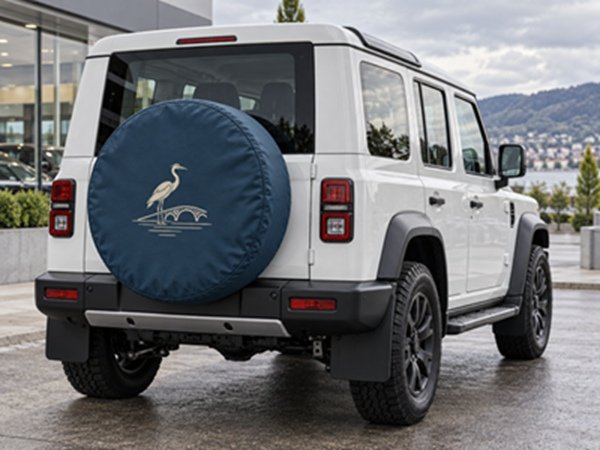
Tire Cover Supply Built Around Distribution Economics
A distributor needs more than a factory willing to sew covers. The supply program must turn product variety into controlled SKUs, predictable costs, usable packaging, dependable fitment, and repeatable replenishment.
Product Range Before Purchase Quantity
- Automotive distribution works best when product architecture is defined before purchase orders are split into individual styles.
- Szoneier starts with the channel, expected retail price, vehicle mix, tire-size coverage, climate, brand position, packaging format, and replenishment plan.
- A universal spare-tire range may need fewer SKUs and lower inventory exposure, while premium Jeep or Bronco programs may justify exact-fit patterns, camera-compatible versions, automotive-style materials, and higher-value branding.
- RV and trailer ranges are usually organized around functional protection, set configuration, material tier, tire diameter, and storage use.
- The goal is not to maximize SKU count. The goal is to create enough coverage to serve the intended market without locking excessive capital into slow-moving combinations.
- A distributor can therefore launch with a focused core range, validate sell-through, then add premium materials, special colors, camera structures, retail packaging, or additional vehicle applications using the same controlled product-development system.
For a recognized automotive brand, supplier qualification should therefore evaluate how the range is managed after the first purchase order. Ask how sizes are identified, how a new vehicle application is approved, how materials are locked, how packaging changes are recorded, and how a replenishment order retrieves the original specification. Those controls determine whether a supplier is suitable for one promotion or capable of supporting a category over several selling seasons.

What Automotive Distributors Need From a Tire Cover Supplier
Sellable SKU Breadth
Margin by Product Tier
Fitment Confidence
Private Label Control
Inventory Efficiency
Replenishment Consistency
Common Distributor Risks and How Szoneier Controls Them
Too Many Slow SKUs
- Define core versus optional SKUs.
- Use universal sizes where fit tolerance allows.
- Reserve specialty patterns for high-value applications.
Wrong Fit Returns
- Tire sidewall data comes first.
- Camera and carrier details are reviewed separately.
- Approved patterns stay tied to the SKU.
Material Drift
- Material ID and supplier lot are recorded.
- GSM, coating, color, and surface are checked.
- Premium outdoor grades receive added performance review.
Branding Inconsistency
- One brand system, multiple product applications.
- Material-specific color control.
- Approval before bulk release.
Packaging Becomes Expensive
- Protect print and surface finish.
- Keep barcode and SKU information readable.
- Balance presentation with carton efficiency.
Reorders Become New Projects
- Approved revision remains the reference.
- Changes require controlled approval.
- Replenishment does not restart development.
Build a Tire Cover Range Dealers Can Actually Sell
Start With Channel and Vehicle Coverage
The first decision is not fabric. It is where the product will be sold and what vehicles or use cases the range must cover. An automotive-accessory distributor may need universal spare-tire covers for broad inventory efficiency, plus exact-fit or camera-compatible versions for Jeep Wrangler, Ford Bronco, Defender, Toyota FJ Cruiser, and other rear-spare applications. An RV-focused distributor may need single wheel covers, 2-packs, 4-packs, dual-axle covers, triple-axle covers, and heavy-duty storage products. Dealer supply may center on logo visibility and repeat sizes, while a retail program needs clear packaging, product naming, and barcode structure. Szoneier maps the range around the sales channel first, then assigns materials and manufacturing details. This prevents a common sourcing mistake: creating many technically different products without a clear reason for each SKU to exist. Every line should have a commercial purpose – wider coverage, a higher margin tier, stronger outdoor performance, better fit, premium branding, or a distinct packaging format.
A useful opening exercise is to classify every proposed SKU as Core, Premium, Specialty, or Experimental. Core items earn warehouse space through broad demand. Premium items lift margin or brand position. Specialty items solve a specific vehicle, camera, climate, or trailer problem. Experimental items should launch in controlled quantities until sell-through is proven. The classification gives purchasing teams a clear reason for each SKU and makes later assortment reviews easier.
Use Good Better Best Where It Adds Value
A distributor does not need the same construction at every retail price. A three-tier structure makes material and value differences easier for sales teams, dealers, and retailers to understand. A standard RV range can use 420D PU-coated Oxford for moderate climates and cost-sensitive channels. A core premium line can move to 600D PU-coated Oxford, where the strength-to-weight balance is well suited to 2-pack, 4-pack, dual-axle, trailer, and long-term storage products. A heavy-duty line can use 900D Oxford when greater tear, abrasion, and structural reserve is justified. Automotive spare-tire lines follow a different path: standard or printable PVC for broad custom graphics, Premium PVC or PVC leather for a more automotive appearance, Premium PU for softer handfeel and low-temperature flexibility, and marine vinyl for premium vehicle-specific programs. The tiers should reflect real changes in material, structure, finish, or service – not only new names on the same cover. The price ladder should remain visible in specifications as well as marketing. If Standard and Premium use different Oxford grades, record GSM, coating, retention, seam reinforcement, packaging, and inspection differences so a dealer can explain the upgrade. If two tiers differ only by a label, the range becomes difficult to defend. Real tier separation improves quotation discipline, retail storytelling, and replenishment because each construction has a defined commercial role.
Separate Core Inventory From Specialty Programs
Universal sizing reduces SKU count and makes replenishment easier, but exact-fit and specialty vehicle products earn their place where fit, camera clearance, or premium appearance affects value. A distributor can keep a core universal range in standard colors and materials, then carry vehicle-specific lines for high-demand applications. Camera-compatible products should remain distinct from non-camera versions because the hole location, reinforcement, artwork safe zone, and carrier clearance may differ. Specialty colors, premium patches, retail boxes, and low-volume graphic programs can also sit outside the main stock plan. Szoneier can quote multi-size orders by total material volume when material, structure, and construction remain common, while cutting, pattern control, and print setup stay specific to the SKU or artwork. The result is a catalog with deliberate complexity rather than uncontrolled complexity – enough choice to sell, but not so many variants that purchasing and warehouse teams lose visibility.
The same rule applies to color. Black, gray, or another proven stock color can carry most core demand, while custom automotive colors should be reserved for programs with enough volume to absorb raw-material MOQ. Graphic products can sometimes create a requested color through printing on a white printable base, avoiding a special coated-material run. Keeping stock logic separate from made-to-order logic protects working capital without limiting future range development.
Design Expansion Into the First Program
A distributor range should be able to grow without changing the underlying system. Initial SKUs can share naming conventions, material IDs, packaging formats, label positions, artwork zones, and QC checkpoints. New sizes can then inherit the same construction logic. A standard line can later gain a premium material. A non-camera range can add camera-compatible models after fitment validation. A basic polybag can move to branded packaging after volume reaches an economical threshold. A dealer logo program can add new artwork while keeping material and size standards unchanged. Szoneier treats product development as a repeatable platform rather than a string of unrelated purchase orders. The value appears after launch: new SKUs require less reinvention, quotation becomes clearer, approved assets remain traceable, and replenishment can move faster because the product family already has established rules for material, pattern, print, packaging, and inspection.
SKU codes should also leave room for growth. A coding structure can distinguish product family, size, material tier, camera status, color, and packaging without becoming unreadable. The exact coding convention is agreed with the distributor, but the principle is consistent: one sellable configuration should map to one controlled record. Clear SKU architecture helps purchasing, barcode creation, warehouse picking, quality reporting, and later data exchange with dealer or e-commerce systems.
Example Starter Assortment for an Automotive Distributor
The structure below shows how a focused opening assortment can balance inventory coverage, price tiers, and premium extensions without creating dozens of uncontrolled variants at launch.
Range Role | Product Format | Typical Material | Suggested Opening SKU Logic | Commercial Purpose |
Core Universal | Spare tire cover | Standard/Premium PVC | 27-29, 29-31, 31-33, 33-35 in black | Broad off-road and SUV coverage with manageable inventory |
Core RV | Single / 2-Pack / 4-Pack | 420D PU Oxford | 4-6 high-demand size families | Functional protection at standard retail price |
Premium RV | 4-Pack / Dual Axle | 600D PU Oxford | Match core sizes, black/gray | Higher margin and stronger outdoor positioning |
Heavy Duty | RV / Trailer / Storage | 900D Oxford | Selected high-demand sizes only | Commercial, long-term outdoor, heavy-use positioning |
Automotive Premium | Exact-fit spare cover | Premium PVC / PVC leather | Jeep/Bronco applications | Better appearance, fit, and branding value |
Camera Series | Vehicle-specific | Premium PVC / PU / Marine Vinyl | Separate camera and non-camera SKUs | Reduces compatibility confusion and supports premium fitment |
Graphic Series | Custom printed spare cover | Printable PVC / Polyester | Selected universal and exact-fit sizes | Full-color, promotional, dealer, and lifestyle graphics |
Private Label Upgrade | Any core range | Matched to base product | Label + branded packaging + barcode | Converts factory product into a retail-ready branded line |
Product Platforms for Distributor Assortment Planning

Universal Spare Covers

Exact-Fit Covers

Vehicle-Specific Covers

Camera-Compatible Covers

RV Single and Sets

Dual and Triple Axle

Heavy-Duty Programs

Printed and Private Label
Fitment Engineering That Protects Distributor Inventory
Tire Data Comes Before Wheel Diameter
A 17-inch wheel does not mean a 17-inch tire cover. Tire-cover selection depends on the assembled tire outside diameter and width, which are influenced by the full sidewall size. Szoneier uses actual tire information as the primary fitment input. Universal ranges are organized by tire-diameter families such as 27-29, 29-31, 31-33, 33-35, 35-37, and larger off-road sizes, with width and side-depth considerations built into the pattern. The 31-33 inch range is especially relevant to common Jeep and Bronco applications, while 33-35 and 35-37 inch ranges address upgraded off-road tires. Exact-fit programs go further and can be tied to a specific sidewall size such as 255/70R18 or another approved tire specification. For RV and trailer products, wheel count, tire diameter, tire width, and axle spacing may be required. Each approved fitment is tied to a pattern reference so replenishment does not depend on someone reinterpreting a size chart months later.
For a multi-SKU catalog, a fitment matrix should state what information was used to approve each size. Universal products can list recommended outside-diameter and width ranges. Exact-fit products should identify the tire specification or validated physical target. RV and trailer products may need set quantity and axle configuration. Storing the basis of approval is more valuable than publishing a large compatibility list with no traceable engineering logic behind it.
Vehicle and Camera Data Create Separate Rules
Vehicle name alone is not a production specification. Jeep Wrangler and Ford Bronco programs may use OEM or aftermarket tires, different spare carriers, camera housings, extension arms, or modifications that alter where the cover can sit. Szoneier therefore reviews make, model, year where relevant, tire sidewall size, actual outside diameter when available, tire width, spare location, camera details, and photos when necessary. Camera-compatible products receive dedicated treatment because a hole can be centered on the tire and still be wrong for the actual camera housing. The pattern needs enough clearance for the lens and surrounding hardware, while reinforcement must protect the opening from tearing. Artwork also needs a safe zone so a logo, phone number, or graphic is not cut by the camera opening. Camera-hole QC is performed as a critical feature, with Szoneier’s internal target using full inspection and engineering deviation controls around the approved project standard.
Aftermarket changes deserve special treatment because they can move the camera relative to the tire. Larger wheels, offset changes, carrier extensions, reinforcement brackets, or replacement camera mounts may change clearance even within the same vehicle year. When such modifications are common in the channel, Szoneier can define a photo or measurement requirement before accepting the application. The extra information prevents a catalog promise from becoming a fitment problem after retail sale.
Patterns Turn Fitment Into Repeatable Production
Once a size or vehicle application is validated, Szoneier assigns a controlled pattern rather than relying on verbal instructions. Cutting records, dimensions, side depth, camera features, retention details, and artwork registration remain connected to the approved SKU. A new development can move through measurement, first pattern, sample fitting, revision, and final approval before bulk production. Existing programs use the approved revision, not the newest “similar” pattern from another account. For distributors, the pattern system protects both inventory and catalog accuracy. A 33-inch universal spare cover, a 33-inch Jeep exact-fit cover, and a 33-inch camera-compatible cover may share a nominal tire diameter but require different construction details. Keeping them separated by pattern ID and product definition reduces warehouse confusion and makes future expansion easier. When a new tire or vehicle application is added, the new SKU enters the same fitment process instead of being improvised from an old cover.
Pattern control also supports controlled cost. Once an approved size family is stable, material yield, panel count, sewing operations, reinforcement pieces, and packaging fold can be planned more accurately. A revised camera position or side depth is then treated as a defined engineering change rather than an invisible factory adjustment. For distributors comparing suppliers, disciplined pattern ownership is a strong indicator that fitment knowledge can survive staff changes and future reorder cycles.
Material Architecture for Price, Climate, and Channel

420D Oxford for Standard Protection Lines
420D polyester Oxford is a standard functional platform for RV, trailer, 4-pack, and mid-range retail products where weight, cost, durability, foldability, and shipping volume must stay balanced. Finished weight typically falls around 180-250 g/m² depending on coating. A 420D PU-coated construction uses a polyester base with PU backing; Szoneier’s internal waterproof target is generally 2,000-3,000 mm, with premium versions reaching around the 5,000 mm class. The material is lighter and more compact than 600D, which can reduce parcel and carton burden for high-SKU distribution. 420D PVC-coated versions typically move to roughly 220-300 g/m² and an internal waterproof target around 5,000-8,000 mm, adding a stronger barrier and more structured handfeel at the cost of extra weight and stiffer low-temperature behavior. Silver-coated 420D is available for heat-management programs, while UV-treated versions target stronger sunlight exposure. Szoneier normally positions 420D as a standard line, not an “ultimate heavy-duty” claim. It is appropriate when the retail proposition values functional outdoor protection and controlled landed cost.
For assortment planning, 420D works best when the sales promise is clear: standard outdoor protection at controlled weight and cost. It should not be marketed with heavy-duty claims borrowed from 900D specifications. A distributor can use 420D as the opening functional tier, then reserve stronger constructions for accounts willing to pay for additional durability. Such positioning protects both product credibility and margin because the specification matches the promise made at retail.

600D Oxford for Core Premium Programs
600D polyester Oxford is Szoneier’s core premium mainstream material for higher-value RV, trailer, private-label, fleet, dual-axle, triple-axle, and heavy-duty spare-cover programs. Finished weight typically runs about 250-380 g/m2 depending on coating; standard PU versions are commonly around 260-300 g/m2, while heavier PVC-backed constructions can reach roughly 320-400 g/m2. A 600D PU-coated program can be specified around 3,000 mm waterproof performance at the base level, 5,000 mm for premium configurations, and up to an internal 8,000 mm target for higher-waterproof versions. The reason 600D works well commercially is balance: it carries more tear and structural reserve than 420D without automatically creating the weight and package volume of 900D. It also works well with screen printing, heat transfer, compatible digital methods, binding, elastic systems, straps, and set packaging. For distributors building a “better” or core premium tier, 600D often provides the most useful combination of perceived value, outdoor performance, manufacturability, and freight control.
When a range contains several sizes, 600D also benefits from shared material purchasing. Black or gray stock programs can often combine total volume even though patterns differ by tire size. Printing, cutting, labels, and packaging remain SKU-specific, but the common base material simplifies procurement and repeat supply. For national or regional distribution, a standardized 600D specification can become the backbone from which 4-pack, dual-axle, heavy-duty spare, and private-label products are extended.

900D Oxford for Heavy-Duty Applications
900D Oxford is an extra-heavy-duty option rather than the default answer for every program. Finished weight is typically around 330-480 g/m², and PVC-coated versions can reach roughly 400-520 g/m². Szoneier uses 900D for extreme outdoor storage, premium RV, fleet, commercial trailer, long-term parking, and heavy-use products where extra abrasion, tear, and structural reserve justify higher material and freight cost. PU-coated 900D generally targets 3,000-5,000 mm waterproof performance, with premium versions around the 8,000 mm class; PVC-coated versions can be specified around an internal 8,000-10,000+ mm target. UV-treated versions may target 500-800 hours of accelerated exposure, with higher-grade projects up to 1,000 hours only when corresponding material evidence supports the claim. Distributor planning should therefore avoid using 900D only because the denier number is larger. A heavier cover takes more carton space, costs more to ship, and may be unnecessary for moderate-use channels. 900D earns its place when heavy-duty positioning is real and sellable.
The commercial question is whether the end user will recognize and pay for the added construction. Fleet, long-term storage, commercial trailer, and premium RV channels often have a stronger reason than short-term promotional use. Packaging should also be reviewed early because heavy coating and higher GSM increase fold bulk. A well-designed 900D SKU therefore combines material, retention, seam reinforcement, packaging, and price positioning instead of relying on the denier number as the entire value proposition.

PVC and Printable Vinyl for Graphic Flexibility
PVC and vinyl constructions are important for spare-tire covers because they combine a water-resistant surface, cleanability, good abrasion performance, flexible texture choices, and strong print compatibility. Szoneier does not treat “PVC” as a complete specification. Material control includes surface layer, polyester backing, total thickness, total GSM, texture, color, UV grade, cold-crack behavior, tear strength, print compatibility, supplier, and lot. Printable white PVC is especially useful for full-color graphics, dealer campaigns, personalized artwork, and lower-volume programs because the white surface produces better detail and color. PVC leather provides a more automotive visual and tactile finish; standard thickness is about 0.55-0.75 mm with typical GSM around 550-750 g/m², while selected premium versions can approach 0.8 mm. Internal waterproof targets can reach 8,000 mm or more depending on grade. PVC is also efficient for exact-fit and camera-compatible covers because it cuts cleanly and accepts reinforcement. For a distributor, PVC creates a flexible bridge between basic branded product, premium graphic product, and low-MOQ development.
Surface texture is another key decision. A smooth printable face preserves fine details and photographic transitions, while deeper leather grain improves tactile character but can reduce image sharpness. Distributor programs with a large logo may tolerate more texture than programs selling detailed landscapes or photographic art. Szoneier can therefore keep separate graphic-grade and automotive-texture specifications under the same PVC family, allowing the assortment to use the right surface for the visual job.

PU Leather for Softer Premium Positioning
PU leather offers a softer handfeel, lower-temperature flexibility, and more premium drape than many comparable PVC constructions, but outdoor performance depends heavily on formulation and hydrolysis resistance. Szoneier’s standard PU tire-cover material is generally 0.45-0.60 mm thick and about 350-500 g/m², with an internal hydrostatic target around 3,000 mm, moderate outdoor UV target around 200-300 QUV hours, low-temperature target around -20°C, and tear target around 30-40 N. Premium PU increases thickness to roughly 0.60-0.80 mm and 500-650 g/m², with internal waterproof targets around 5,000 mm, UV targets around 300-500 hours, low-temperature targets around -25°C, and stronger tear performance. Premium projects also require higher hydrolysis expectations. Matte and textured PU variants add low-gloss or automotive grain finishes for branded Jeep, Bronco, and specialty products. PU should not be selected by touch alone. Szoneier checks thickness, GSM, tear, sewing behavior, fold, print adhesion, scratch resistance, water resistance, cold flex, and hydrolysis before approving material for a long-running program.
Hydrolysis risk deserves particular attention in warm, humid environments because PU chemistry can age differently from PVC. Premium PU should therefore be chosen from an approved grade with documented construction and internal validation rather than selected only from a swatch. For automotive distribution, PU works best when soft touch, low-gloss styling, premium handfeel, or cold-weather flexibility supports a higher retail position. Outdoor-grade selection remains essential for long exposure.

Marine Vinyl and Specialty Outdoor Materials
Marine vinyl and other premium outdoor materials belong in applications where long-term exposure, premium appearance, and vehicle-specific positioning justify a higher material class. Szoneier often uses marine vinyl as an upgrade for premium Jeep, Bronco, Defender, dealer, exact-fit, and camera-compatible covers. Long-term outdoor programs may also use UV-treated 600D or 900D Oxford, reflective or silver-coated fabrics for high-heat environments, and solution-dyed acrylic or specified marine acrylics for high-end RV and outdoor products. Climate matters. Strong sunlight can justify lighter colors, UV-stabilized formulations, or reflective structures. Cold climates increase the importance of cold crack, fold testing, low-temperature flexibility, and coating adhesion. Material upgrades also need matching construction upgrades; stronger fabric without reinforced stitching, suitable hems, UV-resistant thread, binding, or secure retention does not create a truly premium product. Szoneier therefore selects the material as part of a full construction package, not as an isolated marketing label.
Specialty materials should enter the range only with a defined reason. Reflective or silver constructions answer heat-management needs; solution-dyed acrylic answers long-term UV and premium outdoor positioning; marine vinyl answers automotive appearance and weather exposure. Each adds cost, sourcing considerations, or different print behavior. Szoneier therefore treats specialty material as a product-line decision with a target market and retail story, not as a checklist of exotic fabrics offered without context.
Closures, Reinforcement, and Accessories Affect Real Performance

Elastic, Drawstring, and Bungee Systems
Elastic hems are efficient for universal and custom spare-tire covers because installation is fast, the back looks clean, and the structure works well for low-MOQ programs. Elastic performance still depends on width, recovery, joint reinforcement, and the tire-size range assigned to the pattern. Drawstring systems use cord and a cord lock to create a wider adjustment range. They suit larger tires, universal sizes, and programs where aging elastic or broad fit tolerance is a concern, although the visible cord and extra installation step may be less suitable for minimalist premium products. Bungee-cord structures combine elastic response with user adjustment and can improve retention on larger or higher-wind applications. They add more components and assembly steps, so they are generally selected when the commercial value of stronger retention exceeds the added cost. Szoneier treats each system as a design choice connected to fitment, side depth, material stiffness, expected wind exposure, installation convenience, and target retail price rather than using one closure on every tire-cover platform.
For replenishment, the retention specification should include more than the closure name. Elastic width and recovery, cord diameter, cord-lock type, bungee length, joining method, and placement can all affect fit. Szoneier records the approved configuration with the pattern so a later production run does not substitute a visually similar component with different behavior. Distributor complaints about a cover feeling “too loose” often originate in retention variation rather than the main fabric.

Buckles, Webbing, and Windproof Retention
Buckle systems use webbing, adjustable straps, and side-release hardware to create more positive retention for RV, heavy-duty, dual-axle, triple-axle, and commercial-use covers. The added components improve adjustability and wind resistance but also increase cost, assembly time, and visible hardware. A heavy-duty cover therefore needs the full system engineered together: material strength, webbing width, buckle grade, attachment location, stitch pattern, reinforcement patch, and load direction. Upgrading from 420D to 900D while keeping a weak attachment point does not create a stronger product. Szoneier reviews the structure around stress concentrations such as strap joins, elastic joins, and corner areas, then carries those details into the approved sample and QC standard. For a distributor, standardized buckle and webbing specifications also simplify replacement orders. When several sizes share the same hardware family, purchasing and warehouse management become easier while the product range still maintains clear size-specific patterns.
Hardware should also be matched to the use environment. A compact side-release buckle may suit an RV storage cover, while a commercial product may need a different webbing width or attachment reinforcement. Color and finish matter for branded ranges because inconsistent black tones or oversized hardware can make premium products look improvised. By freezing buckle, webbing, attachment, and stitch details in the approved sample, Szoneier keeps the windproof feature repeatable across sizes and reorders.

Hook-and-Loop, Zippers, and Camera Features
Hook-and-loop closures work well as local adjustment or access components, especially around camera openings, access flaps, semi-rigid structures, or supplemental windproof areas. Outdoor versions need appropriate grade because dust, contamination, and repeated exposure can reduce holding performance. Zippers create a more structured, premium opening and can support complex camera access, removable sections, or semi-rigid products, but they introduce additional component MOQ, sewing precision, and weather-management considerations. Camera products may also require reinforcement rings, backing patches, controlled hole dimensions, and artwork safe zones. Szoneier does not treat the camera opening as a post-production cut. The feature is built into the pattern, artwork, reinforcement, and inspection plan. For distributor programs, camera and non-camera products should use distinct SKU definitions so a warehouse or dealer does not rely on visual guesswork when selecting the correct version.
Where moving parts are used, sample testing should include repeated opening and closing as well as installed clearance. A zipper that operates smoothly on a flat table can bind after the cover is tensioned around a tire. Hook-and-loop positioned too close to a camera can interfere with access. Engineering review therefore considers the product under installed tension, not only as a sewn component. Such checks are especially important for premium and vehicle-specific distributor SKUs.

Thread, Binding, and Structural Reinforcement
High-performance material still depends on the sewing system around it. Long-term outdoor programs may require UV-resistant thread, stronger binding, reinforced hems, bartack or reinforced stitch patterns at stress points, and backing reinforcement around camera holes or hardware. Binding protects raw edges and can improve both appearance and durability, while reinforcement distributes load away from a small attachment point. Thread color and specification also affect brand consistency when the seam is visible. Szoneier includes these details in the released construction standard so bulk orders do not depend on operator preference. A distributor replenishing the same SKU months later should receive the same binding width, thread appearance, hardware location, retention structure, and reinforcement logic unless a controlled change has been approved. Small components are therefore treated as part of the sellable product specification, not as interchangeable factory consumables.
Reinforcement design should follow load direction. A square patch, extra seam, or bartack is useful only when it spreads the actual force created by elastic, webbing, camera openings, or repeated installation. Szoneier evaluates stress points during sampling and records the approved reinforcement shape and stitch pattern. For high-UV ranges, thread and binding should also be compatible with the intended exposure so a strong face fabric is not paired with a faster-aging secondary material.
Private Label Built for Retail and Dealer Channels

Brand Architecture
- Private-label development begins with the range structure: product names, price tiers, size families, material levels, and vehicle applications. Szoneier can keep naming and visual rules consistent across universal, RV, camera, heavy-duty, and premium lines so the assortment reads as one brand rather than a group of unrelated factory items.
- A defined architecture also helps future extensions inherit the same naming, packaging language, and tier logic instead of creating a new identity for every additional size.

Cover Branding
- Branding may use screen print, digital print, latex, UV, sublimation, heat transfer, embroidery, TPU patches, silicone patches, woven labels, or hot stamping depending on surface, logo complexity, order volume, and outdoor exposure. The chosen method should reinforce the intended retail position instead of simply using the most elaborate process available.
- Szoneier keeps the logo method tied to the material and artwork revision so changes in surface or quantity trigger a technical review before the process is switched.

Product Labels
- Woven labels, printed care labels, size labels, internal SKU labels, country-of-origin marking, and other product identification can be added according to the program. Custom woven labels commonly require higher quantities, while smaller launches can use printed or existing-stock branding options to avoid letting one accessory MOQ block the full product order.
- Label placement, fold, material, size, and attachment are approved with the product so the final retail item remains consistent across sizes and production cycles.

Retail Packaging
- Branded polybags, reusable zip bags, drawstring storage bags, folding cartons, mailer boxes, inserts, and hang tags can carry product name, size, material, barcode, installation, care, and brand information. Packaging is sized with the folded product so visual presentation does not create unnecessary carton volume or surface creasing.
- Package artwork is version-controlled with the product SKU, allowing barcode, size, care, and brand information to stay synchronized when the assortment expands.
- Packaging approval should include the finished folded product, not only the flat dieline, because fold pressure and product bulk affect appearance at retail.

SKU and Barcode Control
- Each size or configuration can carry its own internal SKU, UPC, EAN, FNSKU where relevant, or other barcode information. Camera and non-camera versions should be separated. Packaging records keep the barcode, size description, product name, and set quantity tied to the correct sellable unit and carton plan.
- The same identification can continue into master cartons and warehouse documents so inbound receiving and replenishment are less dependent on visual recognition.
- Scan checks can be included during packing so printed identification is verified before cartons are closed and released to the distributor.

Controlled Brand Assets
- Production files are managed by version so logo scale, Pantone target, artwork position, camera safe zone, packaging layout, and labels remain consistent. Repeat production returns to the approved artwork and physical reference rather than recreating brand assets from old email attachments or screenshots.
- A change to logo, color, or packaging receives a new controlled revision, protecting existing inventory from accidental mixing with a newly launched version.
- Archived approvals also help distinguish legacy inventory from a later design refresh when both versions need to remain traceable during a transition period.
Printing Methods Matched to Material, Volume, and Artwork

Screen Printing for Repeated Distributor Logos
- For multi-SKU orders, one logo may be used across different cover diameters. Artwork scale can be adjusted by size while spot colors and brand placement rules remain constant. Szoneier can maintain separate production artwork for each size but keep a common color reference, allowing a 29-inch and a 35-inch cover to look like members of the same brand family. The method is especially effective for dealer groups, fleet identification, RV logos, and simple private-label marks.

Latex and UV for Full-Color Automotive Graphics
- Color management becomes more important when the same design is printed on several materials. White PVC and white polyester do not reproduce identical color from the same CMYK values because surface, coating, and ink interaction differ. Szoneier records material-specific settings and uses an approved print or golden sample as the physical reference for repeat production. For distributor programs, such control reduces the risk of one size or material tier appearing visually unrelated to the rest of the branded range.

Sublimation for Polyester Graphic Ranges
- Sublimation can also simplify full-coverage artwork because the design is prepared for the full panel before cutting and sewing. Pattern and artwork registration still matter, especially when a logo must appear centered after the circular face is assembled with the sidewall. Camera-compatible polyester products need additional safe-zone planning. Distributor programs should therefore approve a finished sample, not only a flat print strike, because the final sewn geometry determines how the artwork is perceived on the vehicle.

Premium Logo Finishes for Higher Retail Positioning
- Premium logo methods work best as controlled accents. A raised TPU or silicone badge, small embroidery mark, or restrained hot-stamped logo can communicate value more effectively than covering the entire face with an expensive process. Tooling ownership, mold revision, logo dimensions, placement, attachment, and color should be recorded in the product file. When the same badge is used across several SKUs, a shared branding component can strengthen range identity and reduce unnecessary retooling.
Sampling and Pattern Control Before Bulk Production
Requirement Review Freezes the Commercial Target
The review also separates fixed requirements from preferences. A camera opening or target tire size may be non-negotiable, while packaging style, logo method, or material tier may have alternatives. Szoneier records the distinction so cost optimization does not accidentally remove a critical function. For procurement teams, a short list of must-have, preferred, and optional requirements makes supplier quotations easier to compare and prevents later disagreement about what was actually included in the approved price.
Artwork Moves From Sales File to Production File
Distributor programs often reuse artwork for years, so file governance matters. Text should be converted or packaged correctly, linked images should be embedded, spelling should be checked, and each final file should carry a revision. If a logo is changed, the new version should not silently overwrite the historical reference used by older stock. Separate revisions let purchasing teams decide whether the next replenishment should match existing inventory or intentionally launch a refreshed brand version.
Fitment Samples Validate the Pattern
Sample approval should state what was actually verified. A visual sample may prove material, sewing, and artwork but not a new vehicle fit. A fitment sample should identify the tire or fixture used, camera condition, retention, and observed clearance. A packaging sample verifies fold and presentation rather than fit. Distinguishing sample purpose prevents an attractive prototype from being treated as evidence for a function that was never tested. The approval record becomes part of the SKU history.
Golden Sample Becomes the Bulk and Reorder Reference
The physical reference is especially valuable when specifications contain qualities that are hard to communicate in text, such as handfeel, surface gloss, edge finish, tension, or acceptable visual appearance. Digital records remain essential, but the approved sample gives production and QC a common object to compare. For long-running distributor programs, retaining a representative approved standard reduces interpretation differences between sales, engineering, sewing, inspection, and replacement-order teams.
Start Sample Development
MOQ and Production Timing for Distributor Programs
MOQ depends on material, printing, accessories, packaging, and SKU mix. The ranges below show common planning levels; every quotation is reconfirmed after the final specification and quantity split.
Program Stage | Typical Quantity | Suitable Use | Typical Production Planning* |
Development / Selected Personalization | 1 piece | Stock PVC/PU sample, artwork validation, selected personalized order | 2-4 working days for 1 piece; standard sample 3-5 working days |
Small Commercial Batch | 30 pieces+ | Many Oxford/custom programs, small launch, new logo or size test | About 5-7 working days for 30 pieces |
Commercial Entry | 100 pieces+ | Dealer/distributor test, stronger volume efficiency, simple private label | About 7-10 working days for 100 pieces |
Standard Bulk | 500 pieces | Retail, dealer, distributor, brand, repeated logo programs | About 10-15 working days |
Factory Volume | 1,000 pieces | Mature SKU, multi-size replenishment, packaging optimization | About 12-18 working days |
Contract Program | 5,000 pieces | Mature distribution range, forecasted replenishment, project pricing | About 20-30 days |
Timing assumes approved artwork, available or confirmed material, released patterns, and standard packaging. Special colors, custom textures, tooling, complex camera development, testing, or custom packaging can change the schedule.
Price Engineering for Margin Without Cutting Core Performance
Compare the Product Behind the Unit Price
Two covers described as “600D” may not be commercially equivalent. One may use a lower GSM base, lighter weave, basic PU coating, simple elastic, no UV treatment, and a plain polybag. Another may use higher GSM 600D Oxford, stronger coating, reinforced seams, buckle or bungee retention, screen-printed branding, retail-ready packaging, and controlled AQL inspection. Szoneier therefore builds unit pricing from the actual product: material, printing, cutting, sewing, camera structure, accessories, packaging, QC, normal loss, overhead, and required commercial terms. Setup cost may also include screens, embroidery setup, molds, embossing plates, rubber-patch molds, metal-logo tooling, or special cutting tools. A lower unit quote can be valid, but only if the lower specification still fits the intended channel. Distributor sourcing becomes more predictable when RFQs compare the same thickness, GSM, coating, closure, logo, packaging, and inspection requirement rather than relying on a shared material name.
A good RFQ therefore asks suppliers to return a specification with the price, not only a number. Szoneier quotations can identify product, material, size, printing, logo, camera requirement, packaging, MOQ, quantity, unit price, sample plan, lead time, payment basis, Incoterm, and validity. A standard quotation is generally valid for 30 days, while special materials may use a shorter period because raw material, exchange rate, and freight conditions can move faster.
Use Volume Where It Changes the Production Model
Scale lowers cost because manufacturing conditions change, not because every added unit receives an arbitrary discount. Around 30 pieces, artwork, setup, cutting, sewing, and packing begin to spread across a small batch. Around 100 pieces, material usage, cutting efficiency, printing efficiency, and sewing efficiency improve. Around 300 pieces, custom labels, better packaging, and additional accessories become more realistic. Around 500 pieces, the program enters a standard bulk range suitable for many retail, dealer, and distributor orders. Around 1,000 pieces, concentrated material purchasing, batch printing, line production, packaging optimization, and carton optimization create further efficiency. Around 3,000-5,000 pieces, project or contract pricing can include material booking, production scheduling, packaging planning, and freight optimization. Szoneier also evaluates total quantity when several SKUs share material and structure, while keeping print setup, cutting, and pattern work distinct where necessary.
Multi-SKU distribution can still capture scale when common elements are deliberately standardized. Five sizes using the same 600D black material and identical buckle family can share material purchasing even though pattern and labels differ. Five different logos on one size may share the base product but require separate print setup. Szoneier separates shared cost from variable setup so a distributor can see where assortment complexity truly affects the price and where total volume still creates leverage.
Protect the Features That Control Returns and Reputation
Cost engineering should remove unnecessary cost before it weakens the reason the product exists. A 900D program may be redesigned to 600D when the actual use environment does not require extra-heavy construction. A retail box may be replaced by a branded polybag when the channel does not need shelf display. A premium patch may move to screen printing for a repeated two-color logo. Those changes can improve margin without damaging function. Fitment, camera reinforcement, core UV requirements, seam integrity, correct labeling, and essential QC should not be casually removed. Szoneier separates “must keep” from “can optimize” so a distributor can decide where retail value comes from. The result is not the cheapest possible cover. It is a product whose material, structure, branding, packaging, and landed cost are aligned with the margin and return-risk expectations of the channel.
Landed-cost decisions should also include carton volume and product weight. A heavy PVC-backed 900D cover may offer impressive specification values yet reduce margin if the channel does not value the performance enough to offset added freight. Conversely, an overly light material can increase warranty or return cost in harsh use. The best commercial decision is therefore made at total-program level: unit cost, freight, packaging, expected sell-through, retail position, return exposure, and replenishment stability.
Quality Gates for Multi-SKU Distributor Production
Incoming Material Control
- Material lots are checked for identity, color, width, GSM or thickness where relevant, surface, coating, defects, contamination, odor, and crease condition. Critical materials receive a Material Lot Number so a distributor order can be traced back to the exact lot used rather than only a generic fabric name.
- Approved lots are released to production only after the defined checks pass; nonconforming material is held instead of being mixed into a distributor order.
Artwork and Print Approval
- Artwork version, position, size, color, sharpness, white ink where used, banding, adhesion, and surface damage are checked before print production continues. First-piece approval confirms that the released file and selected material produce the intended result before hundreds of panels are printed.
- Sensitive brand colors may use Pantone targets, controlled viewing conditions, or physical references so visual acceptance is not based only on a monitor.
- A retained print reference helps the next production run reproduce the intended visual result instead of relying on subjective descriptions such as “same red as last time.”
Cutting and Pattern Control
- Cutting checks Pattern ID, revision, diameter, width, sidewall depth, notches, camera features, registration, and quantity. Szoneier’s internal dimensional tolerance for ordinary soft-cover panels is typically ±3 mm, with large RV panels around ±5 mm; camera-critical features follow project-specific engineering limits.
- Quantity and size identification are maintained through cutting so panels from visually similar SKUs do not enter the wrong sewing or packaging flow.
- Bundles or cut-part identification can follow the SKU through production, which is especially important when several tire diameters use the same black material and appear similar before assembly.
Sewing and Reinforcement
- Inspection covers stitch length, seam allowance, broken or skipped stitches, loose thread, puckering, binding, alignment, reinforcement, and critical attachments. Elastic joins, buckle attachments, camera reinforcement, and other load points receive additional attention because a strong fabric cannot compensate for a weak structural connection.
- Approved seam construction and reinforcement locations remain tied to the SKU, protecting repeat orders from operator-by-operator changes in critical details.
- Inline checks can stop a repeated seam or attachment problem before the full lot is completed, reducing the cost of rework compared with discovering the issue at final inspection.
Camera 100% Check
- Camera-compatible products receive full inspection for vehicle application, tire size, pattern, jig or reference, hole ID, center, reinforcement, artwork safe zone, and lens clearance. Szoneier’s internal engineering target controls center deviation around the approved standard, with project hole dimensions typically managed to approximately ±2 mm where applicable.
- The finished cover is also checked for artwork clearance around the opening so branding and graphics remain intact after the engineered camera feature is assembled.
Final Product Inspection
- Finished units are checked for product identity, size, artwork, color, sewing, camera features, accessories, cleanliness, and packaging before release. Personalized or individually variable products require 100% order-level verification; standard bulk programs use the agreed sampling or inspection plan.
- Inspection records distinguish functional, major visual, and minor cosmetic issues so release decisions are based on agreed criteria rather than personal judgment.
- The inspection also confirms that the finished unit matches the sellable SKU on the package, preventing a correct product from being placed into the wrong size or camera-version packaging.
AQL for Bulk Orders
- When AQL inspection is specified, Szoneier can use ISO 2859-1 sampling logic. The internal default is General Inspection Level II with Critical 0, Major 1.5, and Minor 2.5 unless the agreed program uses another standard. The acceptance plan does not replace process control; it verifies the released lot against the agreed defect classification.
- Critical, major, and minor defect definitions are agreed with the project so the sampling result reflects function, saleability, fitment, branding, and appearance rather than a generic factory checklist.
Shipment Release
- Finished does not mean released. Quantity, packaging, labels, barcodes, documents, and inspection status are checked before shipment authorization. Problems that require corrective action enter a CAPA workflow so containment, root cause, correction, prevention, and verification are recorded rather than handled only as an informal remake.
- Only released lots move to dispatch, which protects distributors from receiving finished-looking goods that still have unresolved quantity, labeling, or quality issues.
- Release status can be linked to the shipment record so only approved cartons move forward to the selected freight, warehouse, dealer, or fulfillment route.
Repeat Orders Should Repeat the Approved Product
Reorders Start With the Approved Configuration
A repeat order is not released simply because the SKU has been produced before. Szoneier retrieves the golden sample, Material ID, material lot requirements, Pattern Revision, Artwork Version, color reference, QC standard, and packing specification before production begins. The review confirms whether the same raw material is still available, whether the supplier or coating has changed, whether the artwork file remains current, and whether the packaging or barcode requirement has been updated. For printed programs, repeat color may also require the same printer family, ICC profile, ink system, RIP settings, or screen ink formula recorded from the approved order. The objective is not to freeze every manufacturing variable forever; materials and production realities can change. The objective is to make every change visible and controlled. A distributor should never discover a silent material substitution only after the replenishment reaches the warehouse.
The review can also identify opportunities to improve supply without changing the visible product. A packaging supplier may change, an equivalent raw material may become available, or a print process may receive an updated setting. Such changes should be validated against the approved standard before release. The discipline gives distributors room to benefit from supply improvements while preserving the appearance and function already accepted by dealers, retailers, and existing inventory.
Customer-Specific Revisions Prevent Pattern Drift
Many factories accumulate similar patterns over time. The risk appears when a production team uses the newest or closest pattern instead of the one approved for a specific distributor SKU. Szoneier keeps the approved pattern revision tied to the project and SKU. A 31-33 inch universal spare cover, a Jeep exact-fit cover, and a Bronco camera cover may all involve similar outside diameters, yet their side depth, camera structure, seam position, retention, or artwork registration can differ. Repeat production therefore calls the customer-specific approved revision rather than a generic recent pattern. If a product improvement is proposed, the change is documented and approved before becoming the new standard. This protects catalog consistency, dealer fitment, and warehouse confidence across seasons and replenishment cycles.
Version history is particularly useful after vehicle changes. A distributor may keep an older Jeep pattern for existing stock while introducing a revised camera application for a later model year. Both can remain valid at the same time if their SKUs and revisions are distinct. The file structure therefore protects legacy replenishment and new development simultaneously. It prevents an engineering improvement for one application from unintentionally altering another SKU with a different installed requirement.
The same control also protects packaging and listing data because the product dimension on a size label should continue to match the physical pattern being produced.
Traceability Makes Long-Term Product Lines Easier to Manage
A mature distributor program may carry several materials, sizes, logos, package formats, and sales channels. Szoneier connects project records through Product SKU, Tire Size, Vehicle, Material ID, Pattern ID, Artwork Version, Printing Process, Camera Version, Golden Sample, QC Standard, Packaging Standard, and Shipping Instruction. The structure makes troubleshooting and expansion faster. If one size shows a fitment problem, the pattern can be isolated without affecting unrelated SKUs. If a color shift appears, the material lot and print reference can be reviewed. If packaging changes for one retail account, the original wholesale format can remain untouched. Traceability also helps new SKUs inherit proven rules. A distributor does not need to rebuild the entire specification every time the range grows; the established program already defines how material, fitment, branding, QC, packaging, and replenishment should be controlled.
The same records support corrective action. If a complaint identifies a wrong size, unusual color, or packaging error, Szoneier can trace the relevant SKU, material lot, artwork, and release record rather than investigating the entire assortment. Root-cause work becomes narrower and faster. Corrective action can then be applied to the affected specification and verified on the next production run, giving distributors a more controlled way to manage quality incidents across a broad catalog.
Packaging That Arrives Ready for Distribution and Retail

Standard Polybag

Branded Polybag

Reusable Zip Bag

Drawstring Storage Bag

Retail Box

Inserts and Identification
Manufacturing and Fulfillment Managed as One Szoneier Program
Szoneier coordinates development, material, printing, cutting, sewing, inspection, packaging, and shipment as one controlled program so distributors do not need to manage separate production vendors.
One Project Record Connects Development and Production
Every significant tire-cover project is organized around a project and SKU record rather than scattered conversations. The record connects tire size, vehicle, material, pattern, artwork, printing process, camera version, golden sample, QC standard, packaging standard, and shipping instruction. Inquiry review defines the commercial requirement; fitment review confirms physical application; artwork review creates a production file; material approval defines the construction; sampling validates the product; bulk production follows the released assets; QC checks each defined stage; packaging and shipment use the approved sellable-unit specification. The structure is especially useful for distributors because the same program may contain several sizes, two materials, multiple logos, and different retail packages. Instead of treating every SKU as a separate factory order, Szoneier manages the common rules and the SKU-specific differences within one program. The result is clearer quotation, easier approval, cleaner replenishment, and fewer opportunities for information to be lost between product development and volume production.
For procurement teams, the record also makes handover easier. A product manager may define the range, a sourcing manager may negotiate the order, a quality team may approve inspection, and a logistics team may control delivery. All four groups can work from the same SKU and revision references. The program is less dependent on one person’s memory, which matters when distributor relationships continue through staff changes, seasonal reorders, and assortment expansion over several years.
Small Development and Volume Production Use Different Paths
A 1-piece development sample and a 5,000-piece replenishment order should not be produced as if they were the same job. Small programs rely on flexible digital printing, controlled cutting, sample sewing, and individual QC so a distributor can verify a new size, graphic, material, or camera structure without holding large inventory. As quantity grows, material can be booked in volume, cutting and printing can be batched, sewing can be organized around repeated operations, packaging can be standardized, and carton efficiency becomes more important. Typical planning reflects the shift: a standard sample is often 3-5 working days after confirmation, around 100 pieces may plan at 7-10 working days, 500 pieces at 10-15 working days, 1,000 pieces at 12-18 working days, and 5,000 pieces at roughly 20-30 days under normal approved conditions. Exact timing is reconfirmed for SKU count, material, printing, packaging, testing, and delivery schedule.
Lead-time ranges should be treated as planning tools, not unconditional promises. A 500-piece order with one stock material and one screen-printed logo is very different from 500 pieces split across ten sizes, three custom colors, two camera structures, and retail boxes. Szoneier confirms the critical path after the SKU matrix is known. Material booking, sample approval, print setup, packaging production, inspection, and shipment can then be sequenced with realistic buffers around the required launch date.
Fulfillment Can Match Wholesale or Direct Models
Distribution programs do not all end at the same warehouse. Szoneier supports express, air, sea, LCL, FCL, DDP where contractually agreed, Amazon-directed shipments, and direct-to-recipient fulfillment for selected programs. Traditional wholesale orders can be packed by SKU, set, or carton quantity for a distributor warehouse. Dealer programs can use branded packaging and repeated logo configurations. E-commerce or personalized programs can use one-piece fulfillment, neutral or seller-branded packaging, and individual tracking. CSV or Excel-compatible order files can carry Order ID, SKU, Design ID, Tire Size, Vehicle, Personalization, recipient details, shipping method, gift message, and artwork reference. For higher-volume integration projects, API-based order workflows can be evaluated. The important point is not to offer every fulfillment method on every order; it is to match production and shipment control to the distributor’s channel model.
Packaging profiles can also be separated by channel. The same approved tire cover may ship in a low-volume polybag to a wholesale warehouse, a branded bag to a dealer, or a one-piece neutral mailer for a direct order, provided each packaging version has its own controlled specification. Separating product approval from fulfillment profile gives a distributor more channel flexibility without forcing a completely different manufacturing specification for every destination.
Information Szoneier Needs for a Distributor RFQ
Company and Markets
- Include any retailer, dealer-group, fleet, marketplace, or distributor-specific requirements already known so the first quotation reflects the actual route to market.
Product Families
- Mark which items are core launch SKUs and which are later extensions; the distinction helps Szoneier avoid overengineering the first assortment.
Size and Fitment
- Existing size charts or return data are valuable because they show where current products are too broad, too loose, or incorrectly described.
Target Materials
- If a competitor sample is available, include photos or a physical reference; material comparison is more accurate when weight, coating, handfeel, and structure can be reviewed together.
Artwork and Branding
- Identify whether the artwork stays identical across all sizes or changes by dealer, region, vehicle, or product tier because setup and file control follow the artwork split.
Quantity by SKU
- Separate opening quantity from expected replenishment because a lower launch batch and a larger annual forecast may justify different material and packaging decisions.
Packaging Format
- Provide barcode type, label placement, set quantity, shelf-display needs, and any carton limits from the warehouse or retailer when those requirements are already defined.
Quality Requirements
- If no formal standard exists, describe the most important commercial risks – fit, camera clearance, color, water resistance, seam durability, or package presentation – so priorities are explicit.
Delivery and Incoterm
- State whether orders may ship in stages and whether several destinations are involved; partial shipment or multi-address delivery can change carton and production planning.
Representative Distributor Program Examples
The examples below illustrate workable configurations built from Szoneier’s documented materials, MOQ, fitment, printing, packaging, and fulfillment options. Quantities are planning examples, not named-account performance claims.
480-Piece RV Two-Tier Launch
A distributor wants a focused RV line without committing to dozens of colors and materials. The opening program uses six tire-size families and two product tiers. The standard tier uses 420D PU-coated Oxford in black, 40 pieces per size, creating 240 pieces. The premium tier mirrors the same six size families in 600D PU-coated Oxford, also 40 pieces per size, creating another 240 pieces. The order totals 480 pieces across 12 sellable SKUs. Shared color, similar construction, and common packaging reduce unnecessary complexity while the two materials create a clear standard-versus-premium retail story. Products use defined size labels, internal SKU codes, individual polybags, and master cartons organized by size. A first sample is approved for each construction family, while representative size samples confirm fit. Future replenishment can increase only the fastest-moving sizes without rebuilding the whole range. The structure gives the distributor enough assortment to test demand, protects margin through two retail tiers, and leaves room to add 900D heavy-duty, silver heat-protection, 4-pack, or dual-axle extensions after sell-through data becomes available.
If early sales show that three sizes drive most turnover, the second purchase order can concentrate on those sizes while the slowest variants remain at lower stock. The same product architecture also allows a third tier to be added later without confusing the existing assortment. A 900D or silver-coated extension can use the same size naming and packaging language while receiving a separate material identifier and retail position. The example demonstrates how range design can reduce risk before volume is scaled.
600-Piece Dealer Logo Program
A regional automotive-accessory distributor supplies branded tire covers to several dealer groups. The program uses 600 pieces divided across six common spare-tire size families, 100 pieces per size. A repeated two-color dealer logo is produced with screen printing because the artwork is stable and volume is high enough for setup to be economically efficient. Standard PVC is selected for broad spare-tire coverage, while one premium vehicle-specific SKU can be upgraded to PVC leather or another approved automotive-style material without changing the brand system. Packaging uses a clear or branded polybag with size, SKU, and barcode identification. Logo scale is adjusted by cover diameter so the visual mark stays proportionate, but color and brand position remain controlled. If a camera-compatible version is added later, the artwork receives a dedicated safe zone and the camera SKU uses a separate pattern and package description. Reorders reload the same artwork version, material grade, size definitions, screen-color reference, and packaging standard so dealer programs do not drift between production cycles.
The distributor can also reserve a controlled quantity for one-piece or small-batch replacements if specific dealers need emergency replenishment, while the main program remains a screen-printed bulk order. The distinction between bulk logo production and flexible replacement keeps cost efficient without forcing every dealer to wait for the next large run. Because packaging and SKU identification are standardized, mixed dealer destinations can be prepared without changing the approved product itself.
180-Piece Jeep and Bronco Camera Range
A premium off-road distributor wants a smaller vehicle-specific launch focused on higher-margin camera-compatible covers. The program uses three validated applications at 60 pieces each, for a total of 180 pieces. Premium PVC, Premium PU, or marine vinyl is selected according to desired handfeel, climate, graphic method, and retail position. Each SKU records vehicle application, actual tire range, tire width, carrier information, camera structure, hole reference, reinforcement, artwork safe zone, and pattern revision. A digital mockup confirms logo balance around the camera area, followed by physical fitment sampling before bulk release. The camera opening is treated as an engineered feature rather than a circular cut added after printing. Bulk inspection checks fit, hole center, reinforcement, artwork clearance, sewing, surface condition, and package identification. The smaller quantity keeps launch inventory controlled while still reaching a commercial batch size suitable for private-label presentation. If one application sells faster, replenishment can be released against its approved golden sample without forcing equal reorder quantities across all three models.
A premium camera range also benefits from installed photography after approval. Images showing the final fit, camera clearance, surface finish, and logo placement give dealer sales teams stronger material for listings and training. The approved installed result can be retained with the fitment record so later pattern changes are compared against a known outcome. The combination of controlled low-volume launch and documented fitment is more defensible than ordering a large generic camera cover before compatibility is proven.
One-Piece Dropshipping Extension
A distributor with a traditional wholesale catalog also wants a low-inventory personalized extension for selected universal spare-tire covers. Instead of stocking every graphic, name, and photo combination, the program uses approved printable PVC and standard size patterns with one-piece production. Individual orders can carry a unique Order ID, SKU, Design ID, tire size, vehicle reference, personalization, recipient address, shipping method, gift message, and artwork file. A batch may contain 20-50 different orders in one day while each finished package still represents a single end order. Artwork is matched to the order record, followed by printing, cutting, sewing, 100% order-level QC, individual packing, and tracking. The distributor can keep core black and branded SKUs in warehouse inventory while using one-piece fulfillment for personalization, niche graphics, or long-tail sizes. The model expands the catalog without requiring dozens of finished personalized units to sit in stock, while the same fitment and artwork rules protect order accuracy.
The key control is separation of variable and fixed information. Tire size, pattern, material, seam construction, print method, and packaging rules remain standardized, while artwork, name, address, and order ID change unit by unit. Barcoded or digital order references keep the variable data attached to the correct physical cover through production and packing. The distributor gains long-tail assortment without asking the manufacturing line to reinvent the product structure for every personalized order.
Frequently Asked Questions for Automotive Distributors

Send Your Distributor Program for Technical Review
- Company name and target markets
- Product families and expected SKU count
- Tire sizes, vehicle applications, camera requirements, or axle spacing
- Preferred material or target performance level
- Logo, artwork, Pantone references, or private-label requirements
- Quantity by size, color, artwork, or package format
- Packaging, barcode, labeling, and carton requirements
- Inspection, testing, or retailer specifications
- Destination and requested delivery window
- Estimated annual or replenishment volume
