
...

Your trusted custom Tire Cover Manufacturer since 2007 !

Backup Camera Compatible Spare Tire Covers

Vehicle-specific camera clearance, exact tire fit, custom graphics and scalable manufacturing for automotive brands, dealer programs and private-label product lines.
  • A backup-camera spare tire cover must fit the tire and preserve the camera view at the same time. Szoneier develops the cover around tire geometry, vehicle data, camera position, artwork and the intended production route.
  • Selected PVC and PU personalized projects can start from 1 piece; regular custom material programs commonly start from 30 pieces.
  • For camera projects, standard custom sampling is typically 7-10 working days; an existing vehicle pattern may sample in 4-7 working days, while a new vehicle pattern normally requires 7-12 working days.
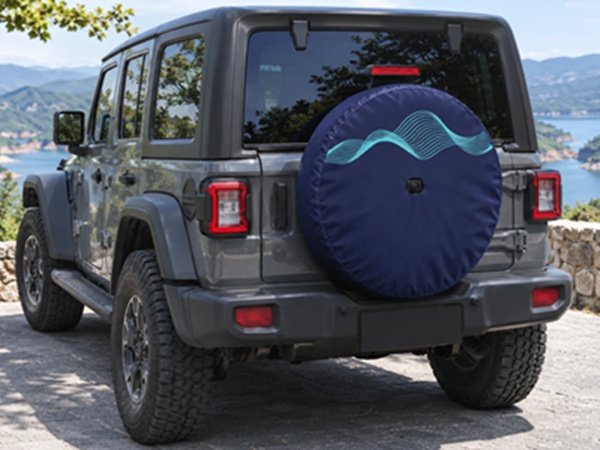
What Makes a Spare Tire Cover Camera Compatible?

True compatibility comes from four controls working together: tire fit, camera geometry, opening construction and artwork placement. A centered hole alone does not guarantee fit.

Exact Tire Fit

A spare tire cover should be developed from the tire specification or verified outside diameter and width, not from rim diameter alone. For example, a 285/70R17 tire has a theoretical outside diameter of about 32.7 inches and normally enters a 33-inch cover platform. Material stretch, side depth, fixing structure and actual tire profile still affect the final pattern, so Szoneier converts the supplied tire data into a production-ready cover pattern rather than relying only on broad labels.

Camera Position

Rear cameras mounted through or near the spare carrier must remain centered inside an unobstructed viewing zone. Szoneier confirms vehicle make, model, year, tire size, camera location and visible camera housing before a camera pattern is approved. The process becomes more important after wheel, carrier or tire modifications because the camera can sit differently relative to the cover surface. A correct cover fits around the installed camera arrangement rather than assuming every Jeep or Bronco uses the same geometry.

Opening Construction

The camera opening is treated as a controlled product feature. Pattern location, opening geometry, camera projection, surrounding material, reinforcement and cover-front position are checked as one assembly. For defined Jeep JL programs, Szoneier uses camera jig logic that fixes tire center, camera center, camera protrusion, housing outside diameter, opening position, cover front plane and side depth. Any change affecting the opening or fit should be handled as a pattern revision rather than an informal production adjustment.

Artwork Safe Zone

A camera opening can cut through a logo, face, badge or focal graphic even when mechanical fit is correct. Artwork preparation therefore starts with the final tire and camera pattern. Szoneier can reposition key graphics, preserve a clear camera zone and keep repeat orders tied to the approved artwork version. The goal is not merely to print the supplied file; the goal is to make the design look intentional after the cover is stretched over the tire and installed around the camera.

Built for Brands, Dealers and Vehicle Accessory Programs

Different sales models need different fitment, MOQ, packaging and replenishment logic. Szoneier develops the product route around how the finished cover will be sold and serviced.

Off-Road Brands

Jeep, Bronco and 4×4 accessory lines often combine several tire sizes, model years and modified vehicle setups. Szoneier can organize development around vehicle-specific patterns, camera variants and size/SKU control instead of treating every order as one universal cover. A brand can begin with a focused launch, verify installation and artwork on physical samples, then expand the pattern library as new sizes or vehicle versions are added. The same approved specification becomes the reference for repeat production.

Dealer Programs

Dealer-logo projects may use one graphic across several tire platforms and vehicle configurations. The main challenge is keeping the branding consistent while the finished geometry changes. Szoneier can separate artwork identity from production pattern, allowing the same logo system to be adapted to approved tire and camera combinations. Packaging, labels and carton identification can also be configured for dealer distribution. Regular custom programs commonly start from 30 pieces, while the final MOQ depends on material, process and structure.

Private Label Brands

Private-label programs need more than a cover and a logo. Product specification, material, pattern, camera opening, print file, packaging and QC standards need to remain controlled across repeat orders. Szoneier supports OEM, ODM, private label, contract manufacturing and exclusive product development. The workflow can begin with a digital proof and physical camera sample, continue through approved production specifications, and finish with branded packaging, barcode handling, inspection and international delivery under one project window.

E-commerce Programs

Online sellers often need wider artwork variety and tighter SKU control than traditional bulk programs. Selected personalized PVC or PU projects can start from one piece, while POD orders can be produced, checked individually, packed under seller branding and blind-shipped to the final recipient. Amazon programs can add unit packaging, barcodes, FNSKU files when required, carton labels, inspection and DDP routing. Product development still starts with correct tire and camera data, so fulfillment speed never replaces fitment control.

Six Inputs We Confirm Before Camera Fitment Starts

A useful RFQ should describe the installed vehicle, not only the desired print. Six inputs prevent most fitment and camera-position errors before pattern work begins.

Vehicle and Year

Provide the vehicle make, model and model year. Camera-equipped spare carriers can change across generations, and closely related vehicles may use different rear-camera arrangements. Szoneier records the vehicle data as part of the pattern reference so later revisions remain traceable. For Ford Bronco work, full-size Bronco and Bronco Sport are not treated as the same platform. For modified vehicles, the model year remains useful, but photos and installed measurements become equally important.

Tire Sidewall Size

Send the full sidewall code, such as 285/70R17, instead of only saying 33-inch tire or 17-inch wheel. Rim diameter alone cannot determine cover size. A 285/70R17 specification calculates to roughly 32.7 inches outside diameter and about 11.2 inches nominal section width, giving an initial 33-inch platform reference. Szoneier then considers actual tire profile, material behavior and cover construction before locking the pattern. A clear tire-sidewall photo is strongly preferred.

Actual Tire Dimensions

Aftermarket tires can differ from theoretical dimensions, so actual outside diameter and width become valuable for premium exact-fit work. Szoneier uses the real dimensions to control front diameter, side depth and the installed appearance. The same nominal tire label can feel looser or tighter depending on tread profile, sidewall shape and cover material. Exact dimensions are especially useful for 35-inch, 37-inch and other upgraded off-road setups where visual fit and camera alignment are more sensitive.

Camera Position

Provide a straight rear photo showing the complete spare tire and camera, plus a closer camera-front image when available. Camera center, housing outside diameter, protrusion and surrounding carrier area determine the opening. A side photo helps confirm how far the camera projects beyond the spare. Szoneier uses the supplied geometry to compare against an existing pattern or to create a new development route. Camera visibility is treated as a fitment requirement, not as a decorative cutout added after production.

OEM or Modified

State whether the tire, wheel, carrier and camera remain factory-original. Aftermarket tire carriers, camera extensions, relocation kits, deep-offset wheels, oversized 37-inch-plus tires, license-plate relocation and third-brake-light changes can invalidate a standard camera jig. Modified setups require photos and measurements before approval. Szoneier does not assume an OEM-style pattern will fit a modified vehicle simply because the make, model and tire diameter appear similar on the order sheet. Recording the modification at RFQ stage also prevents an old OEM pattern from being reused automatically on a repeat inquiry.

Artwork and Quantity

Send the intended logo, photo or graphic together with the expected order quantity. Artwork affects safe-zone planning, while quantity affects material and printing choices. Full-color personalization may favor printable PVC, PU or polyester routes; larger simple-logo programs may use screen printing on suitable Oxford materials. Quantity also influences sampling, packaging and production planning. A 50-piece launch and an 800-piece multi-SKU program can use the same engineering logic but require different production and fulfillment decisions.

Tire, Vehicle and Camera Fitment Engineering Explained

Good fitment starts with measurable geometry. Szoneier connects tire dimensions, installed camera position and vehicle configuration before converting the information into a controlled production pattern.

Tire Geometry Comes Before the Cover Size

  • A spare tire cover is not sized from the wheel diameter. A 17-inch wheel only describes the rim; the finished tire can be far larger. Szoneier starts with the tire sidewall specification and, when needed, the measured outside diameter and width. A 285/70R17 tire, for example, has a theoretical outside diameter of about 32.7 inches and a nominal section width near 11.2 inches. The result gives a 33-inch platform reference, not an automatic final pattern.
  • Pattern decisions also consider material behavior and construction. Premium PVC, PU leather, marine vinyl and polyester do not stretch and drape in exactly the same way. Side depth, elastic or other fixing structure, seam allowance and the installed tire profile influence the finished fit. A cover developed too generously may wrinkle around the camera zone and move the printed graphic. A cover developed too tightly may be difficult to install or place unnecessary load around the camera opening.
  • For exact-fit development, Szoneier converts the approved tire data into a production pattern and links the pattern to its project specification. Tire size, actual dimensions, material and camera feature become part of one record. The approach is especially useful for premium Jeep, Bronco and automotive accessory lines where the cover appearance matters as much as basic weather protection. For a brand range, the same method also makes size expansion easier: a new tire code can be calculated, measured and mapped to a controlled pattern instead of guessed from the nearest existing SKU. The result is a cleaner size architecture for quoting, sampling and repeat replenishment.

Camera Geometry Is a Separate Fitment Layer

  • Camera compatibility cannot be solved by selecting a tire size alone. The camera may sit through the spare-carrier center, project beyond the tire plane or use a housing whose diameter and position affect the required opening. Szoneier therefore records camera center, protrusion, housing outside diameter, opening position, cover front plane and tire-side depth when a camera-specific jig or pattern is used.
  • Jeep JL development provides a good example of controlled geometry. Szoneier maintains a JL camera jig family for OEM-style spare carriers, with fixture tire platforms including JL-31, JL-32, JL-33, JL-35 and JL-37. Pattern revisions are not overwritten when camera-hole position, side depth, elastic, reinforcement or tire width changes. A code such as a JL camera 33-inch revision separates one approved geometry from the next, which protects repeat production from informal shop-floor changes.
  • Bronco development follows its own vehicle logic rather than borrowing Jeep assumptions. Full-size Bronco camera data, camera generation, tire size and installed carrier configuration are reviewed independently. The important principle is simple: a camera-compatible cover must be designed around the camera system actually installed on the vehicle. The record also gives sales and service teams a clear answer when fitment is questioned later. They can identify the approved vehicle, tire and camera combination instead of relying on memory, a marketplace listing title or a photo taken from another model year.

Aftermarket Changes Trigger a Fresh Verification

  • Off-road vehicles are frequently modified after purchase. A larger tire, deep-offset wheel, aftermarket spare carrier, camera extension, relocation kit or nearby license-plate bracket can move the relationship between tire and camera. The vehicle badge may remain unchanged while the rear geometry no longer matches an OEM jig. Szoneier treats those modifications as a verification trigger.
  • A modified project normally starts with a spare-tire photo, camera-front photo, side photo and complete tire size. Actual outside diameter and width can be added for oversized tires. The engineering team compares the installed setup with available patterns and decides whether an existing pattern can be used, revised or replaced with a new development sample. Camera visibility, cover tension and opening position are checked together.
  • The method protects brands from a common failure: approving artwork and bulk quantity from a generic vehicle description, then discovering during installation that the camera opening sits off-center. Extra verification at development stage is cheaper than reworking finished goods. Szoneier therefore treats fitment evidence as part of product approval, not as an optional request after a complaint. Once the revised sample is approved, the modified setup can become its own controlled SKU rather than remaining a one-off exception. Future orders for the same configuration can then reference the verified pattern, reducing repeated measurement work while preserving the original OEM pattern unchanged.

Camera Fitment Decisions for Common Vehicle Setups

The matrix shows how project inputs change when a spare tire, camera or carrier moves away from a factory-original configuration.

Vehicle SetupWhat to ProvideMain Fitment RiskEngineering CheckRecommended Output
OEM tire + OEM cameraMake, model, year, tire sidewall, rear photoWrong cover platform or camera openingTire geometry + camera positionExisting pattern if verified
Larger aftermarket tireSidewall code, actual OD/width, rear photoLoose/tight cover; artwork shiftPattern diameter + side depthRevised size pattern
Aftermarket wheel/carrierPhotos, tire data, side view, modification detailsCamera moves relative to tire planeCamera center + protrusion + carrier geometryCustom verification sample
Camera extension/relocationFront and side camera photos, dimensionsStandard opening no longer alignsOpening location + safe viewing zoneNew or revised camera pattern
Multi-SKU brand programVehicle list, tire list, camera status, artwork setMixed patterns or wrong SKU assignmentPattern/SKU matrix + approved samplesControlled production library

OEM and Aftermarket Setups Need Different Checks

A factory-original vehicle can often use a verified pattern. Modified rear geometry needs additional evidence before sampling or bulk production is released.

Factory Original Setup

An OEM tire, wheel, carrier and camera provide the cleanest route for an existing vehicle-specific pattern. Szoneier still confirms model year, tire sidewall and camera status because even factory configurations can vary by platform or generation. Once the combination matches a verified record, pattern selection becomes faster and the artwork safe zone can be placed against known geometry. A physical sample remains the approval reference whenever the order involves a new graphic, material or construction.

Larger Tire Upgrade

Moving from a smaller factory tire to a 35-inch or 37-inch platform changes more than front diameter. Side depth, cover tension and camera relationship can also change. Szoneier asks for the tire sidewall code and, for exact-fit programs, actual outside diameter and width. The pattern is then checked against camera protrusion and the installed spare profile. An upgraded tire should not be forced into an older pattern simply because a nominal size label appears close.

Modified Carrier Setup

An aftermarket spare carrier can move the camera forward, backward or away from the original center relationship. Camera extensions and relocation kits create similar changes. Szoneier requires installation photos and tire data before using an OEM-style jig on a modified rear setup. The engineering decision may be to adjust the camera opening, change side depth or create a new pattern. A sample verifies the installed result before a brand commits to a larger run.

Deep Offset Wheel

Wheel offset can change how the spare sits on the carrier and where the camera appears relative to the tire face. The cover may fit the tire diameter yet still pull the camera opening out of position after installation. A side photo helps identify the spare-to-camera relationship. Szoneier treats deep-offset wheels as a fitment variable and checks cover front plane, side depth and opening location together. The final approval is based on the installed geometry rather than vehicle name alone.

Camera Opening Engineering Beyond a Simple Center Hole

A reliable opening is controlled through pattern geometry, reinforcement and revision management. The goal is clear camera vision without sacrificing cover fit or graphic placement.

Control the Opening From Measured Camera Geometry

The safest camera opening starts with the installed camera, not with a generic circle copied between vehicle models. Szoneier confirms camera center, housing outside diameter, protrusion, cover-front plane and tire-side depth before an opening is locked. The opening must leave the required camera view clear while allowing the cover to sit naturally around the spare.

  • For existing Jeep JL patterns, jig control can reference defined tire platforms from 31 to 37 inches. A fixture stabilizes the relationship between tire center and camera center so the same opening can be reproduced during sampling and repeat production. A new vehicle or modified carrier may require a different route because camera geometry can shift even when the spare-tire diameter remains similar.
  • The engineering record matters as much as the cut itself. Opening position, size and related cover geometry are tied to the approved pattern revision. If camera-hole location, side depth, elastic, reinforcement or tire width changes, the revision changes. The previous file remains available instead of being overwritten, allowing production teams to trace which specification belongs to each SKU. A controlled opening also improves quoting. When the pattern already records camera housing, protrusion and tire platform, the team can identify whether a request is a repeat fitment, a simple size extension or a genuinely new development project before material is cut.

Reinforcement and Edge Treatment Protect the Camera Zone

The camera zone experiences local stress because the cover material is interrupted by an opening while surrounding panels remain under installation tension. Material, opening shape and reinforcement therefore need to be considered together. Szoneier can use sewing or suitable material-process combinations, including reinforcement concepts and RF/HF-related structures on compatible PVC or PU-coated materials, depending on the approved construction.
  • A stronger-looking reinforcement is not automatically better. Extra layers can make an opening bulky, distort the cover face or interfere with camera clearance. The correct solution depends on material thickness, opening geometry, tire fit and the way the camera projects through the cover. Sampling provides the place to test those relationships before production.
  • QC then checks more than whether a hole exists. Position, surrounding construction, seam quality, visual symmetry and fit against the approved reference are part of the inspection route. When a project uses several tire sizes, each camera pattern should remain linked to the correct size and revision so one opening specification is not accidentally applied to every SKU. The approved construction is documented with the pattern so reinforcement is not added or removed casually on a later order. The record gives production and inspection teams the same reference when different materials are used across one vehicle program.

Design the Graphic Around the Installed Camera

A strong graphic can fail visually if the camera cuts through a logo, face, badge or important text. Artwork preparation therefore uses the approved camera pattern as a design boundary. Szoneier can create a safe zone around the opening, reposition focal elements and keep brand marks away from areas likely to stretch or disappear behind camera hardware.
  • The same artwork may need different placement across tire sizes because the front printable area, side transition and opening relationship can change. A master design can remain consistent while each production file is adjusted to its pattern. Digital proofs help confirm graphic position before physical sampling, and the approved sample becomes the final reference for color, placement and camera relationship.
  • For repeat orders, artwork version and pattern version should travel together. Keeping those records separate prevents a common production error: using the latest graphic on an older camera geometry. Szoneier treats fitment and design as one finished-product problem, so the camera opening looks intentional rather than added after the artwork was already complete. The same discipline is useful for dealer and licensed-style programs where brand marks must remain visually consistent across several tire diameters. Graphic balance can be preserved while each size receives its own mechanically correct camera opening and print position.

Spare Tire Cover Configurations for Different Brand Programs

Product structure should follow vehicle use, graphic requirements, order volume and brand position. Four configurations cover most camera-compatible development paths without forcing every project into one material.

Full-Color Personalized

Printable PVC or selected PU-based materials work well when each cover may carry a different image, name, club mark or dealer graphic. Camera placement is integrated into the production artwork before printing. Selected personalized programs can start from one piece, making the route suitable for personalized stores, launch testing and long-tail size combinations. The project still uses controlled tire and camera data, so low quantity does not mean generic fitment or uncontrolled cutting.

Premium Exact-Fit

Premium PVC, PU leather, marine vinyl and selected polyester constructions can be developed around actual tire size or measured diameter and width. Exact-fit work reduces excess looseness, improves camera-hole stability and gives the graphic a more controlled appearance after installation. The route suits automotive accessory brands and dealer programs where visual quality carries more weight than the lowest possible unit cost. New materials, unusual structures or special accessories may require higher development MOQ and physical validation.

Oxford Outdoor Cover

600D Oxford is a strong general option for outdoor-oriented tire cover programs, while 420D can serve lighter price-sensitive applications and 900D can support heavier-duty positioning. Oxford fabric itself is not naturally fully waterproof, so PU or PVC coating is used when greater water resistance is required. Camera opening construction, seam design and printing method must be matched to the coated fabric. Larger simple logos can suit screen printing, while compatible polyester routes can use other print systems.

Photo Graphic Polyester

Printable polyester and compatible polyester Oxford support full-color graphic routes, including sublimation where the material construction is suitable. The format works well for photo-driven artwork, clubs, personalized designs and retail graphics where a broad printable front surface is important. Camera-safe artwork preparation is essential because detailed images are more sensitive to a central opening. Tire pattern, printable area, camera zone and finishing method are confirmed before the design is released to sample production.

Choose Materials by Use, Graphics and Fit

No single material is best for every spare tire cover. Szoneier matches surface, outdoor exposure, artwork, quantity, fitment and target position before recommending a construction.

Printable PVC and PU for Flexible Customization

Printable PVC is a strong route for full-color personalization, POD and low-quantity programs because the surface can support digital graphic workflows and each order may carry different artwork. Selected PVC or PU personalized projects can start from one piece. Premium PVC also works well for exact-fit development where a smoother front appearance and controlled camera opening are important.

PU leather adds a different visual and tactile direction for premium or style-led products. Material thickness, backing and surface finish should be matched to the required printing method and outdoor expectation. A material chosen for appearance still has to stretch or shape correctly around the spare and camera zone. Szoneier therefore does not approve material from a small swatch alone when the construction is new; the sample confirms how the finished cover installs.

For camera-compatible products, the opening construction matters. Compatible PVC and PU-coated materials can also support reinforcement or RF/HF-related structures where the approved design calls for them. The process is selected by material, quantity and outdoor requirement rather than by a fixed rule. Full-color graphic programs typically use Latex, UV or other suitable digital methods after surface testing. For programs with many unique graphics, the material route can also simplify inventory planning because blank or semi-finished inputs can support several artwork variants without stocking every finished design. Fitment files still remain size- and camera-specific.

420D, 600D and 900D Oxford for Outdoor Programs

Oxford polyester gives brands several performance and cost levels without assuming the highest denier is automatically the best choice. 420D can suit lighter or more price-sensitive programs. 600D is a common outdoor and RV-oriented option with a stronger hand and broad application range. 900D can support heavier-duty positioning where more robust fabric is appropriate. Final selection should still consider cover weight, flexibility, sewing, coating, print method and target price.

Oxford fabric is not inherently completely waterproof. PU coating or PVC coating can improve water resistance, and the finished product still depends on seam construction and other openings. Camera-compatible covers add another interruption in the front surface, so opening reinforcement and edge construction must be evaluated together with the coated fabric.

Printing also changes material choice. Large simple logos and dealer marks can suit screen printing on suitable Oxford fabrics. Polyester materials compatible with sublimation can support larger full-color graphics. Digital and heat-transfer routes are selected according to material surface, color base, artwork coverage and order quantity. Szoneier treats fabric and printing as one specification rather than two separate purchasing decisions. Denier is therefore treated as one input among several, not as a quality ranking. A correctly coated and constructed 600D cover may suit a program better than a heavier 900D option when weight, flexibility, printability and target cost matter.

Marine Vinyl and Premium Surface Options

Marine vinyl is a strong candidate when the product needs a cleaner automotive appearance, stable graphic surface and premium positioning. It can be paired with suitable Latex or UV printing for branded or full-color graphics, while exact-fit pattern development helps keep the finished face smooth around the camera opening. The material is often more relevant for premium Jeep, Bronco, SUV and dealer programs than for the lowest-cost promotional cover.

Surface quality alone does not decide suitability. Thickness, flexibility, side construction, backing, outdoor target and printing chemistry all affect the finished product. A camera opening places extra attention on local stiffness because the material must sit around the housing without pulling the cover off-center. The physical sample is used to confirm camera clearance, opening finish, print placement and installation tension.

Szoneier can also combine branding details such as printed labels, woven labels, patches or other approved logo elements when the program requires more than a front print. Those additions are chosen according to material, quantity and outdoor requirement. The goal is a coherent product specification, not a collection of unrelated decorative processes. Premium programs also benefit from tighter sample approval because small changes in surface texture, sheen or material stiffness can alter perceived quality. The approved sample gives merchandising and production teams a common visual reference before a larger order is released.

Design Artwork Around the Camera Before Printing

Printing starts after fitment geometry is known. Szoneier connects camera safe zones, artwork revision, print process and production pattern before the graphic reaches the material.

Build a Camera Safe Zone Into the Artwork

The camera opening often sits close to the visual center of a spare tire cover, exactly where many logos, badges, portraits and text layouts place their most important element. Szoneier overlays the approved camera geometry on the artwork before production so the focal design can be moved, resized or rebalanced. The purpose is not to create a large empty area; the purpose is to preserve the design while leaving a clear camera opening.
  • A safe zone must follow the actual pattern. A 31-inch, 33-inch and 35-inch cover can share one visual concept but require different production files. Camera position, printable face diameter and side transition affect where the graphic appears after installation. Multi-SKU programs therefore benefit from a controlled artwork matrix tied to each approved pattern.
  • Digital proofing can normally be prepared in 1-3 working days for standard artwork review. If the project changes tire size, construction, material, camera geometry or fit, a new physical sample is required before final production approval. The approved sample becomes the visual and dimensional reference for the first bulk run. When a project contains several names or personalized designs, the safe-zone rule can be built into the artwork template so each new file is checked against the same camera boundary. That reduces manual redesign while protecting the central viewing area.

Match Printing Process to Material and Quantity

Szoneier uses several printing routes, but process selection starts with product requirements rather than a machinery list. Printable PVC and premium vinyl can use suitable Latex or UV workflows for personalized or branded graphics. Polyester and compatible polyester Oxford can use sublimation for broad full-color coverage. 420D or 600D Oxford can suit screen printing for larger-volume one-color or two-color dealer and corporate logos.

  • Artwork coverage matters. A small logo, an edge-to-edge photograph and a high-contrast club emblem place different demands on ink, curing, registration and material surface. Quantity also changes the commercial answer. A one-piece personalized order and a 500-piece repeated logo program may use different print routes even when the finished visual is similar.
  • Color approval should be linked to the actual material because the same digital file can look different on white polyester, dark coated Oxford or textured vinyl. For repeat production, the approved artwork, material and print method remain part of the same specification so the team is not re-deciding the process on every order. Process choice is reviewed again if the order volume, material color or artwork coverage changes materially. A route that is efficient for 50 pieces may not be the best commercial or visual choice for 500 pieces, even when the design concept remains the same.

Control Revisions Across Pattern, Print and SKU

Camera-compatible graphics create two version systems: the physical pattern and the artwork file. Both need traceable revisions. If a camera opening moves, the artwork safe zone may also need to move. If a logo changes, the vehicle pattern may remain unchanged. Treating the files separately but linking them at SKU level avoids confusion during repeat production.

  • Szoneier can organize multi-SKU programs around tire size, vehicle, camera status, material and artwork version. The production record identifies which pattern and print file belong together. The approach is particularly useful for dealer groups, Jeep/Bronco accessory ranges and e-commerce programs that add new artwork while keeping the same approved fitment.
  • A well-controlled file system also reduces costly rework. Printing a visually perfect graphic on the wrong camera pattern still creates unusable product. Fitment data, artwork proof and sample approval therefore meet before production release. The result is a finished cover where camera clearance and branding look planned as one product rather than assembled from separate departments. Revision control also supports after-sales service. If a fitment issue appears in one SKU, the exact physical pattern and artwork version can be isolated without stopping unrelated sizes or graphics. Corrective action can then target the affected combination.


Material and Printing Choices by Program Type

Use the matrix as an initial direction. Final selection is confirmed after artwork, outdoor requirement, order quantity, tire fit and camera construction are reviewed together.

Material / SurfaceTypical Printing RouteGood Fit ForQuantity DirectionCamera Notes
Printable PVCLatex / UV digitalPersonalization, POD, full-color graphicsSelected projects from 1 pcOpening and reinforcement tested with final material
PU-based materialCompatible digital / heat processPremium personalized programsSelected projects from 1 pc; structure dependentSurface, thickness and opening finish require sample
Printable PolyesterSublimation / digitalPhoto graphics, full-surface colorSmall to larger runsSafe zone positioned before print
420D / 600D OxfordScreen print; compatible digital optionsDealer logos, outdoor programsRegular custom programs commonly 30 pcs+Coating and reinforcement matched to opening
900D OxfordScreen / selected compatible processesHeavy-duty positioningProject dependentHigher denier still requires fit and camera validation
Marine VinylLatex / UVPremium automotive graphicsProject dependentExact-fit sample recommended for camera geometry


From Pattern Development to an Approved Camera Sample

Sampling converts vehicle and graphic data into a physical reference. The aim is to remove fitment uncertainty before a larger order enters production.

Requirement Review

Development starts with vehicle make, model, year, tire sidewall, camera status, modification details, artwork, material preference, target quantity and packaging needs. Missing information is identified before pattern work starts. An OEM-style vehicle may match an existing pattern, while a modified carrier or new platform may need additional photos and measurements. Clear input prevents the sample team from solving the wrong fitment problem and gives the quotation a defined technical basis.

Pattern Selection

The engineering team compares tire and vehicle data with the pattern library. Existing exact-fit and camera patterns can shorten development when the installed configuration is verified. New geometry is created when size, camera position, side depth or structure falls outside an approved pattern. Pattern revisions remain traceable when camera hole, elastic, reinforcement or tire width changes. Each SKU therefore has a defined physical reference rather than a verbal note such as “make the hole slightly higher.”

Artwork Proof

The camera opening and cover face are overlaid onto the supplied design before printing. Important logos, portraits, text or badges are kept outside the camera safe zone. A digital proof can typically be prepared in 1-3 working days for standard review. The proof confirms graphic scale and placement, but it does not replace a physical sample when fitment, material, camera geometry or construction changes. Print approval and mechanical fit remain separate checks until both are confirmed.

Physical Sample

A custom sample is produced with the approved material, pattern, camera feature and artwork. Standard camera custom sampling is commonly 7-10 working days. For camera projects with an existing verified vehicle pattern, sample timing can be about 4-7 working days; a new vehicle pattern normally requires about 7-12 working days. Complex samples can extend to 10-15 working days. Timing starts after the required development information and artwork are ready for production.

Fitment Verification

The sample is checked for tire fit, side depth, opening position, camera clearance, graphic alignment, seam quality and overall installed appearance. Modified vehicles should be verified against the actual setup rather than against an OEM reference photo. If a correction affects size, construction, material, camera or fit, Szoneier produces a revised physical sample instead of approving the change only on screen. The accepted version becomes the reference used for production and final inspection.

Golden Sample

After approval, the final sample and specification become the control reference for bulk production. Pattern revision, material, artwork, printing route, camera construction, packaging and key QC points are recorded together. Repeat orders can then use the same reference instead of restarting development from memory. When the product changes materially, a new sample is created and the revision is updated. The goal is repeatability across 100, 500 or 1,000 pieces, not merely a successful first prototype.

Approved Samples Become Repeatable Bulk Production Standards

Bulk manufacturing follows the approved pattern, print file and QC reference. Each production stage protects the fitment decisions already proven during development.

Material Release

Production begins from the confirmed material specification, including surface, coating, color and other project requirements. Incoming material is checked against the approved standard before it moves into printing or cutting. A substitute material is not treated as equal simply because the denier or color name is similar. Camera-compatible covers depend on predictable material behavior around the opening, so unapproved changes can affect fit, reinforcement and printed appearance. Material lot and surface changes can be held for review when they may affect print appearance or opening behavior.

Printing Control

Artwork version, material and print process are verified before the production run. Full-color digital, Latex, UV, sublimation, screen printing and other supported routes are selected according to the approved specification. Camera safe zones and SKU-specific files remain linked to the correct pattern. The production team checks print placement and visual consistency against the approved reference, reducing the risk of using the right logo on the wrong camera or tire-size file. A production-start check also confirms the active artwork revision before volume printing begins.

Pattern Cutting

Cutting follows the approved production pattern rather than a broad size label. Front diameter, side panels, camera opening location and related components are controlled from the correct revision. Exact-fit projects may use actual tire dimensions as part of the pattern basis. Cutting accuracy matters because even a good print cannot compensate for an opening or panel placed incorrectly. Pattern identity is therefore maintained through each SKU and repeat order. Revision identity is checked before cutting starts.

Sewing and Assembly

Panels, fixing structures, reinforcement and camera-related construction are assembled according to the approved sample. Complex vinyl, coated Oxford and camera-hole structures may require different handling from a simple universal cover. Sewing quality is checked during production rather than only after cartons are complete. The aim is consistent side depth, opening stability and finished shape so the cover installs in the same manner across the order. Assembly checkpoints keep the approved opening and side geometry stable before final inspection and packing.

Final Packing

Finished units move through final inspection before individual or bulk packaging. Label, barcode, insert, bag, box and carton requirements can be added for retail, dealer, Amazon or e-commerce programs. SKU identification is especially important when several tire sizes and camera patterns share similar artwork. Packing records help keep the correct product with the correct label and destination, protecting the engineering work completed earlier in the process. Packing verification also confirms quantity and SKU separation before cartons are closed.

Repeat Production

Approved patterns, artwork files, sample references and packaging specifications are retained for repeat orders. A repeat order can move faster when no core product elements change; internal planning data indicates many repeat programs can shorten production lead time by roughly 15-30% compared with a first run. Any change to tire size, camera position, material, artwork or structure is reviewed before reuse of the previous standard. The saved reference protects both speed and consistency.

Quality Control Focused on Fit, Camera and Repeatability

Inspection is built around failure points that matter after installation: tire fit, camera visibility, opening accuracy, artwork position, construction and SKU consistency.

Control the Product Before Sewing Starts

  • Quality control begins with approved standards for material, size, printing, color, sewing, camera position, packaging and any required inspection level. Incoming material inspection helps prevent an unapproved surface, coating or thickness from reaching production. Print files and pattern revisions are checked before cutting because a late inspection cannot economically fix the wrong graphic or camera geometry after assembly.
  • For exact-fit work, the tire specification or verified dimensions remain part of the product record. A 33-inch platform is not treated as a single universal geometry when the approved sample uses a specific tire profile and material. Camera patterns remain linked to the correct vehicle and size reference. The production team therefore works from controlled files instead of handwritten adjustments.
  • Szoneier can coordinate IQC, IPQC, inline QC and final QC, with third-party inspection when a program requires it. The names of the stages matter less than the checkpoints: material correctness, print and pattern identity, in-process assembly, finished dimensions, camera location, appearance and packaging must all remain aligned with the approved specification. The resulting inspection plan can be scaled to the order. A 100-piece launch may use concentrated sample and inline checks, while a larger multi-SKU program can add defined sampling levels or third-party inspection requirements agreed before production.

Inspect the Camera Zone as a Functional Feature

  • A camera opening passes QC only when its position and surrounding construction match the approved reference. Inspection can check opening geometry, camera-center relationship, reinforcement, edge finish, seam quality and visible distortion around the front face. For projects using a camera jig, the fixture helps control repeatability across units. If the vehicle uses an aftermarket carrier or relocation setup, the approved sample and recorded dimensions become the correct reference instead of an OEM jig.
  • Artwork alignment is checked in the same zone. A logo can be technically printed within tolerance and still look wrong if the camera cuts into a critical element. The approved sample therefore defines the visual relationship between camera opening and graphic, not only the hole dimensions.
  • Fit also affects camera accuracy. A cover that is too loose may rotate or wrinkle; a cover that is too tight can pull the opening away from its intended position. Dimensional checks, side-depth control and installed-sample comparison help protect the complete function rather than inspecting camera position in isolation. When possible, photo records or fixture checks can be attached to the inspection record for camera-critical SKUs. The evidence gives procurement and product teams something more useful than a generic pass stamp when reviewing repeat production or a future claim.

Keep Multi-SKU Orders Traceable Through Final Packing

  • Brand programs often mix several tire sizes, camera patterns and artwork versions in one purchase order. Final QC must prevent a unit built on one pattern from being packed under another SKU label. Szoneier can separate product specification, barcode, packaging and order data by seller or project and keep artwork and customer data managed independently.
  • Packing inspection can include unit packaging, barcode application, FNSKU or product labels when required, carton labels and shipment segregation. Amazon-bound programs can be prepared at factory level before delivery to the fulfillment center, while dealer programs may use retail packaging or bulk cartons. Dropshipping orders are checked one by one before seller packaging and blind shipping.
  • The same principle applies to claims and repeat orders. Size, printing, artwork, transit damage or quality issues are recorded so replacement, remake, corrective action and repeat-order improvement can be handled against the original specification. Good QC creates a usable history, not only a final inspection stamp. Traceability becomes more valuable as the assortment grows. A program with several tire diameters and graphics can keep replenishment simple when carton, unit label and internal SKU all point back to the same approved product record. The same linkage helps warehouse teams separate replenishment stock from one-piece personalized orders.

MOQ and Lead Times for Different Order Stages

Order size affects the commercial route, but camera fitment remains controlled at every volume. Timing is planned after artwork, material and product requirements are confirmed.

One-Piece Personalization

Selected PVC and PU personalized products can start from one piece. The route suits POD, personalized stores, long-tail graphics and market testing. Standard POD production is typically 2-4 working days after artwork confirmation and entry into the production queue, with peak-season planning around 3-5 working days. One-piece capability is not a promise that every material or camera structure has a 1-piece MOQ; special materials, structures, accessories and new tooling are evaluated separately.

Regular Custom Programs

Other regular material customization commonly starts from 30 pieces. The level is suitable for dealer launches, small private-label tests and focused vehicle programs where a brand wants a physical market trial before committing to several hundred units. MOQ can change with material, printing, structure, accessory and packaging requirements. A new camera fitment may need sample development first. The quotation therefore separates development conditions from later repeat-order economics instead of presenting one blanket MOQ for every spare tire cover.

Camera Sample Timing

A standard camera custom sample is commonly 7-10 working days. When an existing verified vehicle pattern can be used, a sample may be completed in roughly 4-7 working days. A new vehicle pattern normally requires about 7-12 working days, and complex development can take 10-15 working days. The physical sample is required when size, construction, material, camera or fit changes materially. Digital proofing alone does not replace installation verification for a new camera geometry.

Bulk Camera Orders

Fact-database planning for camera tire covers provides useful reference points: about 8-12 working days for 100 pieces, 12-18 working days for 500 pieces and 15-22 working days for 1,000 pieces after production conditions are met. Formal production lead time starts on the next working day after order confirmation, artwork approval, material confirmation and deposit receipt. Freight time, customs, warehouse appointments and delays caused by later artwork revisions are calculated separately from manufacturing lead time.

Packaging and Fulfillment Matched to Your Sales Channel

Finished covers can move into dealer cartons, retail packaging, Amazon preparation or one-piece blind shipping without handing the project to separate suppliers.

Dealer and Retail

Dealer and retail programs can use individual polybags, branded bags, reusable storage bags, retail boxes, mailer boxes, hang tags, inserts or gift packaging according to the approved project. SKU labels help separate similar camera and tire-size variants. Bulk cartons can be organized for distributor or dealer locations. Packaging MOQ depends on the packaging format, so a low-MOQ tire cover does not automatically mean a fully custom printed box can use the same minimum quantity.

Amazon FBA

Szoneier can support factory-level FBA preparation including unit packaging, polybags, set preparation, FNSKU or barcode application when required, product labels, carton labels, shipment segregation, inspection and DDP routing. Barcode files are supplied by the seller and can be printed, applied and scan-checked before shipment. Camera-compatible SKUs remain separated by size, pattern and artwork, reducing the risk of sending a visually similar but mechanically different cover under the wrong fulfillment label.

One-Piece Dropship

Selected personalized programs can follow one order, one product, one package, one address and one tracking number. Orders may be submitted individually, by CSV or through project-based integration. Szoneier matches the artwork and SKU, produces or picks the unit, performs 100% QC, packs under seller branding and blind-ships to the end recipient. The model supports different names, graphics and tire sizes without requiring the seller to hold finished inventory for every design.

Global Bulk Delivery

Bulk programs can use express, air freight, sea freight, LCL, FCL, DDP or a nominated forwarder. Typical transport references are about 3-7 days for DHL/FedEx/UPS, around 5-10 days for air freight and roughly 20-45 days for sea freight, depending on destination and route. Production lead time and transport time are kept separate in planning so launch schedules are not built on an unrealistic single number that ignores customs or warehouse appointments.

Camera-Compatible Order Scenarios

The examples below show how order structure can change by channel and quantity. They are representative planning scenarios rather than named-client claims or testimonials.

80-Piece Dealer Launch

A regional dealer group plans 80 branded camera-compatible covers across two approved tire platforms. The recommended route starts with one camera sample per fitment, a shared dealer logo system and SKU-specific production artwork. Premium PVC or marine vinyl can be evaluated for a cleaner automotive appearance. After sample approval, the run is separated by size, checked for camera-opening position and packed with dealer-specific labels. A small launch gives the group enough stock for promotion without forcing a large initial commitment.

240-Piece Accessory Range

An off-road accessory brand develops 240 covers split across 33-inch and 35-inch vehicle-specific variants, with two graphic themes. The project uses a fitment matrix so tire platform, camera pattern and artwork version remain linked. A new modified-carrier setup receives a separate physical sample rather than borrowing the OEM pattern. Production is released only after fitment and artwork approval. Individual packaging and SKU labels prepare the range for warehouse replenishment and later expansion into additional patterns.

650-Piece Marketplace Program

An e-commerce brand prepares a 650-piece launch with several camera-compatible SKUs and a mix of full-color and simple-logo graphics. Printable material and Oxford options are compared against artwork coverage, target price and outdoor use. Approved patterns and print files are locked before bulk production. Factory-level barcode labeling, inspection, carton segregation and DDP can be added for marketplace delivery. The quantity is large enough to benefit from repeatable production controls while remaining manageable for a focused new-product launch.

One-Piece Dropshipping

A personalized store sells camera-compatible designs without holding every size and graphic in stock. Each paid order can create one production request with its own artwork, tire-size SKU and destination. Selected personalized materials support one-piece production. The unit is matched to the approved pattern, printed, checked individually, packed with seller branding or neutral packaging and blind-shipped with tracking. The model is useful for long-tail designs, name personalization and low-frequency sizes where stocking dozens of finished variants would tie up inventory.

Why Brands Shortlist Szoneier for Camera Tire Covers

A strong supply partner combines fitment knowledge with manufacturing control. Szoneier keeps development, customization, production, QC, packaging and fulfillment inside one managed program.

Fitment Database

Szoneier maintains a growing tire-size and vehicle-fitment system covering spare tires, Jeep, Bronco, SUV, RV, trailer and specialty applications. The engineering process converts tire specifications into production-ready cover patterns and links camera requirements to the relevant vehicle and size reference. The database is not treated as a substitute for verification; modified carriers, deep-offset wheels, camera relocation and oversized tires still trigger photo and measurement review before an existing pattern is approved.

Camera Engineering

Camera compatibility is managed through pattern, jig, camera-center, protrusion, housing, opening position, side depth and revision control rather than a generic center cut. Defined Jeep JL jig logic covers fixture platforms from 31 to 37 inches for OEM-style spare carriers, while Bronco work follows its own vehicle and camera logic. Any material change in camera position, reinforcement or tire geometry creates a controlled revision instead of quietly replacing the previous production file.

Flexible Development

Manufacturing roots date to 2007, and the current Szoneier tire-cover operation supports product definition, artwork, material selection, structure, pattern development, sampling, printing, production, packaging, QC and shipping. Selected PVC and PU personalized projects can start from one piece, regular custom programs commonly start from 30 pieces, and camera samples follow defined development lead-time references. The same team can support both market testing and larger private-label production without changing the core engineering process.

Material and Print Range

Szoneier works with premium PVC, PU leather, marine vinyl, polyester, 420D/600D/900D Oxford and related coated materials for different positioning and outdoor needs. Printing options include full-color digital, Latex, UV, sublimation, screen printing, heat transfer and selected logo processes. Material and printing are matched by artwork, quantity, surface, outdoor requirement and fitment rather than sold as isolated capabilities. Camera opening and artwork safe zone remain part of the same product specification.

Controlled Production

Approved samples become the reference for material, pattern, artwork, camera construction, assembly, QC and packaging. The quality system can coordinate incoming inspection, in-process checks, inline QC, final QC and third-party inspection when required. Repeat production keeps pattern and artwork revisions linked to the correct SKU. The approach is designed to prevent the most expensive errors in camera programs: wrong size, wrong opening position, wrong print file or a visually similar SKU packed under the wrong label.

Global Fulfillment

Szoneier can support one-piece personalized dropshipping, dealer and distributor shipments, Amazon FBA preparation and larger OEM/private-label programs. Packaging options range from simple polybags to branded bags, storage bags, retail boxes, mailers, hang tags and inserts. Fulfillment routes include express, air, sea, LCL, FCL, DDP, direct-to-recipient shipment and nominated forwarders. Brand artwork, packaging, pricing and order data are managed separately between seller programs, supporting confidentiality and channel control. One project record can therefore continue from approved product specification through the final shipping route.

Backup Camera Tire Cover Frequently Asked Questions

No. Camera position, housing, tire size, wheel offset and carrier configuration can change the required opening. Szoneier verifies make, model, year, tire data and camera photos before approving a pattern. Jeep JL and full-size Bronco are treated as separate fitment systems, and modified carriers or relocation kits require additional verification.
Send the full tire sidewall code and, for exact-fit or modified projects, the actual outside diameter and width. Rim diameter alone is not enough. For example, 285/70R17 calculates to about 32.7 inches outside diameter, giving an initial 33-inch platform reference before material and construction are considered.
Yes, camera-compatible development can cover larger off-road tire platforms. Szoneier has Jeep JL camera jig references including 35-inch and 37-inch fixture platforms. Oversized or modified setups still require photos and tire data because carrier position, wheel offset and camera relocation can change the correct opening.
Provide rear, camera-front and side photos together with tire size and modification details. Aftermarket carriers, camera extensions, relocation kits, deep-offset wheels and 37-inch-plus tires can invalidate an OEM-style camera jig. Szoneier reviews the installed geometry and decides whether an existing pattern can be revised or a new sample is required.
Yes. The approved camera pattern is overlaid on the artwork so logos, portraits, text and focal graphics can be moved away from the opening. Different tire sizes may need separate production files even when the same master design is used. Artwork proof and physical sample approval keep graphic placement tied to the correct fitment.
There is no single best material. Printable PVC suits many personalized and full-color programs; PU leather and marine vinyl support premium positioning; 420D, 600D and 900D Oxford offer different outdoor and cost levels; printable polyester works well for photo graphics and compatible sublimation routes. Final selection depends on fit, artwork, quantity and outdoor requirement.
Selected PVC and PU personalized projects can start from 1 piece. Other regular custom material programs commonly start from 30 pieces. New materials, special structures, accessories, packaging or tooling can require different minimums. Szoneier confirms MOQ after material, print method, camera structure and quantity are reviewed together.
A standard camera custom sample is commonly 7-10 working days. An existing verified vehicle pattern may sample in about 4-7 working days, while a new vehicle pattern normally requires around 7-12 working days. Complex development can extend to 10-15 working days. Timing assumes required fitment information and artwork are ready.
Yes. Szoneier can support factory-level unit packaging, polybags, set preparation, barcodes or FNSKU labels when required, product labels, carton labels, inspection, shipment segregation and DDP routing. The seller supplies the required barcode or label files. Similar-looking tire and camera SKUs remain separated during packing and shipment preparation.
Yes, selected personalized programs support one-piece fulfillment. Individual orders can be matched to artwork and tire-size SKU, produced or picked, checked one by one, packed under seller branding or neutral packaging and blind-shipped directly to the recipient with tracking. Different graphics, names and tire sizes can be handled within the program.

Send Your Tire and Camera Details for Review

Send enough vehicle and product information for Szoneier to quote the correct engineering route rather than a generic spare tire cover. Start with the vehicle make, model and year, then add the full tire sidewall size. For exact-fit or modified applications, include actual outside diameter and width. A straight rear photo, camera-front photo and side photo are strongly recommended when the vehicle uses a backup camera, aftermarket wheel, larger tire, modified carrier, camera extension or relocation kit. Add artwork, expected quantity, preferred material, target sales channel and packaging needs when available. The engineering team can then check whether an existing vehicle pattern is suitable, whether a new camera sample is required, and which material and printing route fit the project. Selected personalized PVC or PU programs can begin from one piece, while regular custom programs commonly start from 30 pieces. Camera sample and bulk timing are confirmed after fitment, artwork, material and production requirements are locked.
  • Vehicle make, model and year
  • Full tire sidewall size
  • Rear, camera-front and side photos
  • OEM or aftermarket wheel/carrier details
  • Artwork file and expected quantity
  • Material, packaging and delivery requirements

Get Your Custom Tire Cover Quote

Send us your tire size, artwork and estimated quantity. Our team will review fitment, materials, printing and production requirements for your project.

# Your project details are used only for quotation and production evaluation.

Seraphinite AcceleratorOptimized by Seraphinite Accelerator
Turns on site high speed to be attractive for people and search engines.